Overweight and obesity are burgeoning global health challenges with severe health consequences. This study explores awareness and knowledge about their risk factors and prevention strategies in District Shimla, Himachal Pradesh, a region experiencing an increasing prevalence of these conditions due to changing lifestyles. Material and Methods: A cross-sectional survey was conducted between April and June 2023, involving 400 adults residing in District Shimla for at least 12 months. A structured questionnaire assessed demographics and knowledge regarding overweight and obesity. Scoring categorized knowledge into very good (29.75%), good (40.5%), fair (15.25%), and poor (14.5%). Data were analyzed using Epi Info V7. Results: The study found a promising level of awareness with 70.5% understanding "overweight" and "obesity," and 57.75% recognizing associated health problems. However, only 31% were aware of the regional prevalence. While 78% felt the need for more awareness, 75.75% acknowledged the role of healthcare providers. Challenges included 54.75% facing issues accessing healthy food, and 63.5% identifying specific barriers to maintaining a healthy weight. Encouragingly, 78.5% believed schools and workplaces should promote healthy lifestyles. Conclusion: While there is notable awareness about overweight and obesity, knowledge gaps exist, particularly regarding regional prevalence. The study highlights the importance of tailored awareness campaigns, policy enhancement, and community engagement to combat these health issues effectively in Himachal Pradesh.
Keywords
Overweight
Obesity
Awareness
Knowledge
Himachal Pradesh
Prevention
Health campaigns
Community engagement
Healthcare providers
Lifestyle
Public health.
INTRODUCTION
Obesity and overweight are global public health challenges associated with numerous adverse health outcomes, including cardiovascular diseases, diabetes and certain types of cancer. These conditions are a result of complex interactions between genetic, environmental and behavioral factors. In the serene landscapes of Himachal Pradesh, specifically in District Shimla, the prevalence of overweight and obesity is on the rise, necessitating a comprehensive understanding of the risk factors and prevention strategies to address this burgeoning health issue [1-4].
Obesity is no longer a concern limited to high-income countries; it has also become a significant health problem in low- and middle-income countries, including India. Rapid urbanization, changing dietary patterns, sedentary lifestyles and increased stress levels have contributed to the escalating rates of overweight and obesity. Himachal Pradesh, known for its natural beauty and cultural diversity, is not immune to these trends [5-7].
Understanding the risk factors associated with overweight and obesity is crucial for devising effective prevention and intervention strategies. These risk factors encompass a wide range of determinants, including dietary habits, physical activity levels, genetic predisposition and socioeconomic factors. Additionally, awareness and knowledge about these risk factors play a pivotal role in individual and community efforts to combat overweight and obesity.
The objective of this study is to gauge the levels of awareness and knowledge about the risk factors and prevention of overweight and obesity among the general population of District Shimla, Himachal Pradesh. By assessing the existing awareness levels, identifying common misconceptions and recognizing potential barriers to adopting healthy lifestyles, this research aims to provide valuable insights that can inform public health initiatives, healthcare policies and educational campaigns tailored to the unique needs of the residents of this picturesque region.
Obesity and overweight are complex health issues that require a multifaceted approach for effective prevention and management. This study endeavors to contribute to the overall well-being and health of the people of District Shimla by shedding light on the factors that contribute to these conditions and by fostering a culture of health and well-informed decision-making.
Objectives of the Study
The objective of this study is to gauge the levels of awareness and knowledge about Risk Factors and Prevention of Overweight and Obesity among the general population of District Shimla Himachal Pradesh.
MATERIALS AND METHODS
Research Methodology
Research Approach-Descriptive
Research Design- Cross-sectional survey design
Study area: District Shimla, Himachal Pradesh
Study duration- between April 2023 to June 2023
Study population: The study's target population encompassed all adults aged 18 and above who had been residents of District Shimla for a minimum of 12 months
Sample size- A robust sample size of 400 adults was determined using a 95% confidence level, an estimated knowledge level of 50% regarding Risk Factors and Prevention of Overweight and Obesity, a precise 5% absolute error margin and a conservative 5% non-response rate
Study tool: A google form questionnaire consisting of questions regarding socio-demography and knowledge regarding Risk Factors and Prevention of Overweight and Obesity was created. The questionnaire was initially pre-tested on a small number of participants to identify any difficulty in understanding by the respondents
Description of Tool
Demographic data survey instrument: The demographic form elicited information on participants’ background: age, marital status, religion, employment, education and many more.
Questionnaire: The questionnaire contains 20 structured knowledge related questions regarding Risk Factors and Prevention of Overweight and Obesity. One mark was given for each correct answer and zero for incorrect answer. The maximum score was 20 and minimum score was zero. Scoring was done on the basis of marks as:
>80%(16-20)=very good,60-79%(12-15) =Good,
41-59% ( 8-11)=Fair,<40% (< 8)=poor
Validity of tool = by the experts in this field
Data Collection
Data was collected under the guidance of supervisors. The google form questionnaire was circulated among the residents of District Shimla, Himachal Pradesh for responses using online modes like e-mail and social media platforms like WhatsApp groups, Facebook, Instagram and LinkedIn till the 400 responses were collected.
Data Analysis
Data was collected and entered in Microsoft excel spread sheet, cleaned for errors and analyzed with Epi Info V7 Software with appropriate statistical test in terms of frequencies and percentage.
RESULTS
The primary objective of this study was to gauge the understanding of Risk Factors and Prevention of Overweight and Obesity among the general population of Shimla A total of 400 participants took part in the study, with 231 (57.75%) residing in urban areas and 169 (42.25%) in rural areas (Table 1).
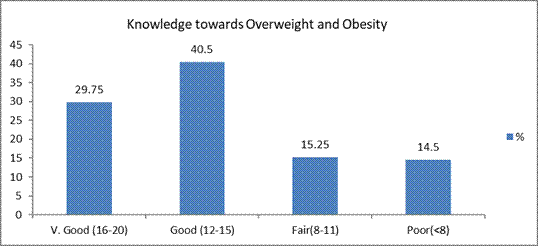
Figure (1) present study 29.75% (119) participants had very good knowledge (16-20 marks) towards Risk Factors and Prevention of Overweight and Obesity, 40.5% (162) had good knowledge (12-15 marks), 15.25% (61) had fair knowledge (8-11 marks) and 14.5% (58) having poor knowledge (<8 marks).
DISCUSSION
Obesity and overweight are increasingly prevalent global health concerns associated with a range of serious health issues, making it imperative to understand the factors contributing to these conditions and effective strategies for prevention. In the serene landscapes of Himachal Pradesh, particularly in District Shimla, where urbanization and changing lifestyles are on the rise, there is a growing need to comprehend the awareness and knowledge about the risk factors and prevention of overweight and obesity among the general population.
This study found that a substantial proportion of participants (70.5%) had a clear understanding of the terms "overweight" and "obesity." This level of awareness is promising, as it suggests that many individuals in District Shimla recognize these health terms, which is fundamental to addressing the issue effectively. Approximately 57.75% of respondents could name common health problems or conditions associated with being overweight or obese. Understanding these health consequences is vital as it helps individuals connect excess weight to potential health risks.
However, only 31% of participants were aware of the prevalence of overweight and obesity in Himachal Pradesh. This finding highlights a significant knowledge gap that needs to be addressed through awareness campaigns and public health initiatives. About 46.25% of respondents were knowledgeable about the factors contributing to overweight and obesity, particularly in their region. This understanding is essential, as it allows individuals to identify the root causes and make informed decisions regarding their lifestyle and dietary choices.
A considerable 54.75% of participants reported receiving education or information about maintaining a healthy weight through schools or community programs.
Table 1: Knowledge regarding Risk Factors and Prevention of Overweight and Obesity among study participants
Statements
Frequency of Correct Responses
Percent
What is your understanding of the terms "overweight" and "obesity"?
282
70.5
Can you name some common health problems or conditions associated with being overweight or obese?
231
57.75
Are you aware of the prevalence of overweight and obesity in Himachal Pradesh?
124
31
Do you know the factors that contribute to overweight and obesity, especially in your region?
185
46.25
Have you received any education or information about maintaining a healthy weight through schools or community programs?
219
54.75
Are there cultural or lifestyle factors in Himachal Pradesh that may influence people's weight and eating habits?
198
49.5
Can you describe the role of diet and nutrition in preventing overweight and obesity?
231
57.75
Are you familiar with the importance of regular physical activity in maintaining a healthy weight?
244
61
Have you ever encountered challenges related to accessing healthy and affordable food options in your area?
219
54.75
Are there any local initiatives or campaigns that promote healthy eating and active living in Himachal Pradesh?
197
49.25
Do you think there is a need for more awareness about the risks of overweight and obesity in your community?
312
78
Have you ever discussed or participated in activities related to weight management and prevention of obesity?
190
47.5
Can you identify any misconceptions or myths about weight loss and weight management?
199
49.75
Are there any specific barriers that individuals face when trying to maintain a healthy weight in Himachal Pradesh?
254
63.5
Do you believe that schools and workplaces should have wellness programs to promote healthy lifestyles?
314
78.5
Are you aware of any government policies or regulations in Himachal Pradesh aimed at addressing overweight and obesity?
102
25.5
Can you suggest ways in which communities can encourage healthy eating and physical activity?
237
59.25
Do you think there is a role for healthcare providers in addressing overweight and obesity in Himachal Pradesh?
303
75.75
Have you ever personally taken steps to maintain a healthy weight or support others in doing so?
193
48.25
How can individuals and families contribute to preventing overweight and obesity in their communities?
210
52.5
Figure 1: Knowledge scores towards Risk Factors and Prevention of Overweight and Obesity among study participants
This is encouraging, as it indicates that formal educational channels are being utilized to disseminate information on weight management. Nearly half of the participants (49.5%) recognized the influence of cultural or lifestyle factors in Himachal Pradesh that may impact people's weight and eating habits. Acknowledging these factors is critical for tailoring interventions to the local context.
An impressive 57.75% of respondents were familiar with the role of diet and nutrition in preventing overweight and obesity. Understanding the significance of a balanced diet is essential for effective weight management. Approximately 61% of participants were aware of the importance of regular physical activity in maintaining a healthy weight. This knowledge emphasizes the significance of promoting an active lifestyle.
Over half of the respondents (54.75%) reported encountering challenges related to accessing healthy and affordable food options in their area. Identifying these barriers is essential for addressing disparities in food accessibility. Around 49.25% of participants were aware of local initiatives or campaigns that promote healthy eating and active living in Himachal Pradesh. These initiatives can contribute significantly to community awareness and engagement.
An overwhelming 78% believed that there is a need for more awareness about the risks of overweight and obesity in their community. This signifies a strong demand for awareness campaigns and educational programs. Nearly half of the participants (47.5%) reported discussing or participating in activities related to weight management and obesity prevention. Community engagement is a crucial factor in promoting healthy behaviors. About half of the respondents (49.75%) identified misconceptions or myths about weight loss and weight management. These misconceptions need to be addressed to provide accurate information to the public.
A significant number (63.5%) recognized specific barriers that individuals face when trying to maintain a healthy weight in Himachal Pradesh. Identifying and addressing these barriers is vital for effective intervention strategies. An impressive 78.5% believed that schools and workplaces should have wellness programs to promote healthy lifestyles. This highlights the importance of incorporating health promotion into educational and occupational settings. Only 25.5% of participants were aware of government policies or regulations in Himachal Pradesh aimed at addressing overweight and obesity. This suggests a need for increased awareness of existing policies and potential policy enhancements.
A substantial 59.25% of participants suggested ways in which communities can encourage healthy eating and physical activity. These suggestions can guide community-based interventions and initiatives. An impressive 75.75% recognized the role that healthcare providers can play in addressing overweight and obesity in Himachal Pradesh. Healthcare providers are valuable resources in promoting healthy behaviors. Almost half of the participants (48.25%) reported taking steps to maintain a healthy weight or support others in doing so. Individual commitment is essential for widespread behavior change. More than half (52.5%) provided suggestions on how individuals and families can contribute to preventing overweight and obesity in their communities. These suggestions can guide community-level efforts.
When comparing these findings with studies conducted in other regions, it becomes evident that awareness and knowledge about overweight and obesity are influenced by various factors, including education, culture and access to healthcare [8-10]. Tailoring interventions to the specific needs and context of Himachal Pradesh is crucial for effective prevention and management.
CONCLUSION
In conclusion, this study provides valuable insights into the awareness and knowledge levels regarding the risk factors and prevention of overweight and obesity among the residents of District Shimla, Himachal Pradesh. While there is commendable awareness in some areas, there are opportunities to enhance education and awareness campaigns, particularly related to the prevalence of overweight and obesity in the region. These findings serve as a foundation for designing evidence-based public health campaigns, educational programs and interventions that empower individuals to make informed decisions about their health and well-being. By fostering community engagement and addressing barriers to healthy living, we aim to contribute to the prevention of overweight and obesity, ultimately promoting the well-being and health of the people of Himachal Pradesh.
Ethical Approval
Participants confidentiality and anonymity was maintained.
Gupta, M., et al. “South Asians and Cardiovascular Risk: What Clinicians Should Know.” Circulation, vol. 126, no. 15, 2012, pp. e185–e187.
Misra, A. and L. Khurana. “Obesity and the Metabolic Syndrome in Developing Countries.” The Journal of Clinical Endocrinology & Metabolism, vol. 93, no. 11 Suppl. 1, 2008, pp. S9–S30.
Swinburn, B.A., et al. “The global obesity pandemic: Shaped by global drivers and local environments.” The Lancet, vol. 378, no. 9793, 2011, pp. 804–814, https://doi.org/10.1016/S0140-6736(11)60813-1.
GBD 2015 Obesity Collaborators. “Health effects of overweight and obesity in 195 countries over 25 years.” The New England Journal of Medicine, vol. 377, no. 1, 2017, pp. 13–27.
Popkin, B.M., et al. “Global nutrition transition and the pandemic of obesity in developing countries.” Nutrition Reviews, vol. 70, no. 1, 2012, pp. 3–21.
Hawkes, C. and K. Buse. “Public health sector and food industry interaction: It's time to clarify the terms of engagement.” Globalization and Health, vol. 11, no. 1, 2015, pp. 1–8.
Kumar, S., et al. “Prevalence of obesity and its influencing factor among affluent school children of davangere city.” Indian Journal of Community Medicine, vol. 32, no. 1, 2007, pp. 15–17.
Kapoor, N., et al. “The role of community health workers in diabetes: Update on current literature.” Current Diabetes Reports, vol. 19, no. 7, 2019, p. 44.
Malik, V.S., et al. “Global Obesity: Trends, risk factors and policy implications.” Nature Reviews Endocrinology, vol. 9, no. 1, 2013, pp. 13–27.
License
Creative Commons Attribution-NonCommercial-NoDerivatives 4.0 International License
All papers should be submitted electronically. All submitted manuscripts must be original work that is not under submission at another journal or under consideration for publication in another form, such as a monograph or chapter of a book. Authors of submitted papers are obligated not to submit their paper for publication elsewhere until an editorial decision is rendered on their submission. Further, authors of accepted papers are prohibited from publishing the results in other publications that appear before the paper is published in the Journal unless they receive approval for doing so from the Editor-In-Chief.
Himalayan Journal of Applied Medical Sciences and Research open access articles are licensed under a Creative Commons Attribution-Share A like 4.0 International License. This license lets the audience to give appropriate credit, provide a link to the license, and indicate if changes were made and if they remix, transform, or build upon the material, they must distribute contributions under the same license as the original.
Advertisement
Recommended Articles
Research Article
Evaluation of Serum Heat Shock Protein 70 as a Diagnostic Biomarker for Ectopic Pregnancy: A Comparative Case-Control Study
Hala Ahmed Atiya,
Ayla Khedher Ghalib
Published: 28/02/2026
Download PDF
Cite
x
APA
Atiya, H. A. & Ghalib, A. K. (2026). Evaluation of Serum Heat Shock Protein 70 as a Diagnostic Biomarker for Ectopic Pregnancy: A Comparative Case-Control Study. Himalayan Journal of Applied Medical Sciences and Research, 7(1), 1-5.
MLA
Atiya, Hala A. and Ayla K. Ghalib. "Evaluation of Serum Heat Shock Protein 70 as a Diagnostic Biomarker for Ectopic Pregnancy: A Comparative Case-Control Study." Himalayan Journal of Applied Medical Sciences and Research 7.1 (2026): 1-5.
Chicago
Atiya, Hala A. and Ayla K. Ghalib. "Evaluation of Serum Heat Shock Protein 70 as a Diagnostic Biomarker for Ectopic Pregnancy: A Comparative Case-Control Study." Himalayan Journal of Applied Medical Sciences and Research 7, no. 1 (2026): 1-5.
Harvard
Atiya, H. A. and Ghalib, A. K. (2026) 'Evaluation of Serum Heat Shock Protein 70 as a Diagnostic Biomarker for Ectopic Pregnancy: A Comparative Case-Control Study' Himalayan Journal of Applied Medical Sciences and Research 7(1), pp. 1-5.
Vancouver
Atiya HA, Ghalib AK. Evaluation of Serum Heat Shock Protein 70 as a Diagnostic Biomarker for Ectopic Pregnancy: A Comparative Case-Control Study. Himalayan Journal of Applied Medical Sciences and Research. 2026 Jan;7(1):1-5.
Download PDF
Research Article
Assessing First Trimester Maternal Serum Pentraxin-3 Levels in Primary Unexplained Recurrent Pregnancy Loss: A Case-Control Study
Raniah Ibrahim Khaleel Yaseen,
Israa Hashim Abdalkareem
Published: 28/02/2026
Download PDF
Cite
x
APA
Yaseen, R. I. K. & Abdalkareem, I. H. (2026). Assessing First Trimester Maternal Serum Pentraxin-3 Levels in Primary Unexplained Recurrent Pregnancy Loss: A Case-Control Study. Himalayan Journal of Applied Medical Sciences and Research, 7(1), 1-6.
MLA
Yaseen, Raniah I. K. and Israa H. Abdalkareem. "Assessing First Trimester Maternal Serum Pentraxin-3 Levels in Primary Unexplained Recurrent Pregnancy Loss: A Case-Control Study." Himalayan Journal of Applied Medical Sciences and Research 7.1 (2026): 1-6.
Chicago
Yaseen, Raniah I. K. and Israa H. Abdalkareem. "Assessing First Trimester Maternal Serum Pentraxin-3 Levels in Primary Unexplained Recurrent Pregnancy Loss: A Case-Control Study." Himalayan Journal of Applied Medical Sciences and Research 7, no. 1 (2026): 1-6.
Harvard
Yaseen, R. I. K. and Abdalkareem, I. H. (2026) 'Assessing First Trimester Maternal Serum Pentraxin-3 Levels in Primary Unexplained Recurrent Pregnancy Loss: A Case-Control Study' Himalayan Journal of Applied Medical Sciences and Research 7(1), pp. 1-6.
Vancouver
Yaseen RIK, Abdalkareem IH. Assessing First Trimester Maternal Serum Pentraxin-3 Levels in Primary Unexplained Recurrent Pregnancy Loss: A Case-Control Study. Himalayan Journal of Applied Medical Sciences and Research. 2026 Jan;7(1):1-6.
Download PDF
Research Article
Patent Ductus Arteriosus Medical Closure and Associated Co-morbidities in Premature Infants in Sulaymaniyah Neonatal Intensive Care Unit
Adil Ali Zainel,
...
Mustafa Elias Abdulqader3
Published: 28/02/2026
Download PDF
Cite
x
APA
Zainel, A. A., Rasheed, S. R. & Abdulqader3, M. E. (2026). Patent Ductus Arteriosus Medical Closure and Associated Co-morbidities in Premature Infants in Sulaymaniyah Neonatal Intensive Care Unit. Himalayan Journal of Applied Medical Sciences and Research, 7(1), 1-5.
MLA
Zainel, Adil A., Sirwa R. Rasheed and Mustafa E. Abdulqader3. "Patent Ductus Arteriosus Medical Closure and Associated Co-morbidities in Premature Infants in Sulaymaniyah Neonatal Intensive Care Unit." Himalayan Journal of Applied Medical Sciences and Research 7.1 (2026): 1-5.
Chicago
Zainel, Adil A., Sirwa R. Rasheed and Mustafa E. Abdulqader3. "Patent Ductus Arteriosus Medical Closure and Associated Co-morbidities in Premature Infants in Sulaymaniyah Neonatal Intensive Care Unit." Himalayan Journal of Applied Medical Sciences and Research 7, no. 1 (2026): 1-5.
Harvard
Zainel, A. A., Rasheed, S. R. and Abdulqader3, M. E. (2026) 'Patent Ductus Arteriosus Medical Closure and Associated Co-morbidities in Premature Infants in Sulaymaniyah Neonatal Intensive Care Unit' Himalayan Journal of Applied Medical Sciences and Research 7(1), pp. 1-5.
Vancouver
Zainel AA, Rasheed SR, Abdulqader3 ME. Patent Ductus Arteriosus Medical Closure and Associated Co-morbidities in Premature Infants in Sulaymaniyah Neonatal Intensive Care Unit. Himalayan Journal of Applied Medical Sciences and Research. 2026 Jan;7(1):1-5.
Download PDF
Research Article
Bones in Balance: Awareness of Rickets and Nutritional Deficiencies Among the Hamirpur Community
Vishal Dhatwalia,
Swati Chandel
Published: 10/12/2024
Download PDF
Cite
x
APA
Dhatwalia, V. & Chandel, S. (2024). Bones in Balance: Awareness of Rickets and Nutritional Deficiencies Among the Hamirpur Community. Himalayan Journal of Applied Medical Sciences and Research, 5(2), 1-5.
MLA
Dhatwalia, Vishal and Swati Chandel. "Bones in Balance: Awareness of Rickets and Nutritional Deficiencies Among the Hamirpur Community." Himalayan Journal of Applied Medical Sciences and Research 5.2 (2024): 1-5.
Chicago
Dhatwalia, Vishal and Swati Chandel. "Bones in Balance: Awareness of Rickets and Nutritional Deficiencies Among the Hamirpur Community." Himalayan Journal of Applied Medical Sciences and Research 5, no. 2 (2024): 1-5.
Harvard
Dhatwalia, V. and Chandel, S. (2024) 'Bones in Balance: Awareness of Rickets and Nutritional Deficiencies Among the Hamirpur Community' Himalayan Journal of Applied Medical Sciences and Research 5(2), pp. 1-5.
Vancouver
Dhatwalia V, Chandel S. Bones in Balance: Awareness of Rickets and Nutritional Deficiencies Among the Hamirpur Community. Himalayan Journal of Applied Medical Sciences and Research. 2024 Jul;5(2):1-5.
Kaushal, A. & Sharma, S. (2023). Navigating Wellness: Exploring Awareness and Strategies to Tackle Overweight and Obesity in District Shimla, Himachal Pradesh. Himalayan Journal of Applied Medical Sciences and Research, 4(2), 1-5.
MLA
Kaushal, Anjana and Shruti Sharma. "Navigating Wellness: Exploring Awareness and Strategies to Tackle Overweight and Obesity in District Shimla, Himachal Pradesh." Himalayan Journal of Applied Medical Sciences and Research 4.2 (2023): 1-5.
Chicago
Kaushal, Anjana and Shruti Sharma. "Navigating Wellness: Exploring Awareness and Strategies to Tackle Overweight and Obesity in District Shimla, Himachal Pradesh." Himalayan Journal of Applied Medical Sciences and Research 4, no. 2 (2023): 1-5.
Harvard
Kaushal, A. and Sharma, S. (2023) 'Navigating Wellness: Exploring Awareness and Strategies to Tackle Overweight and Obesity in District Shimla, Himachal Pradesh' Himalayan Journal of Applied Medical Sciences and Research 4(2), pp. 1-5.
Vancouver
Kaushal A, Sharma S. Navigating Wellness: Exploring Awareness and Strategies to Tackle Overweight and Obesity in District Shimla, Himachal Pradesh. Himalayan Journal of Applied Medical Sciences and Research. 2023 Jul;4(2):1-5.



 Download PDF
 Download XML