Evaluation of Plasminogen Activator Inhibitor-1 (PAI-1) Levels in Blood Serum and Follicular Fluid (Predictive Marker) and its effect on Embryo quality in Iraqi Infertile Females Undergoing ICSI Protocol
Samhar F. Alwan
1
,
Hayder A.L. Mossa
2
,
Rana A.R. Al Saadi
2
1
Elwah Hospital for Obstetrics and Gynecology, Bagdad, Iraq
2
High Institute for Infertility Diagnosis and Assisted Reproductive Technologies, Al-Nahrain University, Baghdad, Iraq
Expression of Plasminogen Activator Inhibitor-1 in serum and follicular fluid has a direct role in embryo implantation and successful pregnancy outcome, which plays a crucial role in regulating fibrinolysis during pregnancy period by inhibits the action of other protein called plasminogen activators. Objective: Evaluate of PAI-1 level in blood serum and follicular fluid as predictive marker and it’s effected on embryo quality in an infertile females undergoing ICSI protocol. Materials and Methods: This study included Sixty-nine infertile female with mean age was (33.03 ±5.97) years, attended to High Institute for Infertility Diagnosis and Assisted Reproductive Technologies, Al-Nahrain University (Baghdad / Iraq), they underwent ICSI program, during a period from October 2022 till February 2023. All infertile female has same inclusion and exclusion criteria. Also, every female was asked some information including age, duration of infertility, body mass index (kg/m²), type of infertility, causes of infertility and hormonal assay, virology assay, husband’s seminal fluid analysis, and ultrasonography picture. All females undergone ovarian stimulation with antagonist protocol and received recombinant follicle stimulating hormone, at the cycle day two. The serum and follicular fluid was collected from each female at the day of oocyte retrieval, for PAI estimation using Elisa kit (Diagnostic/ USA). The data were analyzed using Statistical Package for Social Sciences (SPSS) version 23.0 and Microsoft office 2010. Results: The results showed that serum PAI-1 levels at the day of oocytes retrievals were significantly lower in positive pregnancy women comparison with non-pregnant women (p < 0.05); Yet no significant follicular fluid PAI-1 levels were noted in comparison with non-pregnant women. There was a negative significant correlation (p > 0.05) of serum and follicular fluid PAI-1 levels at the day of oocytes retrieval according to Embryo ICSI outcome. Conclusions: The results of current study concluded that evaluation of serum PAI-1 levels can be used as a promising parameter for the prediction of pregnancy outcome between pregnant and non-pregnant females. So indicating lower levels of serum PAI-1 at the day of oocytes retrievals are predictors of positive pregnancy. It is assumed that pregnancy rate was affected by PAI-1level during ICSI cycles.
Keywords
Plasminogen Activator Inhibitor-1 PAI-1
ICSI program
Implantation.
INTRODUCTION
According to World Health Organizations, Infertility is referring as a global health issue affecting millions of people of reproductive age worldwide. Infertility may occur due to male factors, female factors, a combination of male and female factors or may be unexplained WHO, [13]. Environmental and lifestyle factors such as smoking, excessive alcohol intake, obesity and exposure to environmental pollutants have been associated with lower fertility rates [10,12].
The pregnancy is a state characterized by hyper coagulation with decline of fibrinolytic activity, which caused by an increase of Plasminogen Activator Inhibitor-1 (PAI-1). During implantation, PAI-1 is expressed in extravillous interstitial trophoblasts and vascular trophoblasts. However, PAI-1 is responsible for degradation Extra Cellular Matrix (ECM), then inhibition of trophoblasts invasion. PAI-1 represents a biomarker for reproductive diseases and may be a treatment target in the future [15,2].
Follicular Fluid (FF) is a crucial external environment for the growth and development of oocytes. An in-depth analysis of specific components found in follicular fluid from women undergoing assisted reproductive therapy can advance our understanding of intracellular signal transduction and help us find potential oocyte health biomarkers Xingxing et al. [14]
Ovulation is a time-coordinated tightly regulated proteolytic event. PAI-1 is a major of physiological inhibitor, primarily produced by granulosa cells in FF of human pre ovulatory follicles, allowing localized degradation and regulating ovulation. While ovulation process is rendered redundant in IVF cycles; nevertheless, FF PAI-1 concentration may influence maturity of oocyte within the follicle Chimote, [5]. Any pathological disturbance in PAI-1 levels may lead to several pregnancy complications Pihusch et al. [8]. Expression of Plasminogen Activator Inhibitor-1 in serum and follicular fluid has critical role in embryo implantation and successful pregnancy outcome, which plays an essential role in regulating fibrinolysis during pregnancy period by blocks or inhibits the action of other protein called plasminogen activators, tissue type plasminogen activator (t-PA) and urokinase type plasminogen activator (u-PA) Ye et al. [15].
MATERIALS AND METHODS
The study included Sixty-nine infertile female mean age was (33.03±5.97) years enrolled in Assisted Reproductive Technology (ART) programs to enter ICSI program in High Institute for Infertility Diagnosis and Assisted Reproductive Technologies, Al-Nahrain University (Baghdad/Iraq), during a period from October 2022 till February 2023. All infertile female has an inclusion criterion according to infertility causes such as: an ovulatory cycles and blocked tubes, mild endometriosis and normal ovarian reserve. While, exclusion criteria of female's patients involved the uterine pathology such as leiomyoma, fibroids, adenomyosis, congenital uterine anomalies, Müllerin malformations, polyps and poor ovarian reserve.
Samples Collection
The (5ml) blood sample collected from all infertile female, from cubital veins and (5ml) of follicular fluid were collected at the day of oocyte retrieval from each female in all infertile groups. Finally, poured into clean gel plain tube for serological test and allowed to clot at room temperature, then centrifugation at speed of 3000rpm for 10 minute (serum) and 2000rpm for 10 minutes for follicular fluid, placed in Eppendorf tube stored at (-20 Cº) and use for measurement of PAI-1 levels. Every participant female was interviewed and information data including age, duration of infertility (years), body mass index (kg/m2), type of infertility, causes of infertility and hormonal assay, virology assay, biochemistry assay, complete blood samples, ovulation detection, husband’s seminal fluid analysis and ultrasonography for females. pregnancy test done for all female after 14 day of embryo transfers.
ELISA Assay
Measurement the concentration of plasminogen activator inhibitor type 1 (PAI-1) (ng/mL), serum and follicular fluid levels by using Enzyme-linked immunosorbent assay Elisa kit (Diagnostic/ USA).
RESULTS
Baseline Characteristics of Females PAI-1 Levels in Serum and Follicular Fluid Enrolled in this Study
As shown in Table (1). Serum PAI-1 levels range (3.47–16.62 ng/mL) and the range of follicular fluid PAI-1 levels (1.09–16.88 ng/mL).
The Embryos Characteristics and Fertilization Rate (FR%) in Females in this Study
Table (2) shows the range grade I embryos G1 (0–14), (2.81±1.72) which is higher than G2(0-9) and G3(0-7) that there shows the mean grade 1, 2 and 3 embryos between infertile female's groups.
Pregnancy Rate (PR) in Females Enrolled in the Present Study
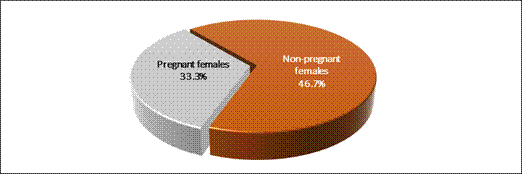
The pregnancy outcome at the end of the study was based on biochemical pregnancy test and the results showed that 23 females out of 69 succeeded in having positive pregnancy test making (Pregnancy Rate 33.3 %) while 46 females were not pregnant as shown in Figure (1).
Comparison of Serum and Follicular Fluid PAI-1 Levels between Pregnant and Non- Pregnant Female
The comparison of serum PAI-1 levels at the day of oocytes retrievals and follicular fluid PAI-1 levels at the day of oocytes retrievals between pregnant and non-pregnant females were demonstrated in Table (3). According to the findings there were significantly lower serum PAI-1 in pregnant females (5.41±0.88 vs. 6.95±0.56 & p=0.013); however, there was insignificantly lower follicular fluid PAI-1 in pregnant females (6.22±1.97 vs. 7.61±0.76 & p=0.115).
Serum Plasminogen Activator Inhibitor-1 Level in Females as a Predictor of Positive Pregnancy
In this study, the Receiver Operative Characteristic curve (ROC curve) showed invalid cut-off value of serum PAI-1 levels as a predictor of positive pregnancy with unacceptable low sensitivity, specificity area under the curve. The cut-off value was ≤5.52 ng/mL with low sensitivity and specificity (43.5% and 39.0% respectively) and very low area under the curve (AUC= 0.331) as presented in Table (4).
DISCUSSION
As shown in a Table (1). The serum results were in line with the normal value PAI-1 levels present in plasma at concentration (2-46 ng/mL). These findings are consistent with the findings obtained by [1,11].
Moreover, Zhang X et al. [16] agrees with this in terms of significant association between the PAI-1 levels and the risk of female infertility.
Table 1: Baseline characteristics of serum and follicular fluid PAI-1 levels
Parameters
Range
Mean ± SD
Serum PAI-1 (ng/mL)
3.47 – 16.62
6.12 ± 1.98
Follicular fluid PAI-1 (ng/mL)
1.09 – 16.88
6.77 ± 2.56
SD: Standard Deviation; PAI-1: Plasminogen activator inhibitor
Table 2: The Embryo characteristics of infertile females enrolled in this study.
Parameters
Range
Mean ±SD
Total Embryos
0 – 16
4.77±3.54
Grade I embryos
0 – 14
2.81±1.72
Grade II embryos
0 – 9
1.75±1.3
Grade III embryos
0 – 7
1.38±0.69
SD: Standard deviation; G: Grade
Table 3: Comparison of serum and follicular fluid PAI-1 levels between pregnant and non-pregnant females
Table 4: ROC curve characteristics of serum PAI-1 levels in females to predict positive pregnancy
ROC curve characteristics
Results
Cut off value
≤ 5.52 ng/mL
Area Under Curve (AUC)
0.331
Sensitivity
43.5 %
Specificity
39.0 %
Accuracy
41.2 %
Figure 1: Pie chart showing the frequency distribution of infertile females according to the results of biochemical pregnancy test (Pregnancy rate of females)
Figure 2: ROC curve representing the discriminatory ability of serum PAI-1 level to predict positive pregnancy
The Embryos Characteristics and Fertilization Rate (FR%) in Females in this Study
In Table (2). Astbury et al. [3] agree that obtaining oocyte with high quality was an important aspect that result in embryo with high quality and because there were approximate numbers of germinal vesical, MI and MII oocytes, there was no significant difference in the mean grade 1, 2 and 3 embryos between infertile female's groups.
Pregnancy Rate (PR) in Females Enrolled in the Present Study
As compared to the results of pregnancy rate (33.3 %) in this study, which is very approximately to the Hassan et al.study [6], a results published in which overall rate of pregnancy after ICSI was 32.3. In this study the result showed agreement with many previous studies which confirmed that human PAI-1 levels are very closely related to embryonic development and pregnancy success rates in pregnant females Chen et al. [4]. Additionally, all females who undergo to Antagonist protocol, which helps to increase the pregnancy rate, this was confirmed by a study according to Raheem et al. [9] which concluded that antagonist protocol associated with significantly higher positive pregnancy outcome in comparison with agonist protocol because of the anti-oxidant effect attributed to antagonist use Figure (1).
Comparison of Serum and Follicular Fluid PAI-1 levels between Pregnant and Non-Pregnant Female
As shown in the Table (4). The PAI-1 measured between pregnant and non-pregnant women and the corresponding linear rhythmic rise in serum PAI-1 levels is a key determinant of transfer embryos within the cycle. Therefore, periodicity in serum PAI-1 levels is a reliable predictive indicator for estimating the likelihood of a clinical pregnancy following an ICSI cycle.
Mechanism of Plasminogen Activator Inhubitor-1
Lower inhibitor (PAI-1) level observed at the time of is presumably necessary for active proteolysis of extracellular matrix components in order to prepare a “pocket” or “cavity” for the incoming embryo to implant. Thereafter, when the supposed ‘implantation window’ closes, persistence in proteolytic activity may cause hindrance in the development of implanted embryo. Therefore, the observed rise in PAI-1 levels at day7 and day14 may logically account for the protection of embryo and prevention of possible pathological invasion of embryo within uterus. The PAI-1 levels recorded continuous rise till the sixth week of gestation, is in tune with earlier reports of increase in serum PAI-1 levels with gestational age Mehta et al. [7].
The PAI-1 levels role through the trophoblast invasion when the fetal side of the human placenta mainly includes cytotrophoblasts and syncytiotrophoblasts, the sycytiotrophoblasts are differentiated and fused by cytotrophoblasts causing invasion of the maternal side and differentiate into extravillous interstitial trophoblasts, intermediate trophoblasts and endovascular trophoblasts. Among them, extravillous interstitial trophoblasts and endovascular trophoblasts express plasminogen activator inhibitor type 1 (PAI-1). Furthermore, cells from the maternal side take part in trophoblast invasion, such as endometrial stromal cells, decidual cells, macrophages and endothelial cells. Extravillous trophoblast invasion in early pregnancy is precisely controlled by many factors expressed by trophoblasts and maternal cells, where PAI-1 is the main anti-invasive factor. PAI-1 prevents trophoblast invasion by inhibiting extracellular matrix degradation, which leads to fibrin accumulation in the maternal side. PAI-1 can remodel maternal uterine spiral arteries Ye et al. [15].
CONCLUSION
The lower of PAI-1 level in blood serum at the retrieval day is a promising parameter to predict pregnancy of females undergoing ICSI cycles. Also, the follicular fluid PAI-1 levels at the retrieval day was insignificant in pregnant females.
Concentration of PAI-1 in serum and follicular fluid at the retrieval day are not correlated with the embryo grading.
REFERENCES
Abbassi-Ghanavati, M., et al. "Pregnancy and laboratory studies: A reference table for clinicians." Obstetrics & Gynecology, vol. 114, no. 6, 2009, pp. 1326–1331.
Agersnap, I., et al. "The role of plasminogen activator inhibitor type 1 (PAI-1) in placenta-mediated pregnancy complications: A systematic review." Seminars in Thrombosis and Hemostasis, vol. 48, no. 5, 2022, pp. 607–624.
Astbury, P., et al. "The presence of immature GV− stage oocytes during IVF/ICSI Is a marker of poor oocyte quality: A pilot study." Medical Sciences, vol. 8, no. 1, 2020, p. 4.
Chen, H., et al. "Association between plasminogen activator inhibitor‐1 gene polymorphisms and recurrent pregnancy loss: A systematic review and meta‐analysis." American Journal of Reproductive Immunology, vol. 73, no. 4, 2015, pp. 292–300.
Chimote, N.M. and B. Chimote. "P-695 Anti-Muellerian Hormone (AMH) and Plasminogen Activator Inhibitor (PAI-1) Are Robust Follicular-Fluid (FF) biomarkers predictive of follicle maturity and oocyte quality in women undergoing IVF cycles." Human Reproduction, vol. 37, suppl. 1, 2022, pp. deac107–644.
Hassan, N.A., et al. "Correlation among obesity, oocyte characteristics, embryo characteristics and maternal plasma folate level in a sample of iraqi women undergoing Intracytoplasmic Sperm Injection (ICSI)." Iraqi Journal of Embryos and Infertility Researches, vol. 10, no. 1, 2020, pp. 1–19.
Mehta, B.N., et al. "Periodicity in the levels of serum plasminogen activator inhibitor-1 is a robust prognostic factor for embryo implantation and clinical pregnancy in ongoing IVF cycles." Journal of Human Reproductive Sciences, vol. 7, no. 3, 2014, p. 198.
Pihusch, M., et al. "Plasminogen activator inhibitor-1: A review plasminogen-aktivator-inhibitor-1." Laboratoriums Medizin, vol. 29, no. 6, 2005, pp. 403–411.
Raheem, F.A., et al. "Assessment of oxidative stress changes in serum and follicular fluid in relevance to gnrh rival protocol in Iraqi infertile ladies undergoing ICSI." European Journal of Medical and Health Sciences, vol. 1, no. 5, 2019.
Silvestris, E., et al. "Obesity as disruptor of the female fertility." Reproductive Biology and Endocrinology, vol. 16, 2018, pp. 1–13.
Tjärnlund-Wolf, A., et al. "Plasminogen activator inhibitor-1 and thrombotic cerebrovascular diseases." Stroke, vol. 43, no. 10, 2012, pp. 2833–2839.
Van Heertum, K. and B. Rossi. "Alcohol and fertility: How much is too much?" Fertility Research and Practice, vol. 3, no. 1, 2017, pp. 1–7.
World Health Organization. World Health Organization Classification of Anovulation. WHO, 2022.
Zhang, X et al. "Study on follicular fluid metabolomics components at different ages based on lipid metabolism." Reproductive Biology and Endocrinology, vol. 18, no. 42, 2020.
Ye, Y., et al. "Role of plasminogen activator inhibitor type 1 in pathologies of female reproductive diseases." International Journal of Molecular Sciences, vol. 18, no. 8, 2017, p. 1651.
Zhang, X., et al. "Association between plasminogen activator inhibitor-1 (PAI-1) 4G/5G polymorphism and risk of Alzheimer's disease, Metabolic Syndrome and Female Infertility: A Meta-Analysis." Medicine, vol. 99, no. 50, 2020.
License
Creative Commons Attribution-NonCommercial-NoDerivatives 4.0 International License
All papers should be submitted electronically. All submitted manuscripts must be original work that is not under submission at another journal or under consideration for publication in another form, such as a monograph or chapter of a book. Authors of submitted papers are obligated not to submit their paper for publication elsewhere until an editorial decision is rendered on their submission. Further, authors of accepted papers are prohibited from publishing the results in other publications that appear before the paper is published in the Journal unless they receive approval for doing so from the Editor-In-Chief.
Himalayan Journal of Applied Medical Sciences and Research open access articles are licensed under a Creative Commons Attribution-Share A like 4.0 International License. This license lets the audience to give appropriate credit, provide a link to the license, and indicate if changes were made and if they remix, transform, or build upon the material, they must distribute contributions under the same license as the original.
Advertisement
Recommended Articles
Research Article
Evaluation of Serum Heat Shock Protein 70 as a Diagnostic Biomarker for Ectopic Pregnancy: A Comparative Case-Control Study
Hala Ahmed Atiya,
Ayla Khedher Ghalib
Published: 28/02/2026
Download PDF
Cite
x
APA
Atiya, H. A. & Ghalib, A. K. (2026). Evaluation of Serum Heat Shock Protein 70 as a Diagnostic Biomarker for Ectopic Pregnancy: A Comparative Case-Control Study. Himalayan Journal of Applied Medical Sciences and Research, 7(1), 1-5.
MLA
Atiya, Hala A. and Ayla K. Ghalib. "Evaluation of Serum Heat Shock Protein 70 as a Diagnostic Biomarker for Ectopic Pregnancy: A Comparative Case-Control Study." Himalayan Journal of Applied Medical Sciences and Research 7.1 (2026): 1-5.
Chicago
Atiya, Hala A. and Ayla K. Ghalib. "Evaluation of Serum Heat Shock Protein 70 as a Diagnostic Biomarker for Ectopic Pregnancy: A Comparative Case-Control Study." Himalayan Journal of Applied Medical Sciences and Research 7, no. 1 (2026): 1-5.
Harvard
Atiya, H. A. and Ghalib, A. K. (2026) 'Evaluation of Serum Heat Shock Protein 70 as a Diagnostic Biomarker for Ectopic Pregnancy: A Comparative Case-Control Study' Himalayan Journal of Applied Medical Sciences and Research 7(1), pp. 1-5.
Vancouver
Atiya HA, Ghalib AK. Evaluation of Serum Heat Shock Protein 70 as a Diagnostic Biomarker for Ectopic Pregnancy: A Comparative Case-Control Study. Himalayan Journal of Applied Medical Sciences and Research. 2026 Jan;7(1):1-5.
Download PDF
Research Article
Assessing First Trimester Maternal Serum Pentraxin-3 Levels in Primary Unexplained Recurrent Pregnancy Loss: A Case-Control Study
Raniah Ibrahim Khaleel Yaseen,
Israa Hashim Abdalkareem
Published: 28/02/2026
Download PDF
Cite
x
APA
Yaseen, R. I. K. & Abdalkareem, I. H. (2026). Assessing First Trimester Maternal Serum Pentraxin-3 Levels in Primary Unexplained Recurrent Pregnancy Loss: A Case-Control Study. Himalayan Journal of Applied Medical Sciences and Research, 7(1), 1-6.
MLA
Yaseen, Raniah I. K. and Israa H. Abdalkareem. "Assessing First Trimester Maternal Serum Pentraxin-3 Levels in Primary Unexplained Recurrent Pregnancy Loss: A Case-Control Study." Himalayan Journal of Applied Medical Sciences and Research 7.1 (2026): 1-6.
Chicago
Yaseen, Raniah I. K. and Israa H. Abdalkareem. "Assessing First Trimester Maternal Serum Pentraxin-3 Levels in Primary Unexplained Recurrent Pregnancy Loss: A Case-Control Study." Himalayan Journal of Applied Medical Sciences and Research 7, no. 1 (2026): 1-6.
Harvard
Yaseen, R. I. K. and Abdalkareem, I. H. (2026) 'Assessing First Trimester Maternal Serum Pentraxin-3 Levels in Primary Unexplained Recurrent Pregnancy Loss: A Case-Control Study' Himalayan Journal of Applied Medical Sciences and Research 7(1), pp. 1-6.
Vancouver
Yaseen RIK, Abdalkareem IH. Assessing First Trimester Maternal Serum Pentraxin-3 Levels in Primary Unexplained Recurrent Pregnancy Loss: A Case-Control Study. Himalayan Journal of Applied Medical Sciences and Research. 2026 Jan;7(1):1-6.
Download PDF
Research Article
Patent Ductus Arteriosus Medical Closure and Associated Co-morbidities in Premature Infants in Sulaymaniyah Neonatal Intensive Care Unit
Adil Ali Zainel,
...
Mustafa Elias Abdulqader3
Published: 28/02/2026
Download PDF
Cite
x
APA
Zainel, A. A., Rasheed, S. R. & Abdulqader3, M. E. (2026). Patent Ductus Arteriosus Medical Closure and Associated Co-morbidities in Premature Infants in Sulaymaniyah Neonatal Intensive Care Unit. Himalayan Journal of Applied Medical Sciences and Research, 7(1), 1-5.
MLA
Zainel, Adil A., Sirwa R. Rasheed and Mustafa E. Abdulqader3. "Patent Ductus Arteriosus Medical Closure and Associated Co-morbidities in Premature Infants in Sulaymaniyah Neonatal Intensive Care Unit." Himalayan Journal of Applied Medical Sciences and Research 7.1 (2026): 1-5.
Chicago
Zainel, Adil A., Sirwa R. Rasheed and Mustafa E. Abdulqader3. "Patent Ductus Arteriosus Medical Closure and Associated Co-morbidities in Premature Infants in Sulaymaniyah Neonatal Intensive Care Unit." Himalayan Journal of Applied Medical Sciences and Research 7, no. 1 (2026): 1-5.
Harvard
Zainel, A. A., Rasheed, S. R. and Abdulqader3, M. E. (2026) 'Patent Ductus Arteriosus Medical Closure and Associated Co-morbidities in Premature Infants in Sulaymaniyah Neonatal Intensive Care Unit' Himalayan Journal of Applied Medical Sciences and Research 7(1), pp. 1-5.
Vancouver
Zainel AA, Rasheed SR, Abdulqader3 ME. Patent Ductus Arteriosus Medical Closure and Associated Co-morbidities in Premature Infants in Sulaymaniyah Neonatal Intensive Care Unit. Himalayan Journal of Applied Medical Sciences and Research. 2026 Jan;7(1):1-5.
Download PDF
Research Article
Bones in Balance: Awareness of Rickets and Nutritional Deficiencies Among the Hamirpur Community
Vishal Dhatwalia,
Swati Chandel
Published: 10/12/2024
Download PDF
Cite
x
APA
Dhatwalia, V. & Chandel, S. (2024). Bones in Balance: Awareness of Rickets and Nutritional Deficiencies Among the Hamirpur Community. Himalayan Journal of Applied Medical Sciences and Research, 5(2), 1-5.
MLA
Dhatwalia, Vishal and Swati Chandel. "Bones in Balance: Awareness of Rickets and Nutritional Deficiencies Among the Hamirpur Community." Himalayan Journal of Applied Medical Sciences and Research 5.2 (2024): 1-5.
Chicago
Dhatwalia, Vishal and Swati Chandel. "Bones in Balance: Awareness of Rickets and Nutritional Deficiencies Among the Hamirpur Community." Himalayan Journal of Applied Medical Sciences and Research 5, no. 2 (2024): 1-5.
Harvard
Dhatwalia, V. and Chandel, S. (2024) 'Bones in Balance: Awareness of Rickets and Nutritional Deficiencies Among the Hamirpur Community' Himalayan Journal of Applied Medical Sciences and Research 5(2), pp. 1-5.
Vancouver
Dhatwalia V, Chandel S. Bones in Balance: Awareness of Rickets and Nutritional Deficiencies Among the Hamirpur Community. Himalayan Journal of Applied Medical Sciences and Research. 2024 Jul;5(2):1-5.
F. Alwan, S., A.L. Mossa, H. & A.R. Al Saadi, R. (2023). Evaluation of Plasminogen Activator Inhibitor-1 (PAI-1) Levels in Blood Serum and Follicular Fluid (Predictive Marker) and its effect on Embryo quality in Iraqi Infertile Females Undergoing ICSI Protocol. Himalayan Journal of Applied Medical Sciences and Research, 4(2), 1-5.
MLA
F. Alwan, Samhar, Hayder A.L. Mossa and Rana A.R. Al Saadi. "Evaluation of Plasminogen Activator Inhibitor-1 (PAI-1) Levels in Blood Serum and Follicular Fluid (Predictive Marker) and its effect on Embryo quality in Iraqi Infertile Females Undergoing ICSI Protocol." Himalayan Journal of Applied Medical Sciences and Research 4.2 (2023): 1-5.
Chicago
F. Alwan, Samhar, Hayder A.L. Mossa and Rana A.R. Al Saadi. "Evaluation of Plasminogen Activator Inhibitor-1 (PAI-1) Levels in Blood Serum and Follicular Fluid (Predictive Marker) and its effect on Embryo quality in Iraqi Infertile Females Undergoing ICSI Protocol." Himalayan Journal of Applied Medical Sciences and Research 4, no. 2 (2023): 1-5.
Harvard
F. Alwan, S., A.L. Mossa, H. and A.R. Al Saadi, R. (2023) 'Evaluation of Plasminogen Activator Inhibitor-1 (PAI-1) Levels in Blood Serum and Follicular Fluid (Predictive Marker) and its effect on Embryo quality in Iraqi Infertile Females Undergoing ICSI Protocol' Himalayan Journal of Applied Medical Sciences and Research 4(2), pp. 1-5.
Vancouver
F. Alwan S, A.L. Mossa H, A.R. Al Saadi R. Evaluation of Plasminogen Activator Inhibitor-1 (PAI-1) Levels in Blood Serum and Follicular Fluid (Predictive Marker) and its effect on Embryo quality in Iraqi Infertile Females Undergoing ICSI Protocol. Himalayan Journal of Applied Medical Sciences and Research. 2023 Jul;4(2):1-5.



 Download PDF
 Download XML