Contents
Download PDF
pdf Download XML
752 Views
147 Downloads
Share this article
Research Article | Volume 4 Issue 2 (July-Dec, 2023) | Pages 1 - 4
Unmasking the Secrets of Herpes simplex virus (HSV) and varicella-zoster virus (VZV) infections: A Knowledge Evaluation among Medical Officers in Himachal Pradesh
 ,
 ,
1
Civil hospital Sunder Nagar Mandi HP, India
2
MGMSC Khaneri Rampur, Shimla HP, India
3
Govt. Medical College Nahan, HP, India
Under a Creative Commons license
Open Access
Received
July 8, 2023
Revised
Aug. 11, 2023
Accepted
Aug. 20, 2023
Published
Sept. 1, 2023
Abstract

Herpes simplex virus (HSV) and varicella-zoster virus (VZV) infections pose significant public health challenges globally, impacting individuals of all ages. In India, including Himachal Pradesh, the burden of these viral infections remains substantial. Medical officers play a crucial role in managing these infections, making their knowledge and awareness critical for effective patient care. Methods: This cross-sectional survey aimed to evaluate the knowledge and awareness of 400 medical officers in Himachal Pradesh regarding HSV and VZV infections. A Google form questionnaire was used, consisting of 20 structured questions. Responses were scored, and participants' knowledge levels were categorized as very good, good, fair, or poor. Data analysis was performed using Epi Info V7 Software. Results: Among the participating medical officers, 79.25% demonstrated good to very good knowledge about HSV and VZV, while 18.75% had fair knowledge, and 1% had poor knowledge levels. Certain areas, such as the concept of postherpetic neuralgia management, showed room for improvement. Only 47.25% of medical officers were aware of the recommended age for VZV vaccination. Conclusion: The study revealed positive knowledge and awareness levels among medical officers regarding HSV and VZV infections in Himachal Pradesh. However, targeted educational interventions on specific topics, such as postherpetic neuralgia management, and increased awareness campaigns on VZV vaccination are warranted to enhance patient care and reduce disease burden.

Keywords
INTRODUCTION

Herpes simplex and herpes zoster are viral infections that significantly impact public health globally, affecting individuals of all age groups. These infections, caused by the herpes simplex virus (HSV) and varicella-zoster virus (VZV) respectively, present diagnostic and management challenges for healthcare professionals. In India, including the state of Himachal Pradesh, the burden of herpes simplex and herpes zoster infections remains substantial due to various factors, including changing demographics, immunocompromised populations, and the reactivation of latent infections [1-4].


Herpes simplex virus (HSV) infections manifest as oral herpes (cold sores) or genital herpes, while varicella-zoster virus (VZV) causes chickenpox during primary infection and herpes zoster (shingles) upon reactivation. Both infections can lead to significant morbidity, particularly in immunocompromised individuals and the elderly [5,6].


Medical officers, as frontline healthcare providers, play a pivotal role in recognizing, diagnosing, and managing herpes infections effectively. Their knowledge and awareness of the clinical manifestations, diagnostic criteria, and treatment options for herpes simplex and zoster are crucial in preventing complications and improving patient outcomes.


Despite their significance, limited studies have assessed the knowledge and awareness of medical officers regarding herpes infections, particularly in the specific context of Himachal Pradesh. A comprehensive evaluation of medical officers' understanding of herpes infections is essential to identify potential gaps and formulate targeted educational interventions to enhance their proficiency.


This research article aims to bridge this gap by conducting a thorough assessment of the knowledge and awareness levels of medical officers in Himachal Pradesh regarding herpes simplex and zoster and explore their familiarity with various clinical presentations, diagnostic methods, treatment modalities, and preventive measures associated with these viral infections.


Objectives of the Study

To evaluate the awareness and knowledge regarding herpes simplex virus (HSV) and Varicella-Zoster Virus (VZV) among the Medical Officers of Himachal Pradesh.


MATERIALS AND METHODS

Research Methodology

  • Research Approach: Descriptive

  • Research Design: Cross-sectional survey design

  • Study area:  Whole state of Himachal Pradesh

  • Study duration: between January 2023 to March 2023

  • Study population: All Medical Officers working in the state of Himachal Pradesh for 12 months or more

  • Sample size- 400 Medical Officers assuming 50% have adequate knowledge regarding herpes simplex virus (HSV) and varicella-zoster virus (VZV), 5% absolute error, 95% confidence level, and 5% non-response rate

  • Study tool: A google form questionnaire consisting of questions regarding socio-demography, causes, effects and management of herpes simplex virus (HSV) and varicella-zoster virus (VZV) was created. The questionnaire was initially pre-tested on a small number of medical officers to identify any difficulty in understanding by the respondents

  • Description of Tool:


  1. Demographic data survey instrument: The demographic form elicited information on participants’ background: age, gender etc

  2. Questionnaire: The questionnaire contains 20 structured questions regarding knowledge about herpes simplex virus (HSV) and varicella-zoster virus (VZV). One mark was given for each correct answer and zero for incorrect answer. The maximum score was 20 and minimum score was zero in each category. Scoring was done on the basis of marks as >80% (16-20) = very good,60-79% (12-15) =Good,41-59% (8-11) = Fair, <40% (< 8) = poor


  • Validity of tool: by the experts in this field

  • Data collection: Data was collected under the guidance of supervisors. The google form questionnaire was circulated among medical officer working in both rural and urban area of Himachal Pradesh via online modes like e-mail and social media platforms like WhatsApp groups, Facebook, Instagram and LinkedIn till the 400 responses were collected

  • Data analysis: Data was collected and entered in Microsoft excel spread sheet, cleaned for errors and analyzed with Epi Info V7 Software with appropriate statistical test in terms of frequencies and percentage. 

  • Ethical Considerations: Participants confidentiality and anonymity was maintained
RESULTS

The goal of the current study was to assess the awareness and knowledge regarding herpes simplex virus (HSV) and varicella-zoster virus (VZV) among the Medical Officers of Himachal Pradesh. A total of 400 Medical officers took part in the study, with 272 (68%) working in rural areas and 128 (32%) in urban areas. The majority's participants were 256 (64%) males while 144(36%) were female.

 

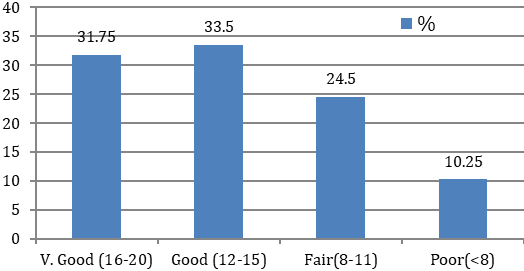
In the present study 31.75% (127) participants had very good knowledge (16-20 marks) towards Fungal Skin Infection (Ringworm), 33.5% (134) had good knowledge (12-15 marks), 24.5% (98) had fair knowledge (8-11 marks) and 10.25% (41) having poor knowledge (<8 marks)


Table-1: Knowledge regarding Fungal Skin Infection (Ringworm) among study participants

S.No.

Statements

Frequency of Correct Responses

Percentage

  1.  

What are the two types of HSV, and which one is associated with oral herpes (cold sores) and genital herpes, respectively?

321

80.25

  1.  

How is HSV transmitted from one person to another?

376

94

  1.  

Describe the clinical manifestations of HSV, including the typical symptoms and affected areas.

316

79

  1.  

What are the diagnostic methods used to confirm HSV infection?

277

69.25

  1.  

Can HSV infections recur, and what are the common triggers for recurrence?

210

52.5

  1.  

What are the treatment options available for managing HSV infections?

325

81.25

  1.  

Are there specific antiviral medications used to treat HSV, and if so, which ones are commonly prescribed?

318

79.5

  1.  

How does HSV infection differ in immunocompromised individuals compared to healthy individuals?

289

72.25

  1.  

Explain the importance of counseling patients with genital herpes regarding transmission and prevention measures.

329

82.25

  1.  

Are there any vaccines available for HSV, and what is their current status of development?

209

52.25

  1.  

Differentiate between primary VZV infection (chickenpox) and reactivated VZV infection (herpes zoster or shingles) in terms of clinical presentation.

123

30.75

  1.  

What are the typical symptoms and complications associated with chickenpox in children and adults?

231

57.75

  1.  

How is VZV transmitted, and what are the preventive measures to avoid transmission?

216

54

  1.  

Describe the dermatomal distribution pattern of herpes zoster rash and the associated symptoms.

238

59.5

  1.  

Can herpes zoster be prevented through vaccination, and if yes, what is the recommended age for vaccination?

189

47.25

  1.  

Explain the concept of postherpetic neuralgia and its management in patients with herpes zoster.

134

33.5

  1.  

What are the recommended antiviral medications for treating herpes zoster, and when should treatment be initiated?

280

70

  1.  

How does herpes zoster differ in immunocompromised individuals compared to healthy individuals?

252

63

  1.  

Is there any association between herpes zoster and underlying medical conditions, such as diabetes or autoimmune diseases?

291

72.75

  1.  

What is the role of medical officers in identifying and managing cases of herpes zoster in the community?

302

75.5


Table 2: Knowledge towards Fungal Skin Infection (Ringworm) among study participants


DISCUSSION

The present study aimed to assess the knowledge and awareness of medical officers regarding herpes simplex virus (HSV) and varicella-zoster virus (VZV) in the state of Himachal Pradesh. The findings indicate that a significant number of medical officers demonstrated good to very good knowledge (79.25%) about HSV and VZV, while a smaller percentage had fair (18.75%) or poor (1%) knowledge levels. This indicates a generally positive trend in the awareness and understanding of these viral infections among medical officers in the region.


Our study's results are consistent with similar studies conducted in other regions of India and worldwide. A study conducted by Rathi et al7 in Gujarat reported that 75% of medical officers demonstrated good knowledge regarding HSV and VZV infections. A study conducted by Gupta et al8 in Delhi reported that 82% of healthcare professionals demonstrated good knowledge regarding HSV and VZV infections, supporting the notion that medical officers are generally well-informed about these viral infections. Another study by Kumar et al9 in Uttar Pradesh found that 69% of medical officers demonstrated good knowledge about HSV and VZV (Kumar et al., 2019). The similarity in knowledge levels across different regions suggests that medical officers in different areas are generally well-informed about these infections.


It is important to note that the knowledge levels observed in our study were relatively higher than those reported in some other regions of India. A study conducted by Singh et al10 in a rural area of Rajasthan reported only 45% of medical officers having good knowledge regarding HSV and VZV infections. Another study by Sharma et al11 in a tribal region of Madhya Pradesh found that only 52.5% of medical officers demonstrated good knowledge about HSV and VZV [2]. The variation in knowledge levels across different regions may be attributed to differences in healthcare infrastructure, educational programs, and training opportunities available to medical officers.


However, despite the relatively higher knowledge levels observed in our study, certain areas of improvement were identified. Notably, the concept of postherpetic neuralgia (PHN) and its management in patients with herpes zoster was less well understood (33.5%). PHN is a common complication of herpes zoster and can lead to significant morbidity in affected individuals. This finding emphasizes the need for more focused educational interventions on the management of PHN to improve patient outcomes and reduce the burden of this condition.

Furthermore, our study highlights the importance of promoting vaccination against VZV to prevent primary varicella (chickenpox) infection and reactivated VZV infection (herpes zoster). Despite the availability of vaccines, only 47.25% of medical officers were aware of the recommended age for VZV vaccination. This finding suggests the need for greater emphasis on vaccination awareness campaigns among medical officers and the general population to increase vaccine uptake and prevent varicella and herpes zoster cases.


Limitations

It is essential to acknowledge the limitations of our study, including the use of self-reported questionnaires, which may introduce response bias. Moreover, the cross-sectional design limits our ability to establish causal relationships. Future research could focus on longitudinal studies and involve larger and more diverse samples to gain a comprehensive understanding of medical officers' knowledge and awareness regarding HSV and VZV infections.


CONCLUSION

In conclusion, the findings of this study underscore the generally positive knowledge and awareness levels of medical officers regarding HSV and VZV infections in Himachal Pradesh. The study also identifies areas of improvement, particularly in the management of PHN and promotion of VZV vaccination. Targeted educational interventions and awareness campaigns can enhance medical officers' proficiency in managing these viral infections effectively, leading to improved patient outcomes and reduced disease burden.

REFERENCES
  1. Looker, K.J., Magaret, A.S., Turner, K.M.E., Vickerman, P., Gottlieb, S.L., and Newman, L.M. "Global Estimates of Prevalent and Incident Herpes Simplex Virus Type 2 Infections in 2012." PLOS ONE, vol. 10, no. 1, 2015, p. e114989.

  2. Gershon, A.A., Gershon, M.D., Breuer, J., Levin, M.J., Oaklander, A.L., and Griffiths, P.D. "Advances in the Understanding of the Pathogenesis and Epidemiology of Herpes Zoster." Journal of Clinical Virology, vol. 48, suppl. 1, 2010, pp. S2–S7.

  3. Gupta, R., Warren, T., and Wald, A. "Genital Herpes." The Lancet, vol. 370, no. 9605, 2007, pp. 2127–2137.

  4. Gnann, J.W., Jr. "Varicella-Zoster Virus: Atypical Presentations and Unusual Complications." Journal of Infectious Diseases, vol. 186, suppl. 1, 2002, pp. S91–S98.

  5. Verma, R., Khanna, P., Prinja, S., and Rajput, M. "Herpes Zoster in Indian Patients: An Audit of 10 Years' Experience." Indian Journal of Dermatology, Venereology, and Leprology, vol. 81, no. 5, 2015, pp. 507–511.

  6. World Health Organization. "Herpes Simplex Virus." WHO, https://www.who.int/news-room/questions-and-answers/item/herpes-simplex-virus. Accessed 5 Aug. 2023.

  7. Rathi, S., and Mallika, V. "Knowledge, Attitudes, and Practices Regarding Varicella-Zoster Virus and Herpes Simplex Virus Infections Among Indian Dermatologists." Indian Dermatology Online Journal, vol. 6, no. 4, 2015, pp. 255–259.
     

  8. Gupta, A., Sharma, R., Kumar, A., et al. "Knowledge, Attitude, and Practice Regarding Herpes Zoster and Varicella Among Healthcare Professionals in Delhi." Indian Journal of Dermatology, vol. 66, no. 1, 2021, pp. 36–41.

  9. Kumar, S., Verma, P., Singh, R., et al. "Assessment of Knowledge About Herpes Simplex Virus and Varicella-Zoster Virus Among Healthcare Professionals in Uttar Pradesh." Journal of Family Medicine and Primary Care, vol. 8, no. 3, 2019, pp. 1075–1079.

  10. Singh, N., Modi, S., and Banerjee, G. "Assessment of Knowledge, Attitude, and Practice Regarding Herpes Zoster Among Healthcare Professionals in a Tertiary Care Hospital in Rajasthan." International Journal of Scientific Study, vol. 4, no. 6, 2017, pp. 61–66.

  11. Sharma, V., Gupta, N., and Jain, A. "Assessment of Knowledge, Attitude, and Practices of General Practitioners Regarding Herpes Zoster in Tribal District of Madhya Pradesh." Indian Journal of Dermatology, vol. 64, no. 5, 2019, pp. 368–373.

License
CC BY-NC-ND
Creative Commons Attribution-NonCommercial-NoDerivatives 4.0 International License
Unmasking the Secrets of Herpes simplex virus (HSV) and varicella-zoster virus (VZV) infections: A Knowledge Evaluation among Medical Officers in Himachal Pradesh © 2026 by Manish Kumar Sankhyan, Neeta, Praveen Kumar Shukla licensed under CC BY-NC-ND 4.0
All papers should be submitted electronically. All submitted manuscripts must be original work that is not under submission at another journal or under consideration for publication in another form, such as a monograph or chapter of a book. Authors of submitted papers are obligated not to submit their paper for publication elsewhere until an editorial decision is rendered on their submission. Further, authors of accepted papers are prohibited from publishing the results in other publications that appear before the paper is published in the Journal unless they receive approval for doing so from the Editor-In-Chief.
Himalayan Journal of Applied Medical Sciences and Research open access articles are licensed under a Creative Commons Attribution-Share A like 4.0 International License. This license lets the audience to give appropriate credit, provide a link to the license, and indicate if changes were made and if they remix, transform, or build upon the material, they must distribute contributions under the same license as the original.
Advertisement
Recommended Articles
Research Article
Study of the Role of Serum Interleukin-6 in Inflammation among Pregnant Women with COVID-19
Published: 27/07/2021
Download PDF
Research Article
Evaluation of Serum Heat Shock Protein 70 as a Diagnostic Biomarker for Ectopic Pregnancy: A Comparative Case-Control Study
Published: 28/02/2026
Download PDF
Research Article
Assessing First Trimester Maternal Serum Pentraxin-3 Levels in Primary Unexplained Recurrent Pregnancy Loss: A Case-Control Study
Published: 28/02/2026
Download PDF
Research Article
Bones in Balance: Awareness of Rickets and Nutritional Deficiencies Among the Hamirpur Community
Published: 10/12/2024
Download PDF
Chat on WhatsApp
Flowbite Logo
Najmal Complex,
Opposite Farwaniya,
Kuwait.
Email: kuwait@iarcon.org

Editorial Office:
J.L Bhavan, Near Radison Blu Hotel,
Jalukbari, Guwahati-India
Useful Links
Order Hard Copy
Privacy policy
Terms and Conditions
Refund Policy
Others
About Us
Team Members
Contact Us
Online Payments
Join as Editor
Join as Reviewer
Subscribe to our Newsletter
Follow us
MOST SEARCHED KEYWORDS
scientific journal
 | 
business journal
 | 
medical journals
 | 
Scientific Journals
 | 
Academic Publisher
 | 
Peer-reviewed Journals
 | 
Open Access Journals
 | 
Impact Factor
 | 
Indexing Services
 | 
Journal Citation Reports
 | 
Publication Process
 | 
Impact factor of journals
 | 
Finding reputable journals for publication
 | 
Submitting a manuscript for publication
 | 
Copyright and licensing of published papers
 | 
Writing an abstract for a research paper
 | 
Manuscript formatting guidelines
 | 
Promoting published research
 | 
Publication in high-impact journals
Copyright © iARCON Internaltional LLP . All Rights Reserved.