Contents
Download PDF
pdf Download XML
314 Views
49 Downloads
Share this article
Research Article | Volume 7 Issue 1 (January-June, 2026) | Pages 1 - 7
Second Trimester Biochemical Markers (HCG and AFP) for Evaluation of Pathological Placentation
 ,
1
Department of Obstetrics and Gynecology, Tikrit Teaching Hospital, Salahaldeen, Iraq
2
M.B.Ch.B., F.I.C.O.G. Department of Obstetrics and Gynecology, College of Medicine, Tikrit University, Salahaldeen, Iraq
Under a Creative Commons license
Open Access
Received
Nov. 3, 2025
Revised
Nov. 22, 2025
Accepted
Dec. 19, 2025
Published
Jan. 3, 2026
Abstract

Into the uterine wall, or both. It encompasses conditions such as placenta accreta (PA) and placenta previa (PP), which are associated with significant maternal and neonatal morbidity. Aim: This study aimed to assess the association between second-trimester levels of serum human chorionic gonadotropin (hCG) and alpha-fetoprotein (AFP), measured between 24 and 30+6 weeks of gestation, and the prediction of pathological placentation. Patients and Methods: This prospective case-control study was conducted in Tikrit City from 1st of December 2023, to 1st of september 2024. Ninety pregnant women with singleton gestations who delivered at Tikrit Teaching Hospital and had complete documentation of second-trimester serum screening results were included. Participants underwent maternal serum biochemical screening between the 24 and 30+6 weeks of gestation. The study cohort was divided into two groups: women with pathological placentation (n=60: PA=30, PP=30) and a control group with normal placentation (n=30), matched for gestational age, parity, and history of cesarean sections. Exclusion criteria included multiple gestations, incomplete data, fetal anomalies, and maternal comorbidities. Maternal serum levels of AFP and hCG were measured using time-resolved fluorescence immunoassay. Results: Women with pathological placentation were older (mean age 35.2±5.6 years) compared to the control group (31.7±4.9 years, p = 0.007). Differences were observed in the indications for cesarean delivery, with higher incidences of placenta previa (41.67% vs. 3.33%, p = 0.005) and low-lying placenta (5% vs. 0%, p = 0.041) in the pathological group, while prolonged second-stage labor was more common in the control group (0% vs. 16.67%, p = 0.015). Women with pathological placentation had higher rates of hysterectomy (5% vs. 0%, p = 0.004), blood transfusions (28.33% vs. 3.33%, p<0.001), anemia (41.67% vs. 3.33%, p<0.001), and postpartum hemorrhage (PPH) (28.33% vs. 3.33%, p<0.001). Neonates of these women had higher rates of NICU admissions (60% vs. 16.67%, p = 0.04) and transient tachypnea of the newborn (TTN) (16.67% vs. 6.67%, p = 0.045). Elevated levels of AFP (1.25±0.30 vs. 1.10±0.28) and hCG (1.45±0.52 vs. 0.98±0.36) were significantly associated with pathological placentation. Logistic regression analysis indicated that lower AFP and hCG values at the 25th percentile significantly reduced the risk of pathological placentation, whereas higher hCG values at the 75th percentile significantly increased the risk (adjusted OR: 2.31, p = 0.001). ROC curve analysis demonstrated moderate diagnostic accuracy with an area under the curve (AUC) of 0.580 for AFP, 0.670 for hCG, and 0.675 for the combined markers. Conclusion: Elevated serum levels of hCG and AFP in the second trimester are significantly associated with pathological placentation, particularly in cases of placenta previa and accreta. Combined assessment of these markers provides moderate diagnostic accuracy for predicting pathological placentation. These findings suggest the potential use of hCG and AFP as part of a screening strategy to identify women at risk for pathological placentation, allowing for tailored management and improved maternal and neonatal outcomes.

Keywords
INTRODUCTION

Pathological placentation represents a major obstetric challenge and is a leading cause of maternal and perinatal morbidity and mortality worldwide. Normal placentation depends on tightly regulated trophoblast differentiation, invasion, vascular remodeling, and placental endocrine activity. Disruption of these processes can result in a spectrum of placental disorders, including placenta previa, placenta accreta spectrum (PAS), placental abruption, fetal growth restriction, and hypertensive disorders of pregnancy. Early identification of pregnancies at risk for abnormal placentation remains a critical objective in modern obstetrics, as timely diagnosis allows appropriate surveillance, referral, and peripartum planning to reduce adverse outcomes [1-3]. The human placenta is a discoidal organ that facilitates maternal–fetal exchange through highly specialized villous structures bathed in maternal blood. Its functional unit consists of chorionic villi lined by trophoblast, forming a haemomonochorial barrier that allows efficient transport of gases, nutrients, hormones, and waste products [1-2]. Placental development begins in early gestation with trophoblast differentiation and invasion into the decidua, followed by formation of villous trees and establishment of uteroplacental circulation. During the first trimester, histiotrophic nutrition predominates, while from the second trimester onward, haemotrophic exchange becomes the primary mode of fetal support [3-4]. Any disturbance in these developmental stages may impair placental implantation or vascular remodeling, predisposing to pathological placentation. The placenta is not merely a passive exchange interface but an active endocrine and metabolic organ. It consumes a substantial proportion of maternal oxygen and glucose delivery and produces a wide array of hormones essential for pregnancy maintenance, fetal growth, and maternal adaptation [5-7]. Among these hormones, human chorionic gonadotropin (hCG) plays a central role in early pregnancy by maintaining corpus luteum function and promoting progesterone production. Beyond its luteotropic effect, hCG regulates trophoblast differentiation, invasion, angiogenesis, and immune tolerance at the maternal–fetal interface [8-9]. Alterations in hCG production or bioactivity may therefore reflect abnormal placental development. Alpha-fetoprotein (AFP) is another key biochemical marker synthesized initially by the yolk sac and later predominantly by the fetal liver. AFP is transported into the maternal circulation via the placenta and fetal membranes, making maternal serum AFP (MS-AFP) a well-established second-trimester screening marker [10-11]. Traditionally, MS-AFP has been used for the detection of open neural tube defects and certain chromosomal abnormalities. However, accumulating evidence suggests that unexplained elevations in second-trimester MS-AFP may also reflect placental pathology, particularly disorders associated with abnormal placental adherence or vascular damage [12-14].


Pathological placentation is characterized by defective decasualization and abnormal trophoblast invasion. In placenta previa, implantation occurs in the lower uterine segment, increasing the risk of antepartum hemorrhage and adverse perinatal outcomes. More severe forms, grouped under the placenta accreta spectrum, involve abnormal adherence of chorionic villi to the myometrium due to partial or complete absence of the decidua basalis. These conditions are associated with massive obstetric hemorrhage, need for peripartum hysterectomy, and increased maternal mortality [1-3]. Despite advances in ultrasound and magnetic resonance imaging, a significant proportion of cases remain undiagnosed antenatally, underscoring the need for adjunctive biomarkers. Second-trimester biochemical markers offer a practical, widely available, and relatively inexpensive approach for risk stratification. During mid-gestation, placental mass, vascularity, and endocrine activity increase substantially. Deviations in maternal serum concentrations of placental-derived proteins during this period may therefore signal abnormal placental implantation or function. Elevated hCG levels in the second trimester have been associated with placental dysfunction, fetal aneuploidy, and adverse pregnancy outcomes, suggesting that altered trophoblastic activity persists beyond early gestation [8,9]. Similarly, increased MS-AFP levels may reflect enhanced leakage of fetal proteins into maternal circulation secondary to placental vascular disruption or abnormal placental adherence [12-14]. From a pathophysiological perspective, abnormal placentation shares features with invasive processes observed in malignancy, including dysregulated cell invasion, angiogenesis, and immune modulation. Both hCG and AFP are closely linked to trophoblast biology and placental integrity. HCG acts as an autocrine and paracrine regulator of trophoblast differentiation and syncytialization, while AFP levels may rise in response to increased placental permeability or tissue injury [9-14]. Thus, combined assessment of these markers may enhance the prediction of pathological placentation compared with imaging alone. The second trimester represents an optimal window for biochemical screening, as placental development has progressed sufficiently for abnormalities to manifest, while clinical complications may not yet be apparent. Identifying high-risk pregnancies during this stage allows referral to tertiary centers, multidisciplinary planning, and individualized timing and mode of delivery. Importantly, both hCG and AFP assays are already integrated into routine prenatal screening programs, facilitating potential translation into clinical practice without substantial additional cost or infrastructure [10,13]. In light of these considerations, evaluating second-trimester serum hCG and AFP as predictors of pathological placentation is of significant clinical relevance. Understanding the association between abnormal levels of these markers and placental disorders may improve antenatal detection, optimize maternal and fetal outcomes, and reduce the burden of obstetric morbidity. Therefore, this study aims to assess the relationship between second-trimester maternal serum hCG and AFP levels, measured between 24 and 30+6 weeks of gestation, and the risk of pathological placentation. The aim of this study was to assess the association between 2nd trimester level of serum hCG and serum AFP measured between 24-30+6 weeks of gestation in predicting pathological placentation.


Pateints and Methods

This Prospective Case-Control study was conducted in Tikrit City from the period: 1st of December 2023 to 1st of September 2024.


Inclusion Criteria

The study included 90 pregnant women with singleton gestations who delivered at Tikrit Teaching Hospital and had complete documentation of second-trimester serum screening results. Eligible participants were those who underwent maternal serum biochemical screening between the 24 and 30+6 weeks of gestation. The study cohort was divided into the following groups:


Women with Pathological Presentation (n:60)


  • Women diagnosed with Placenta Accreta (PA) (n:30)

  • Women diagnosed with Placenta Previa (PP) (n:30)


Control Group

Women with normal placentation (n:30). Controls were matched with cases based on gestational age at delivery, parity, and history of previous cesarean sections.


Exclusion Criteria


  • Multiple gestations (e.g., twins, triplets)

  • Women with incomplete or missing serum screening data

  • Presence of congenital anomalies or chromosomal abnormalities in the fetus

  • Women with other significant comorbidities that could independently affect pregnancy outcomes (e.g., pre-eclampsia, chronic hypertension, diabetes mellitus)

  • Cases where gestational age could not be accurately determined due to lack of reliable last menstrual period data or ultrasound confirmation

  • History of maternal conditions that affect placental function unrelated to pathological placentation, such as thrombophilias or autoimmune disorders (systemic lupus erythematous)


Administrative Approvals were Granted from the Following


  • Scientific council of obstetrics and gynecology / iraqi board for medical specialization

  • Authorization for the study was granted by the Director of the Tikrit Health Directorate 

  • All participants were interviewed using a questionnaire developed by the investigator to collect relevant data


Data collection

Data were retrieved from the comprehensive computerized perinatal database of the obstetric division and the ambulatory database. Each patient was assigned a unique identification number to ensure accurate cross-tabulation of data. Collected data included maternal demographics (e.g., age), obstetric parameters (e.g., parity), risk factors for pathological placentation (e.g., history of previous uterine surgical procedures), maternal and neonatal outcomes (e.g., hysterectomy, NICU admission), and values of second-trimester biochemical markers (AFP and hCG).


MATERIALS AND METHODS

Placenta Accreta (PA)


  • Dianosis based on ultrasound features in women with high risk factors (history of previous caesarean section, anterior low-lying placenta or placenta previa) at routine fetal anomaly scan screened placenta accreta spectrum and used magnetic resonance imaging (MRI) assess depth of invasion and lateral extension of myometrial invasion

  •  Diagnosed based on partial or total failure of manual removal of the placenta with no cleavage plane between the placenta and the uterine wall, confirmed by intraoperative findings and histological examination of hysterectomy specimens


Placenta Previa (PP)


  • Diagnosis based on transabominal ultrasound and transvaginal ultrasound done at 20 to 24 weeks of pregnancy for patient with risk factor, if there is persistent low-lying placenta and placenta previa at 32 weeks additional scan done at 36 weeks of pregnancy

  • Diagnosis based on ultrasound imaging showing partial or total coverage of the internal cervical os by the placenta by ultrasound after 32 weeks of gestation or confirmation during cesarean delivery


Blood Sampling and Tests

All participants underwent second-trimester maternal serum biochemical screening between 24-30+6 weeks of gestation. The biochemical markers measured included Alpha-fetoprotein (ichroma, Korea) and human chorionic gonadotropin (ichroma, Korea). Maternal serum samples stored (-20 ºC) untile laboratoy analyzing using immunofluorescence technique instrument (ichroma immunofluorescence, Korea), and results were adjusted for gestational age, maternal weight, and other factors to produce MoM values.


Statistical Analysis

Statistical analyses were conducted using IBM SPSS (Statistical Package for the Social Sciences), version 26.0. Continuous variables were compared using the Student's t-test or Mann-Whitney U test, and categorical variables were analyzed using the Chi-square test or Fisher's exact test as appropriate. Logistic regression analysis was performed to assess serum markers (AFP, hCG, and their combination) as potential risk factors for pathological placentation, yielding adjusted odds ratios (ORs) with 95% confidence intervals (CIs). Receiver operating characteristic (ROC) curves were generated to determine the diagnostic accuracy (sensitivity and specificity) of the biochemical markers in predicting pathological placentation. A p-value of less than 0.05 was considered statistically significant.

RESULTS

Overall, 90 deliveries were evaluated in the study, comprising 60 women with pathological placentation and 30 in the control group (Table 3.1). Among maternal andobstetrical characteristics, women with pathological placentation were significantly older, with a mean maternal age of 35.2±5.6 years compared to 31.7±4.9 years in the control group (p = 0.007). For indications of cesarean delivery were observed in cases of prolonged 2nd stage labor (0% vs. 16.67%, p = 0.015), placenta previa (41.67% vs. 3.33%, p = 0.005), and low-lying placenta (5% vs. 0%, p = 0.041).


Table 1: Maternal and Obstetrical Characteristics of Women with Pathological Placentation and the Control Group

CharacteristicWomen with pathological placentation (n = 60)Control group (n:30)p-value

Maternal and Obstetrical Characteristics

Maternal age, years

35.2±5.6

31.7±4.9

0.007

Parity

2.0 (1, 2)

2.0 (1, 2)

0.56

Gestational age at delivery, weeks

38.2±6.6

38.7±5.1

0.17

Labor Characteristics

Preterm labor, n (%)

17 (28.33%)

8 (26.67%)

0.17

Cesarean delivery, n (%)

12 (20%)

5(16.67%)

0.17

Indications for Cesarean Delivery

Abnormal fetal heart rate

0(0%)

1(3.33%)

0.17

Prolonged 1st stage labor

2(3.33%)

1(3.33%)

0.91

Prolonged 2nd stage labor

0(0%)

5(16.67%)

0.015

Breech presentation

5(8.33%)

6(20%)

0.16

Placenta previa

25(41.67%)

1(3.33%)

0.005

Low-lying placenta

3(5%)

0(0%)

0.041


The study compares maternal and neonatal outcomes between women with pathological placentation and a control group. Maternal outcomes showed higher rates of hysterectomy, transfusion, anemia, and postpartum hemorrhage compared to the control group. Neonatal outcomes showed higher NICU admissions and transient tachypnea of the newborn, but no significant differences were found (Table 2).


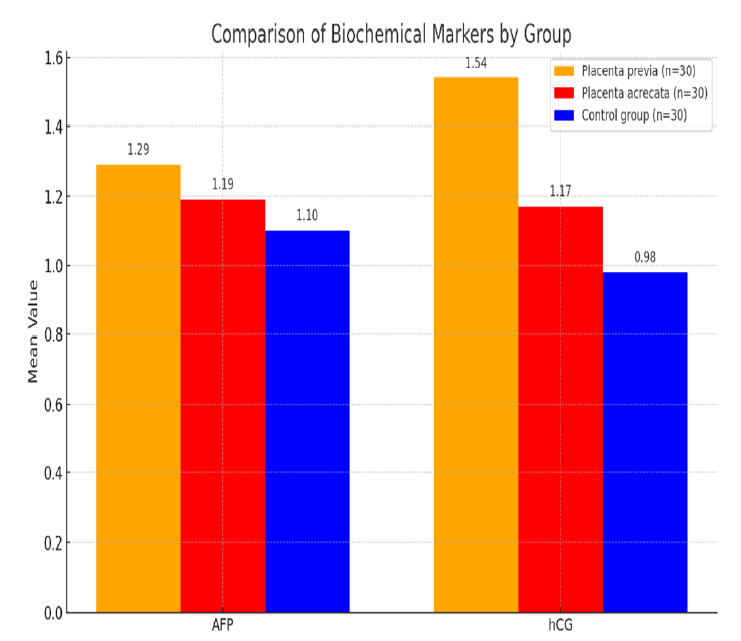
Figure 1: Subanalysis of Biochemical Markers in Cases of Pathological Placentation


Table 2: Maternal and obstetrical outcomes of women with pathological placentation and the control group

Maternal and neonatal OutcomesWomen with pathological placentation (n = 60)Control group (n:30)p-value
Maternal Outcomes
Relaparotomy1 (1.67%)0 (0%)0.292
Hysterectomy3(5%)0 (0%)0.004
Transfusion17 (28.33%)1(3.33%)<0.001
ICU2(3.33%)1 (3.33%)0.16
DIC2(3.33%)1 (3.33%)0.16
Anemia25(41.67%)1(3.33%)<0.001
PPH17 (28.33%)1(3.33%)<0.001
Neonatal Outcomes
Antepartum fetal death0 (0%)1 (3.33%)0.39
Birthweight, g3.071 (2,672–3,231)3,176 (2,681–3,316)0.98
5-min Apgar score <71 (1.67%)5 (16.67%)0.11
NICU admission36 (60%)5(16.67%)0.04
Intraventricular hemorrhage2 (3.33%)1 (3.33%)0.98
TTN of the newborn10 (16.67%)2 (6.67%)0.045
RDS5 (8.33%)0 (0%)0.11
Mechanical ventilation4 (6.67%)3 (2%)0.15


Table 3 presents the comparison of second trimester biochemical markers between women with pathological placentation and a control group. The levels of Alpha-fetoprotein (AFP) were significantly higher in women with pathological placentation compared to the control group (1.25±0.30 vs. 1.10±0.28, p=0.031). Similarly, Human chorionic gonadotropin (hCG) levels were significantly elevated in the pathological placentation group (1.45±0.52 vs. 0.98±0.36, p=0.005). These findings suggest that elevated AFP and hCG levels in the second trimesters may be associated with pathological placentation.


Table 3: Second Trimester Biochemical Markers in the Studied Women

Second trimester biochemical markersWomen with pathological placentation (n = 60)Control group (n = 30)p-value
AFP (Alpha-fetoprotein)1.25±0.301.10±0.280.031
HCG (Human chorionic gonadotropin)1.45±0.520.98±0.360.005


The levels of AFP were significantly higher in women with placenta previa (1.29±0.29) and placenta accreta (1.19±0.31) compared to the control group (1.10±0.28), with a p-value of 0.007. Similarly hCG levels were significantly elevated in cases of placenta previa (1.54±0.40) and placenta accreta (1.17±0.35) compared to the control group (0.98±0.36), with a p-value of 0.011. These results indicate that elevated AFP and hCG levels are associated with both types of pathological placentation, particularly placenta previa (Table 4).


Table 4: Subanalysis of Biochemical Markers in Cases of Pathological Placentation

Biochemical Marker Placenta previa (n:30)Placenta acrecata (n:30)Control group (n:30)p-value
AFP1.29±0.291.19±0.311.10±0.280.007
hCG1.54±0.401.17±0.350.98±0.360.011


The study found that a lower AFP and hCG values at the 25th percentile significantly reduce the risk of pathological placentation. When considering AFP, hCG, or both, the combined risk at the 25th percentile is significantly reduced. At the 75th percentile, a higher AFP value does not increase the risk, but a higher hCG value significantly increases it. The combination of elevated AFP or hCG is strong predictors of pathological placentation risk (Table 5).


Table 5: Logistic Regression Analysis of Biochemical Markers for Predicting Risk of Pathological Placentation

PercentileBioMarkerValueOR95% CIp-value
25th AFP0.910.39(0.14–1.04)0.061
hCG0.740.06(0.01–0.29)0.001
AFP or hCG or both1.040.17(0.06–0.44)0.001
75th AFP1.451.24(0.91–1.29)0.39
hCG1.802.31(1.27–3.61)0.001
AFP or hCG or both1.812.88(2.16–2.96)0.001


Maternal age showed a non-significant association with the risk (adjusted OR: 1.10, 95% CI: 0.94–1.18, p=0.10). Previous hysteroscopy also did not significantly increase the risk (adjusted OR: 1.25, 95% CI: 0.35–3.90, p=0.85). However, a history of previous adherent placenta was significantly associated with a higher risk (adjusted OR: 25.0, 95% CI: 2.5–4.30, p=0.020), as was a history of previous dilatation and curettage (adjusted OR: 4.8, 95% CI: 2.7–10.8, p=0.001). Regarding biochemical markers, AFP levels were not significantly associated with an increased risk (adjusted OR: 1.35, 95% CI: 0.70–2.4, p=0.50), whereas elevated hCG levels were significantly associated with a higher risk of pathological placentation (adjusted OR: 1.80, 95% CI: 1.35–2.6, p=0.002). These results indicate that prior obstetric interventions and elevated hCG levels are important predictors of pathological placentation risk (Table 6).


Table 6: Adjusted odds ratios for various parameters associated with the risk of pathological placentation

ParameterAdjusted OR95% CIp-value
Maternal age1.10(0.94–1.18)0.10
Previous hysteroscopy1.25(0.35–3.90)0.85
Previous adherent placenta25.0(2.5–4.30)0.020
Previous dilatation and curettage4.8(2.7–10.8)0.001
AFP1.35(0.70–2.4)0.50
hCG1.80(1.35–2.6)0.002


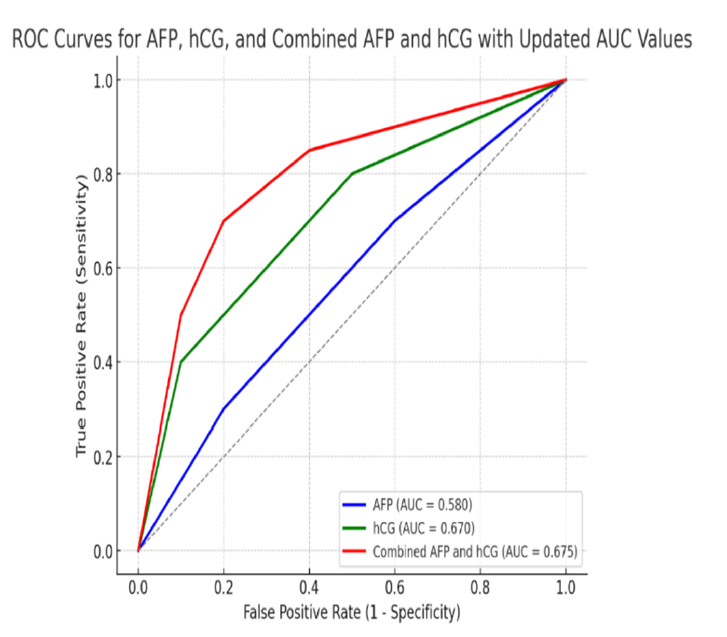
Table 7 and Figure 2 presents the diagnostic performance of AFP and hCG in predicting pathological placentation, along with their combined effect. The area under the curve (AUC) for AFP is 0.580, indicating a modest diagnostic accuracy with a sensitivity of 70% and specificity of 48% at a cut-off of 1.00 MoM. For hCG, the AUC is 0.670, showing better diagnostic accuracy with a sensitivity of 60% and specificity of 66% at a cut-off of 1.30 MoM. When combining both AFP and hCG, the AUC slightly improves to 0.675, with a sensitivity of 65% and specificity of 62%.


Table 7: AFP and hCG as Prediction of Pathological Placentation

BiomarkerAUC p-valueSensitivitySpecificityCut-off (MoM)
AFP 0.580 0.02570%48%1.00
hCG 0.670 0.00160%66%1.30
Combined AFP and hCG0.675 0.00165%62%-


Figure 2: ROC Curves of Maternal Serum AFP, hCG, and both

DISCUSSION

This study assessed 90 deliveries, including 60 women with pathological placentation and 30 controls, and demonstrated clear maternal, obstetric, and biochemical differences between groups. Women with pathological placentation were significantly older (mean maternal age 35.2 years), and had higher frequencies of placenta previa/low-lying placenta and differences in cesarean indications, alongside increased maternal morbidity. These findings support the concept that pathological placentation is not only an anatomic implantation disorder but also a clinically high-risk phenotype characterized by hemorrhagic complications and measurable biochemical changes. Advanced maternal age is a consistently reported risk factor for placenta previa and placenta accreta spectrum (PAS), likely reflecting cumulative exposure to uterine injury, scarring, and altered endometrial/decidual receptivity. The significantly older age profile in the pathological placentation group in our cohort aligns with contemporary descriptions of PAS epidemiology and major outcomes, where increasing maternal age is commonly observed among affected women. Jauniaux et al. [3] highlighted the population-level burden and outcomes of PAS, while Premkumar et al. [8] described PAS in mid-gestation as a complex clinical condition often presenting in women with established risk factors. In addition, evidence from tertiary-care settings indicates that severe maternal morbidity patterns are strongly shaped by underlying placental pathology and maternal risk clustering, supporting our observed demographic differences. Chama et al. [9]The present study found significant differences in cesarean indications between groups, particularly the dominance of placenta previa/low-lying placenta in the pathological placentation group. This is expected because placenta previa is both a major clinical manifestation and a principal risk factor for PAS, and often necessitates planned cesarean delivery to minimize hemorrhagic risk. Silver [10] emphasized the central role of placenta previa and accreta in abnormal placentation and the need for anticipatory delivery planning. Consistent with this approach, our data also suggested less exposure to labor progression complications (e.g., prolonged second stage) among pathological placentation cases—an observation that may reflect earlier, planned cesarean before advanced labor in high-risk placenta previa/PAS to prevent catastrophic bleeding. Takeda et al. [11]
Maternal outcomes were worse among women with pathological placentation, with higher rates of postpartum hemorrhage, anemia, transfusion, and hysterectomy. This pattern is well established: abnormal adherence and/or invasion of chorionic villi into the myometrium disrupts normal separation, leading to severe hemorrhage that frequently mandates massive transfusion protocols and peripartum hysterectomy when conservative measures fail. Reviews focused on PAS management consistently report hemorrhage-driven morbidity as the dominant clinical threat, emphasizing multidisciplinary preparation, availability of blood products, and specialized surgical and anesthetic strategies. Morlando and Collins [12], Fonseca and de Campos [13], Einerson and Weiniger [14] Furthermore, hemorrhage risk is amplified by placenta previa and prior cesarean scars, and is reinforced by evidence showing increased abnormal placentation and bleeding in subsequent pregnancies after cesarean delivery. Chen et al. [15]Although neonatal outcomes did not show large between-group differences overall, NICU admissions and transient tachypnea of the newborn (TTN) were more common in the pathological placentation group. This is biologically plausible because placenta previa/PAS is frequently managed by elective cesarean delivery (often earlier gestational ages), and lack of labor is a known context for TTN. In addition, NICU admission may be driven by prematurity, respiratory morbidity, and surveillance needs for neonates delivered from high-risk pregnancies. Baseer et al. [16]A key finding of this work is that both AFP and hCG were significantly higher in the pathological placentation group than in controls, with elevations particularly evident in placenta previa and placenta accreta subgroups. These results support the hypothesis that pathological placentation is accompanied by measurable changes in trophoblastic function and placental barrier integrity. AFP, produced primarily by the fetal liver and transferred to maternal serum via placental/fetal membrane pathways, may rise when placental permeability increases or when abnormal placental attachment and vascular disruption facilitate enhanced passage into maternal circulation. Evidence increasingly links elevated second-trimester AFP to PAS risk and other adverse placental outcomes. Wang et al. [17], Cai et al. [18]. Similarly, abnormal or increased hCG may reflect altered syncytiotrophoblastic activity, compensatory trophoblastic hyperplasia, or dysregulated placental development, which can coexist with placenta previa/PAS phenotypes. In the context of integrated screening markers, Berezowsky et al. [4] reported higher AFP and hCG MoM values among pathological placentation cases than controls, supporting the direction of effect observed in our cohort. Our diagnostic findings suggest modest discrimination for AFP and hCG (AFP/hCG cut-offs around 1.00 MoM yielding sensitivity ~70% and specificity ~48%), with a small improvement when combining markers (AUC ≈ 0.675). This overall performance is comparable to published retrospective evidence where single biochemical markers are useful for risk stratification rather than definitive diagnosis. Berezowsky et al. [4] similarly showed moderate sensitivity/specificity patterns across AFP and hCG, with improved performance when markers were used jointly. Dreux et al. [5] also reported higher second-trimester AFP and hCG among PAS cases and suggested clinically meaningful risk increases when levels exceed high MoM thresholds (e.g., >2.5 MoM), reinforcing the clinical logic of identifying high-risk subgroups using combined marker elevation. The percentile analyses in the present study provide clinically intuitive insights. Lower AFP and hCG values at the 25th percentile were associated with reduced risk of pathological placentation, supporting the interpretation that normal placentation tends to maintain expected biochemical patterns. Conversely, at the 75th percentile, hCG—but not AFP alone—was associated with increased risk, suggesting hCG may be a more sensitive indicator of trophoblastic dysregulation in later mid-gestation. Importantly, the combination of elevated AFP or hCG strengthened risk prediction, consistent with the general screening principle that multi-marker strategies perform better than single analytes for complex placental phenotypes. Berezowsky et al. [4], Dreux et al. [5]While maternal age and previous hysteroscopy did not show strong independent effects in the multivariable model, a history of previous adherent placenta was significantly associated with higher risk—an observation that is consistent with the recurrence tendency of abnormal placentation in the setting of prior uterine injury and scarring. Large-scale epidemiologic data and national case–control evidence have repeatedly confirmed that PAS risk rises with prior cesarean delivery and placenta previa, and is influenced by other uterine procedures that alter decidualization. Fitzpatrick et al. ‘[19] Our findings therefore support the existing framework in which clinical risk factors and imaging remain foundational, while biochemical markers can provide additive value for stratification.


Implications
Taken together, our results support using second-trimester AFP and hCG primarily as adjunctive tools to improve antenatal screening, guide referral decisions, and prioritize advanced imaging and multidisciplinary planning—especially in women with placenta previa/low-lying placenta or prior uterine surgery. The modest AUC emphasizes that biomarkers should not replace ultrasound/MRI, but rather complement them within a combined risk model.

REFERENCE
  1. AbidAlkareem, I.H. “Management of placenta accreta in patients with repeated caesarean section in Tikrit.” Kirkuk Journal of Medical Sciences, vol. 5, no. 1, 2021, pp. 47–52.

  2. Yaaqoub, N.K. et al. “Impact of previous cesarean section scar thickness on next pregnancy outcome: hospital based study in Tikrit city.” Tikrit Medical Journal, vol. 21, no. 1, 2016.

  3. Jauniaux, E. et al. “Prevalence and main outcomes of placenta accreta spectrum: a systematic review and meta-analysis.” American Journal of Obstetrics and Gynecology, vol. 221, 2019, pp. 208–218.

  4. Berezowsky, A. et al. “Second trimester biochemical markers as possible predictors of pathological placentation: A retrospective case-control study.” Fetal Diagnosis and Therapy, vol. 46, 2019, pp. 187–192.

  5. Dreux, S. et al. “Second-trimester maternal serum markers and placenta accreta.” Prenatal Diagnosis, vol. 32, no. 10, 2012, pp. 1010–1012.

  6. Matsuzaki, S. et al. “Trends, characteristics, and outcomes of placenta accreta spectrum: A national study in the United States.” American Journal of Obstetrics and Gynecology, vol. 225, 2021, pp. 534.e1–534.e38.

  7. Bartels, H.C. et al. “Placenta accreta spectrum: A review of pathology, molecular biology, and biomarkers.” Disease Markers, 2018, article 1507674.

  8. Premkumar, A. et al. “Placenta accreta spectrum in the second trimester: A clinical conundrum in procedural abortion care.” American Journal of Obstetrics and Gynecology, 2024.

  9. Chama, C.M. et al. “The pattern and spectrum of severe maternal morbidities in Nigerian tertiary hospitals.” African Journal of Reproductive Health, vol. 24, no. 2, 2020, pp. 115–122.

  10. Silver, R.M. “Abnormal placentation: placenta previa, vasa previa and placenta accreta.” Obstetrics and Gynecology, vol. 126, 2015, pp. 654–668.

  11. Takeda, S. et al. “Cesarean section for placenta previa and placenta previa accreta spectrum.” Surgical Journal (New York), vol. 6, no. S02, 2020, pp. S110–S121.

  12. Morlando, M. and Collins, S. “Placenta accreta spectrum disorders: challenges, risks, and management strategies.” International Journal of Women’s Health, vol. 12, 2020, pp. 1033–1045.

  13. Fonseca, A. and de Campos, D.A. “Maternal morbidity and mortality due to placenta accreta spectrum disorders.” Best Practice and Research Clinical Obstetrics and Gynaecology, vol. 72, 2021, pp. 84–91.

  14. Einerson, B.D. and Weiniger, C.F. “Placenta accreta spectrum disorder: Updates on anesthetic and surgical management strategies.” International Journal of Obstetric Anesthesia, vol. 46, 2021, article 102975.

  15. Chen, S. et al. “The risk of abnormal placentation and hemorrhage in subsequent pregnancy following primary elective cesarean delivery.” Journal of Maternal-Fetal and Neonatal Medicine, vol. 33, no. 21, 2020, pp. 3608–3613.

  16. Baseer, K.A. et al. “Risk factors of respiratory diseases among neonates in neonatal intensive care unit of Qena University Hospital, Egypt.” Annals of Global Health, vol. 86, no. 1, 2020.

  17. Wang, F. et al. “Elevated second trimester alpha-fetoprotein increases the risk of placenta accreta.” Clinical and Experimental Obstetrics and Gynecology, vol. 50, no. 11, 2023, p. 232.

  18. Cai, S.N. et al. “Value of 3D ultrasound flow imaging combined with serum AFP, β-hCG, sFlt-1 and CK in the diagnosis of placenta accreta.” BMC Women’s Health, vol. 22, no. 1, 2022, p. 556.

  19. Fitzpatrick, K.E. et al. “Incidence and risk factors for placenta accreta/increta/percreta in the UK: A national case-control study.” PLoS One, vol. 7, no. 12, 2012, e52893.

License
CC BY-NC-ND
Creative Commons Attribution-NonCommercial-NoDerivatives 4.0 International License
Second Trimester Biochemical Markers (HCG and AFP) for Evaluation of Pathological Placentation © 2026 by Sally Abdul Majeed Salih, Israa Hashim Abdul Kareem licensed under CC BY-NC-ND 4.0
All papers should be submitted electronically. All submitted manuscripts must be original work that is not under submission at another journal or under consideration for publication in another form, such as a monograph or chapter of a book. Authors of submitted papers are obligated not to submit their paper for publication elsewhere until an editorial decision is rendered on their submission. Further, authors of accepted papers are prohibited from publishing the results in other publications that appear before the paper is published in the Journal unless they receive approval for doing so from the Editor-In-Chief.
Himalayan Journal of Applied Medical Sciences and Research open access articles are licensed under a Creative Commons Attribution-Share A like 4.0 International License. This license lets the audience to give appropriate credit, provide a link to the license, and indicate if changes were made and if they remix, transform, or build upon the material, they must distribute contributions under the same license as the original.
Recommended Articles
Research Article
Study of the Role of Serum Interleukin-6 in Inflammation among Pregnant Women with COVID-19
Published: 27/07/2021
Download PDF
Research Article
Evaluation of Serum Heat Shock Protein 70 as a Diagnostic Biomarker for Ectopic Pregnancy: A Comparative Case-Control Study
Published: 28/02/2026
Download PDF
Research Article
Bones in Balance: Awareness of Rickets and Nutritional Deficiencies Among the Hamirpur Community
Published: 10/12/2024
Download PDF
Research Article
Assessing First Trimester Maternal Serum Pentraxin-3 Levels in Primary Unexplained Recurrent Pregnancy Loss: A Case-Control Study
Published: 28/02/2026
Download PDF
Chat on WhatsApp
Flowbite Logo
Najmal Complex,
Opposite Farwaniya,
Kuwait.
Email: kuwait@iarcon.org

Editorial Office:
J.L Bhavan, Near Radison Blu Hotel,
Jalukbari, Guwahati-India
Useful Links
Order Hard Copy
Privacy policy
Terms and Conditions
Refund Policy
Others
About Us
Team Members
Contact Us
Online Payments
Join as Editor
Join as Reviewer
Subscribe to our Newsletter
Follow us
MOST SEARCHED KEYWORDS
scientific journal
 | 
business journal
 | 
medical journals
 | 
Scientific Journals
 | 
Academic Publisher
 | 
Peer-reviewed Journals
 | 
Open Access Journals
 | 
Impact Factor
 | 
Indexing Services
 | 
Journal Citation Reports
 | 
Publication Process
 | 
Impact factor of journals
 | 
Finding reputable journals for publication
 | 
Submitting a manuscript for publication
 | 
Copyright and licensing of published papers
 | 
Writing an abstract for a research paper
 | 
Manuscript formatting guidelines
 | 
Promoting published research
 | 
Publication in high-impact journals
Copyright © Himalayan Journals . All Rights Reserved.