Obesity is a chronic life threatening disorder caused by the excessive fat deposition in the body that increases the risk of other co-morbidities. Genetic and epigenetic alterations interplay important role in the development of obesity and metabolic disorders. These changes lead not only obesity but also play important role in the development of co-morbidities such as type-2 diabetes, cancer, thyroid imbalance, heart diseases, non-alcoholic fatty liver disease and hypertension. Literature search was done with help of PubMed, PubMed-central and Google scholar for the relevant literature. In this review, we are trying to explore genetic and epigenetic signatures in obesity, metabolic dysfunctions and other co-morbidities. Lifestyle also plays important role in the development of obesity and metabolic disorders. Environmental factors affect genes related to metabolism regulation epigenetically without changing genome sequences and leads to obesity and other co-morbidities.
Genetic, epigenetic process, biological (adiposity status), socioeconomic, behavioral, cultural and environmental (modifiable environmental factors-diet and lifestyle) determinants were the major factors which in combination leads to the obesity [1-2]. Obesity was seen as a very crucial factor in the development of co-morbidities such as metabolic syndrome, diabetes, hypertension, kidney disease, cardiovascular diseases and cancer. Increased morbidity was observed among women who were suffered from breast cancer. Breast cancer and obesity was linked with serum leptin and leptin receptor polymorphism [3]. According to a cross sectional study, individuals with BMI>25 and bisphenol-A (thyroid activity disruptor) exposure showed greater risk of malignancy of thyroid than the individuals with BMI<25 [4].
Eating behaviour play important role in the obesity or overweight and it was regulated by fat mass and obesity (FTO) gene, expressed in hypothalamic region that is important for appetite. Loss of control eating (LOC) reported in overweight, predicts excessive weight gain in population. Higher body mass index (BMI) and adiposity in both children and adults were associated with common single nucleotide polymorphisms (SNPs) in the first intron of the FTO (16q12.2) gene [5].
There were different types of gene polymorphisms closely related with obesity and these polymorphic forms play crucial role in the development of different types of obesity (class-I, II, III). FTO locus strongly associated with BMI (0.58 kg/m2 per effect allele) out of the 97 BMI loci [6-7]. According to a study, polymorphic form of MC4R directly associated with obesity and it was also seen that interaction of gene transformation takes place according to the environment of rural to urban population. C allele of rs17782313 and A allele of rs12970134 were associated with obesity in urban and rural population [8]. TP53 or p53 gene (a tumor suppressor gene) play important role in the regulation of many metabolic activities such as lipolysis, glycolsis and glycogen synthesis.
But it was studied that its polymorphic forms were the key factor in the development of obesity and type-2 diabetes in the Saudi population [10].
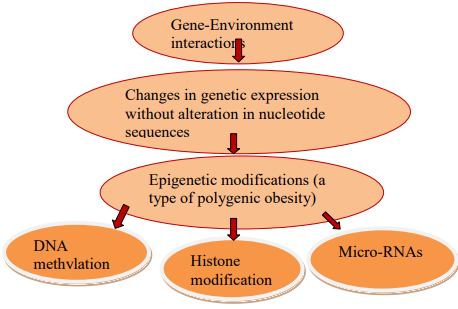
While genetic disturbance play crucial role to find out individual susceptibility to obesity, gene and environment interaction also a very interesting and important factor in the growing rate of obesity and obesity related co-morbidities. Nowadays epigenetic changes (without a radical alteration of the genome) are the key determinants in the growing epidemic of obesity. Epigenetic changes are heritable changes without altering the nucleotides sequence of the genome [11]. Epigenetic modifications are the biochemical process that synergistically interacts with environment and gene. It was seen that, this interaction increases susceptibility to metabolic diseases with diverse etiology. Type of lifestyle, diet and environment influence the gene expression through epigenetic changes. DNA methylation, histone modification altered due to intense exercise and effective changes in gene expression was also takes place through epigenetic mechanism.
According to epigenetic classical theory, it has inherent property and could be inherited from parent to offspring. But its heritability through generations to generations is not well known, while it was clear that its epigenetic pattern normally plagiarized through mitotic cell divisions. Non-coding RNAs, DNA methylation and histone modification were the principal component in the incident of epigenetic changes. These elements regulate gene-expression, cell differentiation, chromosome inactivation, imprinting, genome stability and structure [12].
A systematic literature search was conducted using PubMed, PubMed-central. Goggle scholar and Web of Science for relevant studies published in the past 5 years. The search was performed using the keywords "DNA methylation", "obesity", and "epigenetics". The present work restricted to human studies that investigated the association between DNA methylation and obesity.
Genetic Factors
According to a study, it was seen that obesity is not only a lifestyle problem but it is also positively related with the genetic changes. And it was seen that genetic susceptibility and lifestyle both were crucially related with the risk of obesity. Genetic vulnerability of individuals was induced by obesogenic environment and lifestyle [6]. PKHD1 rs2784243 and MC4R rs17782313 was significantly associated with birth weight and overeating respectively. Incident of obesity was higher among women and hormonal changes, environmental factors and low physical activity were the possible reason [13]. MTHFR gene was positively associated with the risk of obesity among Saudi women. Presence of G allele in the MTHFR rs1801131 SNP increased the risk of fat deposition in the body. It was also related with the level of LDL, which may affect cardiovascular system. Higher frequency of G allele if MTHFR, 33.3% was significantly related with the fat accumulation and increased BMI compared to non-obese. This positive correlation increased the risk of obesity [14]. Common variants of FTO gene such as rs1421085, rs8050136 and rs9939609 were significantly associated with increased BMI, obesity and with different obesity associated phenotypes including body fat but not with type-2 diabetes in north Indian population [15-16]. It was reported that the risk allele (A) of FTO rs9939609 shows a positive relation with systolic and diastolic blood pressure in north Indians [16].
According to stratified Mendelian randomization (MR) study of Zou et al. both obesity class-I and obesity class-II were significantly positively related to ischemic stroke (IS) while obesity class-III was not. There were many SNPs reported which were strongly related to the obesity. 29 SNPs were found, among them two SNPs (rs9816226 and rs8028313) of obesity class-I and three SNPs (rs17381664, rs12914773, rs2207139) of obesity class-II, can significantly increased the risk of ischemic stroke. Furthermore, three SNPs (rs7138803, rs7141420, and rs527248) of obesity class-I and one SNP (rs7138803) of obesity class-II were found, which may potentially increased the risk of cardioembolic stroke. SNPs of obesity class-I and obesity class-II were significantly related with stroke’s subtypes such as intracellular hemorrhage (ICH), large artery stroke (LAS) cardioembolic stroke (CES) and ischemic stroke (IS) [7].
Eight obesity associated variants were reported among Arabs individauls i.e. rs7799039, rs11761556, c.104 T>G, c.34delC, rs104894023, rs2167270, rs1349419, and tetra nucleotide repeat (TTTC) n. Other variants of genes associated with obesity reported in Arab country were FTO (5 variants), ADIPOQ (7 variants), and LEPR (3 variants). Other variants that were found to be associated with obesity include EXT: rs3740878, PRDM16 rs2651899, MTFHD1 rs2236225, and TP53 rs1042522, these variants were strongly associated with congenital heart defects, type-2 diabetes, cervical cancer and migraine susceptibility [17-20,22].
Genotyping
In a genotypic analysis, genomic DNA was isolated from the blood sample by using QIAamp DNA Blood Maxi Kit. By using a TaqMan SNP Genotyping Assay, genotyping of FTO SNP rs9939609 was performed. An automatic allele calling quality value of 0.95 was used to determine genotype assignment. All assays were performed in duplicate. By the direct sequencing of the polymerase chain reaction amplicon containing the rs9939609 locus, subjects with indeterminate results with the TaqMan assay were genotyped. And then rs9939609 locus was amplified using forward primer 5’- CTATGGTTCTACAGTTCCAGTCATTT-3’ and reverse primer 5’- AGGATAGTTTCGATCTATTGACCTC-3’. To examine the association of FTO rs9939609 (AA/AT and TT allele) with BMI analysis of covariance (ANCOVA) was used (accounting for age, sex and race). To examine the associations between genotype and LOC eating presence, binary logistic regression and Pearson’s chi-square tests accounting for BMI z-score were used [5].
Table 1: Summary of Obesity Related Genes, Snps and Their Role in Occurrence of Obesity and Co-Morbidities
Gene | Polymorphic Froms | Clinical Phenotype | YEAR | References |
Gene-FTO | rs9939609, rs1421085, rs1421085, rs11642841. | Obesity | 2009 | [5] |
Gene-EXT | rs3740878. | Obesity and type-2 diabetes. | 2015 | [19] |
Gene-POMC | rs1042571. | Morbid obesity. | 2016 | [23] |
Gene MTFHD1 | rs2236225. | Obesity and heart defect susceptibility. | 2017 | [18] |
Gene-TP53 | rs1042522. | Obesity and cervical cancer development. | 2019 | [21] |
Gene PRDM16 | rs2651899. | Obesity and migraine susceptibility. | 2019 | [22] |
Class-I obesity | rs9816226, rs8028313, rs7138803, rs7141420, rs527248. | Obesity | 2021. | [7] |
Class-II obesity | rs17381664, rs12914773 rs2207139, rs7138803. | Obesity | 2021 | [7] |
Class-III | rs13104545 | Obesity | 2021 | [7] |
Gene-LEP | rs11761556, rs7799039, rs104894023, rs1349419, rs2167270 | Obesity and MetS. | 2021 | [17] |
Gene-PRDM16 | rs2651899 | Obesity | 2021 | [17] |
Gene-MTHFR | rs1801133 | Obesity | 2021 | [17] |
Gene-STAT4 | rs7574865 | Obesity and diabetes. | 2021 | [17] |
Gene-RETN | rs1862513, rs3745367. | Obesity and MetS. | 2021 | [17] |
Gene-MC4R | rs17782313, rs571312. | Obesity | 2022 |
|
MTHFR | rs1801131 | Fat deposition, increased BMI | 2023 |
|

Figure 1: Types of Obesity on the Basis of Gene and Environmental Interactions
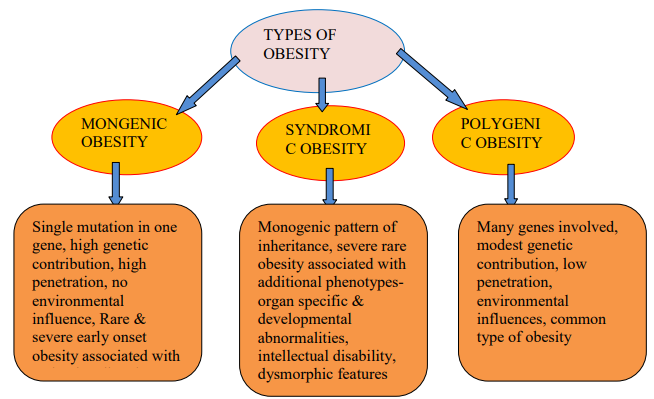
Several potential obesity related gene and variants have been documented, including FTO, MTFHD1,TP53, PRDM16, EXT, LEP, PRDM16, MTHFR, STAT4, RETN and MC4R. Furthermore, FTO, PRDM16 andMC4R were mainly implicated in polygenic/common obesity. It was estimated that about 5% country’s population affected with morbid obesity in India. In North Indians, observational studies suggested that long range interactions between FTO and IRX3 genes SNPs leads to obesity. MC4R -rs17782313 and POMC-rs1042571 genes were reported in North India with morbid obesity. Numerous studies conferred association of FTO rs9939609 variants with adiposity, metabolic consequences and enhanced effect associated with urban population in South Indians [23].
Epigenetic Modifications
Obesity is a complex disease that results from the interaction of genetic and environmental factors. Epigenetic modifications, including DNA methylation, are increasingly recognized as critical mediators of the gene-environment interface in obesity. Recent studies have identified multiple differentially methylated CpG sites in obese individuals, suggesting a role for DNA methylation in the pathogenesis of obesity. According to a study, increased BMI play important role in the acceleration of epigenetic ageing and it was also associated with insulin resistance. It was observed that epigenetic mechanism modulates the genes, which were associated with metabolic disorders, fat storage and remodeling of cells involve in metabolism [24].
DNA Methylation
Latest research on DNA methylation has been identified multiple differentially methylated CpG sites that are associated with obesity. These findings suggest that DNA methylation plays a critical role in the development of obesity and may provide potential biomarkers for the disease. Further research is needed to determine the causal relationship between DNA methylation and obesity, and to establish the clinical implications of these findings. DNA methylation is an epigenetic process, which play crucial role in the regulation of gene function, biological and molecular phenotypes [2].
According to a study, in genomic DNA isolated from peripheral blood, hypomethylation of the proinflammatory gene promoter was observed in obese individuals compared to the non-obese. Negative correlation was observed in the promoter methylation percentage and BMI, visceral fat percentage, total fat percentage, fasting plasma insulin, B.P., IL6, alcohol intake. But positive correlation was seen with flow induced dilation (FID), flow mediated dilation (FMD), vitamin B12, folate and HDL [25]. In peripheral blood leukocytes, a connection between lower promoter methylation of gene RORC, IL17A, TNFA were observed in obesity related asthma and allergic asthma [26]. In overweight and obese women, reduced methylation of ADRB3 gene and malondialdehyde was observed. But HDL-C and total antioxidant capacity level was increased [27].
Histone Modifications:
Histone are conserved protein mechanism involve in the organizing and packaging of DNA into chromatin. Hoistone proteins were susceptible for various post translational modifications such as methylation, phosphorylation, acetylation, O-GlcNAcylation, adenosine diphosphate (ADP) ribosylation and lactylation.histone modifications play important role in the regulating metabolic genes in response to the environmental cues [28].
Table 2: Metabolic Consequences of Obesity
Metabolic Co-morbidities of Obesity | Effects | References |
Obesity related NAFLD | fibrosis progression of NAFLD | [35] |
Thyroid Imbalance | breast cancer, thyroid cancer incidence | [36] |
PCOS | Ovulatory, Metabolic Dysfunction and overproduction of androgens. | [37] |
Hypertension | Increased cardiovascular and cerebrovascular diseases | [38] |
Abstractive sleep apnea | heart failure | [39] |
Dyslipidemia | Dysregulated DNA hydroxymethylation of apoptosis- and senescence-related genes | [40] |
Obesity related Osteoarthritis | Knee and hand Osteoarthritis | [41] |
Impared activity of histone deacetylases (HDACs) (enzymes that catalyze the removal of acetyl functional groups from lysine residuces of histone and non-histone proteins), was seen in visceral and white adipose tissues of obese subjects. Reduced HDAC activity was related with lower expression of HDAC5/Hdac5 and HDAC6/Hdac6 human adipocyte. Hypoxia (absence of adequate oxygen level in the body) reduced the Hdac5 and Hdac6 expression in the 3T3-L1 adipocytes. Reduced expression of Hdac5 and Hdac6 changed the expression of adipokines and of a key repressor named inducible cAMP early repressor (Icer). Icer was seen defective in obese subjects. In the condition of obesity and hypoxia, silencing of inducible cAMP early repressor (Icer) in adipocytes altered the level of adipokines. It was seen that expression of Hdac5 and Hdac6 was needed for the enough expression of Icer and adipocyte function. Due to hypoxia impaired expression of Hdac5 and Hdac6 in obesity may contribute to the development of metabolic diseases [29]. It was seen that isocitrate dehydrogenase 1(IDH1) mediated α-ketoglutarate (α-KG) decrseased the trimthylation of histone H3 lysine-4 in the promoter region of genes related to brown adipogenesis. Due to important role in the regulation of brown adipocyte differentiation, IDH1–α-KG axis could be used as a important therapeutic target for the treatment of metabolic abnormalities [30].
Non-coding RNAs
Cell differentiation, cell growth and gene expression are regulated by non-coding small RNAs known as miRNAs. It was seen that several biological processes were regulated by MiRNAs such as miRNA-146b-5p. By inhibiting sirtuin-1 (SIRT-1) in 3T3-L1 cells miRNA-146b-5p promotes adipogenesis. Increased regulation of miRNA-146b-5p expression was seen in subcutaneous adipose and visceral tissue in the obese individuals. Altered expression of MiR-146b miRNA in visceral fat tissues was seen the obese subjects. Increased expression of MiR-146b miRNA was observed in the mature adipocytes but in mesechymal stem cells (hMSCs) and visceral preadipocytes (vHPA) expression level was very low. MiR-146b expression was significantly different in the visceral fat tissue in obese and non-obese subjects and it directly directs the KLF7 gene, therefore it could be used as a therapeutic target against the treatment of obesity and other metabolic diseases [31]. Higher expression of IL-6, TGF-β and some tumor biomarkers, such as carcinoembryonic antigen (CEA), carbohydrate antigen 19.9 (CA19.9), and alpha-fetoprotein (AFP) was observed in the obese and colorectal cancer patients. MicroRNAs (miR-215 and miR-146a) expression was lower in the obese patients with colorectal cancer and negative correlation was observed between microRNAs (miR-215 and miR-146a) and BMI [32]. It was observed that high-fat, high-saturated (HFHS) diet induced the expression of miRNAs and these miRNAs regulates TGF-beta, CARM1, RSK, and BMP pathways associated genes. Intake of green tea reduced the expression HFHS meal induced miRNAs [33]. Down regulation of miR-27b and miR-483 was observed in obese individual’s subcutaneous adipose tissue as compared to the non-obese individual’s. In visceral adipose tissue of obese individuals expression of miR-27b and miR-223 was significantly decreased. Dissimilar expression of miR-26a and miR-338 was also observed in the obese group. All these findings could be used as key factors to assess the development of obesity related diseases such as heart diseases (cardiovascular and pulmonary diseases) [34].
Interconnection of genetic, epigenetic and environmental factors plays important role in development of obesity and its related co-morbidities. Genetic mutation in FTO, leptin, ghrelin, MTHFR genes clearly linked with the incident of obesity. Environment and behaviour (epigenetic) is also clearly linked with obesity. Epigenetic changes do not change the sequences of DNA, they change reading mechanism of DNA sequences and these epigenetic effects are reversible.
Leptin and BMI were correlated and due to the presence of leptin increased proinflammatory cytokines was observed in obese subjects compared to the normal/overweight/underweight. Increased STAT3 and ERK1/2 phosphorylation mediates the effect of CD4+CD25− effecter T- cells and cell cycle inhibitor P27kip1 downregulated [42].
Leptin gene polymorphism rs7799039 and rs2167270 were observed in obese women and significantly related with leptin levels [43], but according to a case control study, LEP gene polymorphisms rs7799039 and rs11761556 were not associated with the risk of obesity [44].
According to study performed in the Saudi Arabia it was observed that polymorphic form of p53 gene (rs1042522) shows significance relationship with the incident of obesity in the studied population. Anthropometric and clinical details like age, gender, education, occupation, BMI, height, weight, waist-to- hip ratio were recorded, biochemical analysis was done by using semi-automated biochemistry analyzer and the level of triglycrides, total cholesterol, HDL and LDL level were measured. With help of T-test, clinical and biochemical data of obese and healthy individuals were compared and it was seen that both parameters showed difference in the obese population and non-obese, they were associated with risk of obesity. BMI, waist-hip ratio and other biochemical parameters were higher in the obese except HDL. Genetic analysis was done by using TaqMan based allelic discrimination and using Applied Biosystems7500 Fast Real-time PCR for both cases and controls. Hardy-Weinberg Equilibrium was calculated by using genotype frequencies and it was noticed that that all SNPs of p53 (rs1642785, rs9894946, and rs1042522) were in the Hardy-Weinberg Equilibrium. Genotyping of SNPs rs1642785, rs9894946 and rs1042522 of p53 gene in obese and non-obese individuals disclosed that the p53 SNP rs1042522 GG (Arg72Arg) was significantly related with the risk of obesity compared to CC (Pro72Pro) genotype. Mutation in the SNP r1042522 is non-synonymous and Proline was replaced by Arginine at 72 amino acid position. Protein back bone was disturbed by this replacement and also leads to loss of hydrophobic interaction. All these changes (p53 gene SNPrs1042522 (Pro72Arg)) were the key determinants in the risk of obesity [10].

Figure 2: Types of Obesity on the Basis of their Genetic Modifications
Fat deposition in the body leads to the increased value waist and hip area. According to a study, waist ratio and hip ratio was the important indicator of determining disease venous thromboembolism (VTE) and WC was the better indicator of venous thromboembolism (VTE) in obese population compared to the HC [9]. It was observed that PPARG mRNA expression was high in the diabetic and non-diabetic obese individuals [45]. For instance, polymorphic forms of gene MC4R rs17782313 (T>C) and rs12970134 (G>A) was observed in obese urbanized population and it was also seen that modification in the effect of MC4R gene was possible by changing the living environment [8].
Expression of IL-6/TGF-β and miR146a/ miR215 was significantly correlated in obese and colorectal patients. Higher expression of IL-6 and TGF- β was observed in obese and CRC patients but microRNAs (miR-215 and miR-146a) expression was considerably lower in the obese subjects with CRC. Negative correlation was observed between BMI and microRNAs (miR-215 and miR-146a) expression. But TGF-β was well linked with IL-6, cholesterol, triglyceride levels, and BMI and increased level of TGF-β and IL-6 indicates intensity of inflammation developed by obesity, which increases the risk of colorectal cancer [32].
Strong association was observed between PPARG mRNA and body mass index of obese patients, their waist circumference and waist-hip-ratio was also positively correlated with PPARG mRNA expression [45]. Significant correlation was observed between TGF-β/IL-6 and miR146a/miR215 expression in obese and colorectal cancer. According to study miR-146a and miR-215 could be used as potential biomarkers for the diagnosis and treatment [32]
An association between clock gene and methylation was seen, which is related to the obesity, metabolic syndrome (MetS) and weight loss. Different methylated CpG sites were observed in gene CLOCK and PER2 related with weight loss and it could be used as biomarkers of weight loss [46]. ACLY, FASN, SCD and GCK were up-regulated in the individuals of obesity with type-2 diabetes [47]. ZNF423, clock genes (CLOCK, BMAL1 and PER2), LEP and ADIPOQ were observed methylated in the case of Obesity, MetS and subcutaneous adipose tissue hypertrophy [46,48-50]. It was observed that DNA mehylation was regulated by LDL-C and LDL-C through epigenetic process regulates adipokine’s gene expression [49]. H3K4me3 region of histone was observed modified in the obese individuals [50].
Genetic and epigenetic processes are principle causative agent of obesity and its co-morbidities. Different types of genetic polymorphisms were seen related to obesity and other metabolic disorders. Epigenetic changes such as DNA methylation, histone modification and non-coding RNAs were important factors in the development of metabolic disorders, obesity and other co-morbidities. But there were no clear connection in epigenetic changes and obesity observed in some studies. Therefore, to uncover the relationships of genetic, epigenetic alterations and complexity of obesity, broad and specific studies are required.
Conflict of Interest
The authors declared that they have no conflict of interest.
Ethical Statement
Study is a systematic review, so this study did not need ethical approval or consent to participant.
Lee, Y.C. et al. “Using Machine Learning to Predict Obesity Based on Genome-Wide and Epigenome-Wide Gene–Gene and Gene–Diet Interactions.” Frontiers in Genetics, vol. 12, 2022, p. 783845.
Loos, R.J. and G.S. Yeo. “The Genetics of Obesity: From Discovery to Biology.” Nature Reviews Genetics, vol. 23, no. 2, 2022, pp. 120–133.
Atoum, M.F. “Association of Leptin Receptor Q223R Gene Polymorphism and Breast Cancer Patients: A Case Control Study.” Asian Pacific Journal of Cancer Prevention: APJCP, vol. 23, no. 1, 2022, p. 177.
Marotta, V. et al. “Exposure to Bisphenol A Increases Malignancy Risk of Thyroid Nodules in Overweight/Obese Patients.” Environmental Pollution, vol. 316, 2023, p. 120478.
Tanofsky-Kraff, M. et al. “The FTO Gene rs9939609 Obesity-Risk Allele and Loss of Control over Eating.” The American Journal of Clinical Nutrition, vol. 90, no. 6, 2009, pp. 1483–1488.
Dashti, H.S. et al. “Interaction of Obesity Polygenic Score with Lifestyle Risk Factors in an Electronic Health Record Biobank.” BMC Medicine, vol. 20, 2022, pp. 1–12.
Zou, X. et al. “Deciphering the Irregular Risk of Stroke Increased by Obesity Classes: A Stratified Mendelian Randomization Study.” Frontiers in Endocrinology, vol. 12, 2021, p. 750999.
Wang, Y. et al. “MC4R Gene Polymorphisms Interact with the Urbanized Living Environment on Obesity: Results from the Yi Migrant Study.” Frontiers in Genetics, vol. 13, 2022, p. 849138.
Wang, J. et al. “Genetic Predisposition of Both Waist Circumference and Hip Circumference Increased the Risk of Venous Thromboembolism.” Thrombosis and Haemostasis, vol. 123, no. 3, 2023, pp. 347–361.
Sabir, J.S. et al. “The Genetic Association Study of TP53 Polymorphisms in Saudi Obese Patints.” Saudi Journal of Biological Sciences, vol. 26, no. 7, 2019, pp. 1338–1343.
Thaker, V.V. “Genetic and Epigenetic Causes of Obesity.” Adolescent Medicine: State of the Art Reviews, vol. 28, no. 2, 2017, p. 379.
Ling, C. and T. Rönn. “Epigenetics in Human Obesity and Type 2 Diabetes.” Cell Metabolism, vol. 29, no. 5, 2019, pp. 1028–1044.
Ansari, Y. et al. “Association Study of Melanocortin-4 Receptor (rs17782313) and PKHD1 (rs2784243) Variations and Early Incidence of Obesity at the Age of Maturity.” Advances in Human Biology, vol. 13, no. 1, 2023, pp. 144–150.
Aboonq, M.S. et al. “Methylenetetrahydrofolate Reductase and Peroxisome Proliferator-Activated Receptor-γ Gene Polymorphisms and Risk of Obesity in Females of Madina, Saudi Arabia.” Bulletin of Egyptian Society for Physiological Sciences, vol. 43, no. 1, 2023, pp. 64–74.
Chauhan, G. et al. “Common Variants of FTO and the Risk of Obesity and Type 2 Diabetes in Indians.” Journal of Human Genetics, vol. 56, no. 10, 2011, pp. 720–726.
Prakash, J. et al. “Association of FTO rs9939609 SNP with Obesity and Obesity-Associated Phenotypes in a North Indian Population.” Oman Medical Journal, vol. 31, no. 2, 2016, p. 99.
Younes, S. et al. “Genetic Polymorphisms Associated with Obesity in the Arab World: A Systematic Review.” International Journal of Obesity, vol. 45, no. 9, 2021, pp. 1899–1913.
Khatami, M. et al. “Relationship of the MTHFD1 (rs2236225), eNOS (rs1799983), CBS (rs2850144) and ACE (rs4343) Gene Polymorphisms in a Population of Iranian Pediatric Patients with Congenital Heart Defects.” The Kaohsiung Journal of Medical Sciences, vol. 33, no. 9, 2017, pp. 442–448.
Ren, Q. et al. “Impact of Variants of the EXT2 Gene on Type 2 Diabetes and Its Related Traits in the Chinese Han Population.” Endocrine Research, vol. 40, no. 2, 2015, pp. 79–82.
Liu, G.C. et al. “Interaction between TP53 and XRCC1 Increases Susceptibility to Cervical Cancer Development: A Case Control Study.” BMC Cancer, vol. 19, 2019, pp. 1–9.
Li, L. et al. “Exercise Retards Ongoing Adipose Tissue Fibrosis in Diet-Induced Obese Mice.” Endocrine Connections, vol. 10, no. 3, 2021, pp. 325–335.
Fu, X. et al. “Association between PRDM16, MEF2D, TRPM8, LRP1 Gene Polymorphisms and Migraine Susceptibility in the She Ethnic Population in China.” Clinical and Investigative Medicine, vol. 42, no. 1, 2019, pp. E21–E30.
Srivastav, A. et al. “Genetics of Obesity.” Indian Journal of Clinical Biochemistry, vol. 31, no. 4, 2016, pp. 361–371.
Kasinska, M.A. et al. “Epigenetic Modifications in Adipose Tissue–Relation to Obesity and Diabetes.” Archives of Medical Science, vol. 12, no. 6, 2016, pp. 1293–1301.
Ali, Mohamed M. et al. “DNA Methylation Profile of Genes Involved in Inflammation and Autoimmunity Correlates with Vascular Function in Morbidly Obese Adults.” Epigenetics, 2021. https://doi.org/10.1080/15592294.2021.1876285.
Leija-Martínez, J.J. et al. “Promoter Methylation Status of RORC, IL17A, and TNFA in Peripheral Blood Leukocytes in Adolescents with Obesity-Related Asthma.” Heliyon, vol. 8, no. 12, 2022.
Lima, R.P.A. et al. “Effect of a Diet Containing Folate and Hazelnut Oil Capsule on the Methylation Level of the ADRB3 Gene, Lipid Profile and Oxidative Stress in Overweight or Obese Women.” Clinical Epigenetics, vol. 9, 2017, pp. 1–9.
Hammond, C.M. et al. “Histone Chaperone Networks Shaping Chromatin Function.” Nature Reviews Molecular Cell Biology, vol. 18, no. 3, 2017, pp. 141–158.
Bricambert, J. et al. “Impaired Histone Deacetylases 5 and 6 Expression Mimics the Effects of Obesity and Hypoxia on Adipocyte Function.” Molecular Metabolism, vol. 5, no. 12, 2016, pp. 1200–1207.
Kang, H.S. et al. “IDH1-Dependent α-KG Regulates Brown Fat Differentiation and Function by Modulating Histone Methylation.” Metabolism, vol. 105, 2020, p. 154173.
Chen, L. et al. “MiR-146b Is a Regulator of Human Visceral Preadipocyte Proliferation and Differentiation and Its Expression Is Altered in Human Obesity.” Molecular and Cellular Endocrinology, vol. 393, nos. 1–2, 2014, pp. 65–74.
Ayeldeen, G. et al. “Signature of Micro RNA 146a/215 and IL-6/TGF-β Levels in a Cross-Link Axis between Obesity and Colorectal Cancer.” Non-Coding RNA Research, vol. 8, no. 2, 2023, pp. 187–191.
Bastos, R.V. et al. “Acute Green Tea Intake Attenuates Circulating MicroRNA Expression Induced by a High-Fat, High-Saturated Meal in Obese Women: A Randomized Crossover Study.” The Journal of Nutritional Biochemistry, vol. 112, 2023, p. 109203.
Lacedonia, D. et al. “Different Expression of Micro-RNA in the Subcutaneous and Visceral Adipose Tissue of Obese Subjects.” Rejuvenation Research, vol. 25, no. 2, 2022, pp. 89–94.
Man, S. et al. “Association between Metabolically Healthy Obesity and Non-Alcoholic Fatty Liver Disease.” Hepatology International, vol. 16, no. 6, 2022, pp. 1412–1423.
Pasqual, E. et al. “Obesity, Obesity-Related Metabolic Conditions, and Risk of Thyroid Cancer in Women: Results from a Prospective Cohort Study (Sister Study).” The Lancet Regional Health–Americas, vol. 23, 2023.
Jeanes, Y.M. and S. Reeves. “Metabolic Consequences of Obesity and Insulin Resistance in Polycystic Ovary Syndrome: Diagnostic and Methodological Challenges.” Nutrition Research Reviews, vol. 30, no. 1, 2017, pp. 97–105.
Chen, L. et al. “Association of Different Obesity Patterns with Hypertension in US Male Adults: A Cross-Sectional Study.” Scientific Reports, vol. 13, no. 1, 2023, p. 10551.
Kalaydzhiev, P. et al. “Sleep Apnea in Patients with Exacerbated Heart Failure and Overweight.” Sleep Medicine: X, vol. 5, 2023, p. 100065.
Glasstetter, L.M., et al. “Obesity and Dyslipidemia Are Associated with Partially Reversible Modifications to DNA Hydroxymethylation of Apoptosis-and Senescence-Related Genes in Swine Adipose-Derived Mesenchymal Stem/Stromal Cells.” Stem Cell Research & Therapy, vol. 14, no. 1, 2023, pp. 1–19.
Grotle, M. et al. “Obesity and Osteoarthritis in Knee, Hip and/or Hand: An Epidemiological Study in the General Population with 10 Years Follow-Up.” BMC Musculoskeletal Disorders, vol. 9, 2008, pp. 1–5.
Marrodan, M. et al. “Obesity and the Risk of Multiple Sclerosis. The Role of Leptin.” Annals of Clinical and Translational Neurology, vol. 8, no. 2, 2021, pp. 406–424.
Duan, D.M. et al.“Modification Effect of Sex and Obesity on the Correlation of LEP Polymorphisms with Leptin Levels in Taiwanese Obese Women.” Molecular Genetics & Genomic Medicine, vol. 8, no. 3, 2020, p. e1113.
Bouafi, H. et al. “Genetic Association of LEP Gene Polymorphisms with Obesity in Moroccan Individuals: Case–Control Study and Updated Meta-Analysis.” Biochemical Genetics, 2023, pp. 1–17.
Darwish, N.M. et al. “PPARG Expression Patterns and Correlations in Obesity.” Journal of King Saud University-Science, vol. 34, no. 6, 2022, p. 102116.
Milagro, F.I. et al. “CLOCK, PER2 and BMAL1 DNA Methylation: Association with Obesity and Metabolic Syndrome Characteristics and Monounsaturated Fat Intake.” Chronobiology International, vol. 29, no. 9, 2012, pp. 1180–1194.
Shen, J. and B. Zhu. “Integrated Analysis of the Gene Expression Profile and DNA Methylation Profile of Obese Patients with Type 2 Diabetes.” Molecular Medicine Reports, vol. 17, no. 6, 2018, pp. 7636–7644.
Longo, M. et al. “Epigenetic Modifications of the Zfp/ZNF423 Gene Control Murine Adipogenic Commitment and Are Dysregulated in Human Hypertrophic Obesity.” Diabetologia, vol. 61, 2018, pp. 369–380.
Houde, A.A. et al.“Leptin and Adiponectin DNA Methylation Levels in Adipose Tissues and Blood Cells Are Associated with BMI, Waist Girth and LDL-Cholesterol Levels in Severely Obese Men and Women.” BMC Medical Genetics, vol. 16, 2015, pp. 1–10.
Castellano-Castillo, D. et al. “Genome Profiling of H3k4me3 Histone Modification in Human Adipose Tissue during Obesity and Insulin Resistance.” Biomedicines, vol. 9, no. 10, 2021, p. 1363.
Tanofsky-Kraff, M. et al. “The FTO Gene rs9939609 Obesity-Risk Allele and Loss of Control over Eating.” The American Journal of Clinical Nutrition, vol. 90, no. 6, 2009, pp. 1483–1488.
Dashti, H.S. et al. “Interaction of Obesity Polygenic Score with Lifestyle Risk Factors in an Electronic Health Record Biobank.” BMC Medicine, vol. 20, 2022, pp. 1–12.
Pillon, N.J. et al. “Metabolic Consequences of Obesity and Type 2 Diabetes: Balancing Genes and Environment for Personalized Care.” Cell, vol. 184, no. 6, 2021, pp. 1530–1544.
Lazarus, E. and H.E. Bays. “Cancer and Obesity: An Obesity Medicine Association (OMA) Clinical Practice Statement (CPS) 2022.” Obesity Pillars, vol. 3, 2022, p. 100026.
Zou, X. et al. “Deciphering the Irregular Risk of Stroke Increased by Obesity Classes: A Stratified Mendelian Randomization Study.” Frontiers in Endocrinology, vol. 12, 2021, p. 750999.
Lundgren, S. et al. “BMI Is Positively Associated with Accelerated Epigenetic Aging in Twin Pairs Discordant for BMI.” MedRxiv, 2021, p. 2021-03.
Ayeldeen, G. et al. “Signature of Micro RNA 146a/215 and IL-6/TGF-β Levels in a Cross-Link Axis between Obesity and Colorectal Cancer.” Non-Coding RNA Research, vol. 8, no. 2, 2023, pp. 187–191.
Wang, Y. et al. “MC4R Gene Polymorphisms Interact with the Urbanized Living Environment on Obesity: Results from the Yi Migrant Study.” Frontiers in Genetics, vol. 13, 2022, p. 849138.
Willmer, T. et al. “DNA Methylation of FKBP5 in South African Women: Associations with Obesity and Insulin Resistance.” Clinical Epigenetics, vol. 12, no. 1, 2020, pp. 1–15.