BETAPEN has been merging with MITSUO for three years. However, the hope to fully integrate the needs of the wholesale banking segment with a variety of products particularly is still below the target. The purpose of this research is to identify BETAPEN wholesale transaction banking regarding the current wholesale transaction banking product development process, improve wholesale transaction banking new product development process and implement the improved wholesale transaction banking new product development process. The author uses a systematic design method with four main processes, namely inquiring, framing, generating, and reflecting. Primary data collection for this final project was carried out using qualitative methods. The results of the study found that the current wholesale transaction banking product development process is still not optimal, this is due to the lack of channel integration, software system development methods that have limited capacity and lack of involvement with customers. Researchers have three recommendations to improve the new product development process, the first is creating new product idea generation by compelling a customer experience vision, eliminating internal silos, setting indicators to measure success, increasing product value for customers by implementing an open banking system, implementing agile software system in developing products, creating customer engagement by lead user.
Keywords
Agile
Customer involvement
Integrated channel
New product development
Systemic Design
Wholesale Banking
INTRODUCTION
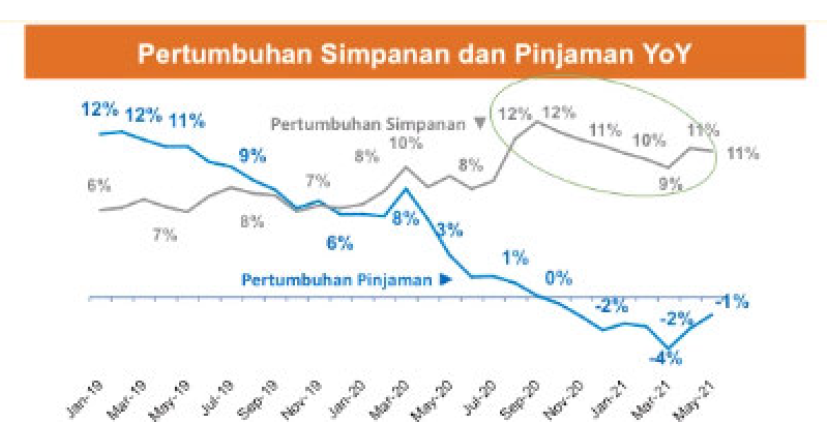
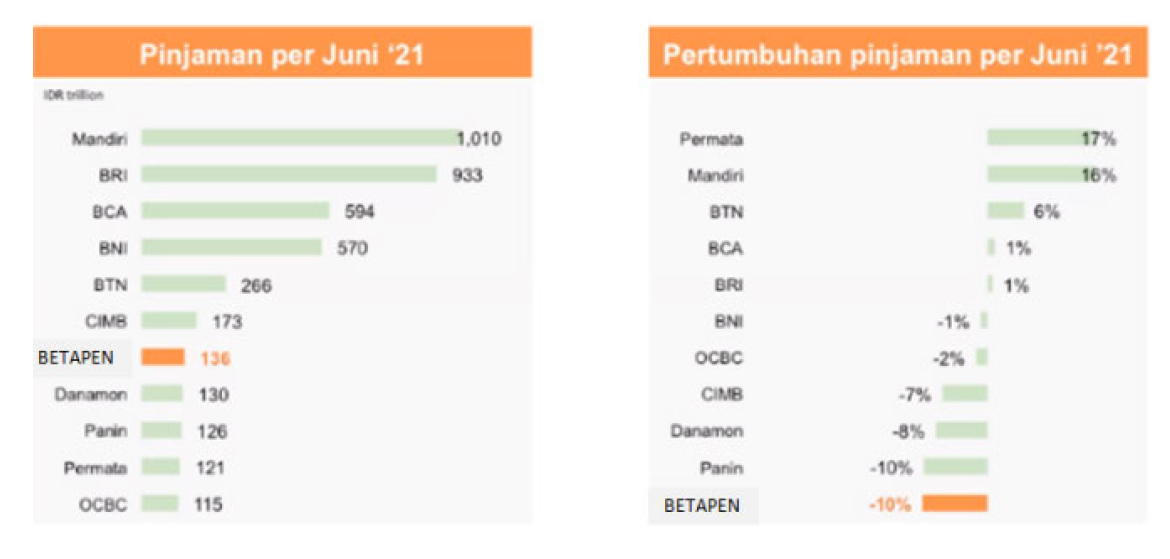
The World Health Organization declared a pandemic of the COVID-19 virus on March 11, 2020, which has escalated from the January 30, 2020 Public Health Emergency Declaration. In Indonesia, the government applied control policy through Large-Scale Social Restrictions Policy (Pembatasan Sosial Berskala Besar/PSBB) and coupled with the new normal policy the COVID-19. This pandemic uncertainty condition is rapidly disrupting business and consumer activity in affected areas and beyond. Indonesia had felt the enormity of this pandemic in various aspects of development due to the Large-Scale Social Restrictions Policy [1-5]. Indonesia's economy slowed throughout the year to minus 5.3% in the second quarter of 2020.and in aggregate growth was minus 2.1 percent in 2020. Amid this maelstrom, the role of banks has come under the spotlight, with the reasonable expectation banks need to provide financial support to those in need during these difficult times. The pandemic Covid-19 has demanded banking institutions to respond in ways beyond previous unimaginable. The bank need to ensure that there are no operational disruptions, engage in collaboration within internal institution, other banks and the government. The Covid-19 crisis is accelerating innovation and spurring a new round of technology investments by wholesale banks. The product that would have normally taken years to produce took place within weeks. These rapid responses constraint banks to respond properly to their customer’ needs in a time of crisis. More than two decades, the traditional business model of wholesale banking in developed markets was clearly defined and stable. However, the segment has come under pressure in recent years, amid intensifying competition, technology, innovation, and weak performance in some markets. The “lend and cross-sell” model business transaction banking has proven difficult to be acquired for many banks, the role of the bank was clear and unquestioned. Concerning this condition, the competition among the banks seemed tight. Some of Bank has developing their strategies to develop their main products saving and lending, developing digital transaction banking, partnering with potential companies. As results, the competitors successfully grow their saving and lending percentage during 2021. BETAPEN has been merged with MITSUO for three years Ever since that, the expectation to fully integrate the needs of wholesale banking segments was still below the target. Starting from early 2020 the growth of saving and loan in BETAPEN tend to decline until May 2021 (Figure 1,2) and comparing to other bank the performance BETAPEN performance need to be improved (Figure 1,2).
This objective of this research can be described into several points, to identify the current new products development’s process, to discover improvement for the new products development’s process, to build the implementation plan of the improved product’s development process [6].
Figure 1: Growing funding and Loan year on year
Source: BETAPEN Virtual Town Hall, 2021
Figure 2: BETAPEN Loan disbursement and Growing Loan June 2021
Source: BETAPEN Virtual Town Hall, 2021
LITERATURE REVIEW
Transaction banking (also known as Transactional banking) and Supply chain can be defined as the banking services that has a significant role to play in the functioning of a corporate or a banking institution by enabling the secure flow of money from one country to another (also known as cross-border payments), trade transactions, risk reduction, cash flow management services, and security to improve relationships between banks, customers and partners [7-9].
Systemic Design as Integrating Systemic and Design
Systematic design is a way to work, act, reflect and learn together. Systematic design is considered in terms of situations characterized by conflicting values, complexity, uniqueness, and ambiguity of goals . Systematic design captures value conflicts between stakeholder groups in order to develop a broader new perspective on existing challenges and common standards frameworks. New perspectives can unleash the potential for discontinuous improvement and substantial innovation. With systematic design, users can significantly advance the most complex tasks by quickly transforming creative breakthroughs into concrete actions to improve the situation and be proactive in changing situations. A process is introduced to adapt to [10-14].
Shimon Naveh’s theory of systemic operational design, its origins systemic design methodology presented here although the terminology has been modified as a result of reflective practice in other settings. The methodology is consists of four main activities: Inquiring, Framing, Generating, and Reflecting [15].
Inquiring means reaching outside the team's existing knowledge base to bring external references to the design studio. This can be done through ethnography of the group of interest, literature research, questions to experts in the subject area, and excursions.
Framing is a framework, a perspective that can understand and address indeterminate and undefined problematic situations. It provide a guide for selecting, interpreting, organizing, and understanding complex realities to identify, analyze, persuade, and act. A common framework maps problematic situations or frame reflections and iteratively redesigns problematic situations by selecting and redesigning systematic design research perspective changes. The goal of framing is a common reference frame, which is a prerequisite for common meaning and common understanding within a team.
Generating means shifting the focus from understanding to prescribing what it should be. Questions of what ought to be engage values. Based on a common framework, the team develops ideas to uncover potential situations in order to maintain and maintain the value of stakeholders. The design team gradually takes shape by embodying the concept. Highlighted the ought problem in that what ought to be cannot be directly inferred from what is. By visualize it, the team transforms abstract concepts into concrete forms with discrete and special extensions of space and time. The gap between expected and actual results provides an opportunity to learn (especially) even if the initial intervention seems to have failed. This learning can be fed back to future iterations of system design. This generative act has multiple purposes. It should not only improve the stakeholder situation, but also stimulate the learning of the team and stakeholder.
Reflecting is a touchstone for all other activities in systematic design. Thinking about actions gives teams a better understanding of what team did and how their thoughts acted in one way and not in another. Reflection, unlike introspection, requires a certain distance and an external reference, reflective tape. This allows for a more important perception of oneself by the difference. Recursive practice can transform itself and continuously improve at both individual and team levels. Reframing allows for reframing, reformulation, and learning from generated actions.
MATERIALS AND METHODS
Qualitative research is used to reveal the trends in thought and opinions and dig in into the problem. This type of research is intended to have better understanding and interpreting social interactions. Regarding this analysis researcher decided to use In-Depth Interviews for wholesale banking BETAPEN customers. In-Depth Interviews are useful for detailing information about a customer’s thoughts and behaviors or want to explore new topics in detail. Interviews are often used to provide context to other data (such as result data) to better understand what happened in the program and why. Moreover, In-Depth Interviews are able to distinguish individual (as opposed to group) opinions about the product.
FGD (Forum Group Discussions) with related teams are conducted so that participants can agree or disagree with each other, what the group thinks about the problem, the scope of opinions and ideas, and the contradictions that exist in a particular place and provide insights on variations. A group in terms of beliefs, experiences and practices [16,17,18,19].
RESULTS
Inquiring is an activity which allow the team to connect with maintenance internal cohesion and their context. The inquiring process for this study conducted by using empathy map. Empathy map is a tool to visualize a person’s perspective in order to better empathize with customer by capturing what a customer say and do, think and feel, hear and see, as well as their hopes fears in their own words. To visualize it, there are three personas that being identified based on interview. After understanding customer’s empathy map the list of concerns are including:
The administration product registration procedure takes time and complicated
Application is not user friendly
Branch sometimes do not understand the process to register a product i.e. basic bill payment is limited
It takes a lot time if request a new feature or product
Lack of application usage
Feels less engage with the bank compare to other banks
No uniqueness compare to other banks
Continuing to framing, in order to create a frame, causal loop diagram is used to map the system structure in order to try to understand system behavior. These diagrams are also referred to as influence diagrams. Causal loop diagrams allow groups to visualize the systemic structure underlying the observed patterns of behavior and events. Leveraging points where interventions in a complex system will be more effective and efficient can be identifying. The process of causal loop diagram consists of listing key variables, showing influence with arrows, label the influence as proportional or inverse. Moreover, regarding the brainstorming results by using causal loop diagram understanding map the list of key variables are including [20,21-25]:
Clarity vision
Quality of research product
Number of product initiative
Quality of requirement
Capability of software
The duration of project
Affectivity time to market
Ability to connect with partnership system
Product development budget
Marketing budget
The quality of human resources employee
The kit tools to promote the product.
Number of Partnering with third Parties
Regulation strictness
Number of customer
The traffic of transaction.
Income that bank can earn
The quality of product
Bank reputation
Number feedback about the product
Quality after service
Quality of customer engagement
Market share
Competitor sales number
Number of product competitor
According to the analysis after understanding customer’s empathy map and having brainstorming regarding to key variables of new product development process by causal loop diagram. The author linking between customers pain and what are the key variables that play role in customers pain to find a root problem. This table below summarizes the result and furthermore those processes generate several initiatives, those are presented in Table 1.
Improvement New Product Development’s Process.
Creating New Product Idea Generation
COVID-19 is accelerating these demands: Consumer behavior has also changed and we are thinking about new tools and technologies. Customers of all ages are becoming "digital first," questioning the traditional banking model of individual, often unintegrated channels. Therefore create new product idea generation is developed to address one of the main business issues which occurred in BETAPEN Wholesale transaction banking. Starting with create a compelling customer experience vision, removing internal silos, doing, setting metrics and initiative objectives, and open banking
Create a compelling customer experience vision
A need to define what the things are that makes something different from other competitors. The uniqueness will help to have clearer identity in the mindset of customer. Having deep understanding what kind of customer that being served. Moreover customer journey mapping or initiative road map can help to identify customer.
Table 1: Summary of Organizational Challenges Identified Through Inquiring, Framing, Root Problem Analysis, and Idea Generation
Inquiring
Framing
Root Problem
Generating
The administration product registration procedure takes time and is complicated.
Regulation needs to be aligned with customer experience and vision to create a mutual relationship. Clear customer-experience tools play an important role in producing good research outcomes and defining accurate requirements.
A vision that becomes the main factor in determining what kind of product is going to be developed is unfortunately unclear. Interviews revealed that this lack of clarity creates uncertainty across teams, resulting in poor synergy. Additionally, regulations differ for each product, and variations in internet-banking procedures make the process complex and inefficient, affecting customer numbers.
Setting a clear vision and ensuring team alignment.
Application is not user-friendly.
Quality of research product will affect formulation of good requirements.
Lack of quality research and poor requirement definition due to customer voices not being considered. No clear vision that accommodates customer needs.
Therefore, customer-experience vision clarity is required as a foundation for proper product development.
Branch staff sometimes do not understand the process to register a product.
Quality and number of human resources remain a challenge. Employee training is required.
Lack of synergy between branch teams and product teams, resulting in limited knowledge distribution.
Teams should be aligned with customer-experience vision and supported with governance and proper guidance.
The application features or product integrations are limited, e.g., basic bill payment only.
Number of partnerships with third parties (billers, vendors) is insufficient.
Lack of synergy with third-party partners.
Open Banking should be explored to enhance financial and non-financial services.
It takes a lot of time to request approval for a new feature or product.
Product-development capabilities are influenced by budget, project duration, and human-resource allocation. Coordination between teams is required. Regulations also impact delivery.
Limitations of the Agile method cause delays when one development phase cannot proceed until the previous phase is completed. Consequently, testing is delayed until final completion.
Agile and product-delivery processes should be improved to reduce delays and streamline approvals.
Lack of application usage.
The capability of the software mainly determines customer satisfaction and the number of users.
If an error occurs in the application system, fixing it takes time due to limitations of the existing software under the waterfall development method.
Agile method needs to be implemented.
Customers feel less engaged with the bank compared to other banks.
The number of feedback responses has not aligned with the quality service expected from customer service or the call center. Customers tend to move to competitor banks offering innovative products. Customer engagement and quality service are essential.
Low feedback quality from customer-service and call-center teams affects customer engagement.
Creating lead-user programs is needed to improve engagement.
No uniqueness compared to other banks.
The quality and quantity of customer feedback—especially through the service call center—play a significant role in evaluating customer experience.
Customers who understand real market conditions and use the product have noted that some issues were not addressed properly. This leads to dissatisfaction with product innovation.
Creating lead-user programs to capture real market insights.
Governance
With the internal silos removed, the ability to get a 360-degree view of the customer at best difficult, making it nearly impossible to provide a personalized solution. Governance involves executives regularly reviewing customer experience programs and making investment decisions to improve. Once understanding the customers’ journeys and have a compelling vision for the future.
Build Metrics
Researchers are strongly encouraged to use the journey mapping process to understand customer value and create metrics that reflect it. It comes from customer-based Key Performance Indicators KPIs, such as customer churn rate, customer usage, customer lifetime value and many more. These indicators track the true value that a company is providing to its customers. Silo destruction is one of the most demanding customer experience initiatives. But the competitors are starting down this journey.
Open Banking
Open banking is a great opportunity for banks to better integrate with a variety of financial and non-financial services, allowing clients to build a network of tools to help reach thefinancial goals [20]. Future banking platforms will combine insights from multiple financial institutions. Open banking also allows banks to become the center of the consumer's overall lifestyle. Create an open ecosystem where consumers can choose the services want to be linked to, and those services don't have to be economical [21,22-25].
Agile Methodologies
Agile methodology is appeared as solution due to limitation in term of acceleration, simplicity, flexibility in current new products development’s process. Regarding to customers interview It takes a lot time if request a new feature or product therefore it impacts to lack of application usage. Moreover there was a need for a new approach that can help product development be more flexible, responsive, and adaptive.
The Lead User
The observation found that the root problem of customers who feel less engage, and feel difficult to know the uniqueness of BETAPEN due to lack of customer hearing, the customers feedback is not accommodate properly therefore the understanding of customer is not optimize and often difficult to anticipate, understand, and determine. Yet proper customer hearing is critical to successful outcomes of the innovation process. As life product cycles shorten and the technological competitive environments are changing fast, product-based organization has to transform new technologies into innovative products and accelerate the processes. In parallel, the product development teams need to make sure that customer needs are met. However to cope with this problem the lead user method is the way to enhance it. The lead user approach allow to be more proactive and having orientation to the future which is not limited to rearview.
Reflecting
After realizing what are the things that need to be improved and what can be done to improve. It is a fact that there is always consequent regarding any improvement that has been made. Discussing about creating new product idea generation it involved many departments to create. Commitment of each department should become a priority. Because to set a customer experience vision and removing internal silo it involve some departments which basically has different priorities. Trying to open up any opportunities partnership with finance or non finance partnership to increase product value for customer should be involved with related teams such as partnership engagement, risk assessment, product development.
Agile system has many abilities to cope with the issue in new product development’s process however there are many things to be considered in term of mitigation risk. Agile processes dependent on experts due to the tacit knowledge becomes one of main factor key success of agile projects. In addition, informal evaluation methods for agile processes may not be sufficient to determine the quality of safety-critical systems.
As a part of customer engagement lead user should be following with the reward to customers who done it therefore customer have motivation to do it. in creating the proper metrics partnering consultant company will may need to involved therefore the measurement result can be more objective. Doing interview, mail survey or analyzing trend it should be done properly not only as ad hoc project but need to put in as one mandatory assignment of involvement team. Moreover setting success indicator to detect what are the objectives to be improved should be discussed.
CONCLUSION
As explained the pandemic forced banking institutions to respond. The bank need to ensure that there are no operational disruptions, engage in collaboration within internal institution, other banks and the government. The pandemic has necessitated a remarkable acceleration in bank operations that demanded increased pace, alignment, and performance. BETAPEN wholesale banking in term of new product development is struggling to increase automation levels, consolidate platforms, and transform to a more modern environment. This product development leans on “relationship banking” and “cross-selling”. However, the transaction banking customers segment is in a tight corner amid intensifying innovation, competition, and technology. Weak performance in some market while the “lend and cross-sell” model business transaction banking has proven difficult to be acquired for many banks, the current new product development’s process in BETAPEN wholesale banking has not properly accommodate the customer’s needs which resulted in various negative impact both to their own customer and growing of funding and loan in BETAPEN Wholesale banking.
The improvements can be done for new products development’s processes in the emergency Covid-19 are:
Regarding the customer interview result who has pain about the administration product registration procedure takes time and complicated, application is not user friendly, branch sometimes do not understand the process to register a product, the application feature is not integrated is due to lack new product idea generation. Moreover BETAPEN wholesale banking needs to create more new product idea generation by following these solution starting with create a compelling customer experience vision, removing internal silos, doing, setting metrics and initiative objectives, and open banking.
Discussing about why it challenge for having new product and lack usage application is because developing the software in wholesale banking, waterfall method is used. The waterfall method which is the linear approach, dividing documenting requirements until product delivery into a series of events from. The limitation in current developing system has damage to the ability of meeting the customer requirements need, modification to changes and management prioritization therefore the current system which is waterfall system need to be transformed into agile system due to the capacity of agile system can cope with the limitation of current system.
Lack of engagement and feel difficult to know the uniqueness of BETAPEN is due to lack of customer hearing, the customers feedback is not accommodated properly therefore the understanding of customer is not optimize and often difficult to anticipate, understand, and determine. Yet proper customer hearing is critical to successful outcomes of the innovation process. Moreover, the lead user is able to help BETAPEN Wholesale understanding and determining the customer.Isi dari simpulan hendaknya merupakan jawaban atas pertanyaan dan tujuan penelitian. Simpulan dipaparkan dalam satu paragraf, bukan point-point, dan diungkapkan bukan dalam kalimat statistik. Simpulan dilengkapi dengan satu paragraf saran hasil penelitian.
Herstatt, Cornelius, and C. Stockenström. “Fuzzy Front End Practices in Innovating Japanese Companies.” International Journal of Innovation and Technology Management, vol. 3, no. 1, 2006, pp. 43–60.
Casteren, Wilfred Van. The Waterfall Model and the Agile Methodologies: A Comparison by Project Characteristics – Short. Open Universiteit Nederland, 2017.
Creswell, John W., and Cheryl N. Poth. Qualitative Inquiry and Research Design: Choosing Among Five Approaches. 2018.
Creswell, John W., and J. David Creswell. Research Design: Qualitative, Quantitative, and Mixed Methods Approaches. Sage Publications, 2018.
Diebner, Rachel, et al.Prediction: The Future of CX. McKinsey & Company, 2021.
Glover, Yvette. “What Is Wholesale Banking?” The Balance, Oct. 2021. https://www.thebalance.com/what-is-wholesale-banking-5207548.
Goffin, Keith. Sustainability and New Product Development. Cranfield on Corporate Sustainability, 2012.
Hernandez, Julio. Customer Experience in the New Reality. KPMG International, 2020.
Herstatt, Cornelius. The "Fuzzy Front End" of Innovation. Technical University of Hamburg, 2001.
Krueger, Richard A. Focus Groups: A Practical Guide for Applied Research. Sage, 1988.
Maechler, Nicolas, et al.Managing a Customer-Experience Transformation in Banking. McKinsey & Company, 2018.
Matthew, Little. How to Transform Product Development to Outperform the Competition. EYGM, 2020.
Marous, Jim. Digital Banking Report. DBR Media LLC, 2017.
Morgan, David L. Focus Group as Qualitative Research. Sage, 1988.
Pablo, Juan. “3 Steps for Building the Best Agile Teams.” 2021. https://techbeacon.com/app-dev-testing/3-steps-building-best-agile-teams.
Perla, Keren. A Field Guide to Systemic Design. CoLab, 2016.
Schnarr, Thomas. Delivering Excellence in Corporate Banking. Oliver Wyman, 2015.
Stewart, David W., and Prem N. Shamdasani. Focus Groups: Theory and Practices. Sage, 1990.
Thakur, Madhuri. “What Is Transaction Banking?” https://www.wallstreetmojo.com/transaction-banking/.
Thesing, Theo. Agile versus Waterfall Project Management: Decision Model for Selecting the Appropriate Approach to a Project. Elsevier B.V., 2021.
Ryan, Alex J. A Framework for Systemic Design. Government of Alberta, Department of Energy, 2014
License
Creative Commons Attribution-NonCommercial-NoDerivatives 4.0 International License
All papers should be submitted electronically. All submitted manuscripts must be original work that is not under submission at another journal or under consideration for publication in another form, such as a monograph or chapter of a book. Authors of submitted papers are obligated not to submit their paper for publication elsewhere until an editorial decision is rendered on their submission. Further, authors of accepted papers are prohibited from publishing the results in other publications that appear before the paper is published in the Journal unless they receive approval for doing so from the Editor-In-Chief.
Himalayan Journal of Economics and Business Management open access articles are licensed under a Creative Commons Attribution-Share A like 4.0 International License. This license lets the audience to give appropriate credit, provide a link to the license, and indicate if changes were made and if they remix, transform, or build upon the material, they must distribute contributions under the same license as the original.
Recommended Articles
Research Article
Resonant leadership and its role in achieving organizational success: An Exploratory study of the opinions of a sample of employees of the Baghdad Municipality-Baghdad Water Department-Southern Reservoir
Muthana M. Saeed
Download PDF
Cite
x
APA
Saeed, M. M. (2026). Resonant leadership and its role in achieving organizational success: An Exploratory study of the opinions of a sample of employees of the Baghdad Municipality-Baghdad Water Department-Southern Reservoir. Himalayan Journal of Economics and Business Management, 7(2), 1-14.
MLA
Saeed, Muthana M.. "Resonant leadership and its role in achieving organizational success: An Exploratory study of the opinions of a sample of employees of the Baghdad Municipality-Baghdad Water Department-Southern Reservoir." Himalayan Journal of Economics and Business Management 7.2 (2026): 1-14.
Chicago
Saeed, Muthana M.. "Resonant leadership and its role in achieving organizational success: An Exploratory study of the opinions of a sample of employees of the Baghdad Municipality-Baghdad Water Department-Southern Reservoir." Himalayan Journal of Economics and Business Management 7, no. 2 (2026): 1-14.
Harvard
Saeed, M. M. (2026) 'Resonant leadership and its role in achieving organizational success: An Exploratory study of the opinions of a sample of employees of the Baghdad Municipality-Baghdad Water Department-Southern Reservoir' Himalayan Journal of Economics and Business Management 7(2), pp. 1-14.
Vancouver
Saeed MM. Resonant leadership and its role in achieving organizational success: An Exploratory study of the opinions of a sample of employees of the Baghdad Municipality-Baghdad Water Department-Southern Reservoir. Himalayan Journal of Economics and Business Management. 2026 Jul;7(2):1-14.
Download PDF
Research Article
Influence of Leadership on Poverty Reduction in the Devolved Government in Trans-Nzoia County, Kenya
Kinisu Sifuna,
...
Peter Simotwo
Published: 30/06/2021
Download PDF
Cite
x
APA
Sifuna, K., Lwangale, D. W., Simotwo, P., Sifuna, K., Lwangale, D. W. & Simotwo, P. (2021). Influence of Leadership on Poverty Reduction in the Devolved Government in Trans-Nzoia County, Kenya. Himalayan Journal of Economics and Business Management, 2(1), None-None.
MLA
Sifuna, Kinisu, et al. "Influence of Leadership on Poverty Reduction in the Devolved Government in Trans-Nzoia County, Kenya." Himalayan Journal of Economics and Business Management 2.1 (2021): None-None.
Chicago
Sifuna, Kinisu, David W. Lwangale, Peter Simotwo, Kinisu Sifuna, David W. Lwangale and Peter Simotwo. "Influence of Leadership on Poverty Reduction in the Devolved Government in Trans-Nzoia County, Kenya." Himalayan Journal of Economics and Business Management 2, no. 1 (2021): None-None.
Harvard
Sifuna, K., Lwangale, D. W., Simotwo, P., Sifuna, K., Lwangale, D. W. and Simotwo, P. (2021) 'Influence of Leadership on Poverty Reduction in the Devolved Government in Trans-Nzoia County, Kenya' Himalayan Journal of Economics and Business Management 2(1), pp. None-None.
Vancouver
Sifuna K, Lwangale DW, Simotwo P, Sifuna K, Lwangale DW, Simotwo P. Influence of Leadership on Poverty Reduction in the Devolved Government in Trans-Nzoia County, Kenya. Himalayan Journal of Economics and Business Management. 2021 Jan;2(1):None-None.
Download PDF
Research Article
Modelling Structure Job Quality, Job Design and Job Satisfaction
Moch Nurhadi,
...
Avi Sunani
Published: 30/08/2022
Download PDF
Cite
x
APA
Nurhadi, M., Bisyri Effendi, M., Saiful Ulum, A. & Sunani, A. (2022). Modelling Structure Job Quality, Job Design and Job Satisfaction. Himalayan Journal of Economics and Business Management, 3(2), 1-4.
MLA
Nurhadi, Moch, et al. "Modelling Structure Job Quality, Job Design and Job Satisfaction." Himalayan Journal of Economics and Business Management 3.2 (2022): 1-4.
Chicago
Nurhadi, Moch, Moch Bisyri Effendi, Achmad Saiful Ulum and Avi Sunani. "Modelling Structure Job Quality, Job Design and Job Satisfaction." Himalayan Journal of Economics and Business Management 3, no. 2 (2022): 1-4.
Harvard
Nurhadi, M., Bisyri Effendi, M., Saiful Ulum, A. and Sunani, A. (2022) 'Modelling Structure Job Quality, Job Design and Job Satisfaction' Himalayan Journal of Economics and Business Management 3(2), pp. 1-4.
Vancouver
Nurhadi M, Bisyri Effendi M, Saiful Ulum A, Sunani A. Modelling Structure Job Quality, Job Design and Job Satisfaction. Himalayan Journal of Economics and Business Management. 2022 Jul;3(2):1-4.
Download PDF
Research Article
The Constitutional and Legislative Basis for Considering the Taxable Capacity of Taxpayers in Iraqi Tax Legislation
Hussein Kamel Wadaa
Published: 05/05/2025
Download PDF
Cite
x
APA
Wadaa, H. K. (2025). The Constitutional and Legislative Basis for Considering the Taxable Capacity of Taxpayers in Iraqi Tax Legislation. Himalayan Journal of Economics and Business Management, 6(1), 1-10.
MLA
Wadaa, Hussein Kamel. "The Constitutional and Legislative Basis for Considering the Taxable Capacity of Taxpayers in Iraqi Tax Legislation." Himalayan Journal of Economics and Business Management 6.1 (2025): 1-10.
Chicago
Wadaa, Hussein Kamel. "The Constitutional and Legislative Basis for Considering the Taxable Capacity of Taxpayers in Iraqi Tax Legislation." Himalayan Journal of Economics and Business Management 6, no. 1 (2025): 1-10.
Harvard
Wadaa, H. K. (2025) 'The Constitutional and Legislative Basis for Considering the Taxable Capacity of Taxpayers in Iraqi Tax Legislation' Himalayan Journal of Economics and Business Management 6(1), pp. 1-10.
Vancouver
Wadaa HK. The Constitutional and Legislative Basis for Considering the Taxable Capacity of Taxpayers in Iraqi Tax Legislation. Himalayan Journal of Economics and Business Management. 2025 Jan;6(1):1-10.
Hasim, M. P. & Sunitiyoso, Y. (2023). Improving New Product Development’s Process in Wholesale Transaction Banking Betapen Using Systemic Design. Himalayan Journal of Economics and Business Management, 4(1), 1-6.
MLA
Hasim, Mega P. and Yos Sunitiyoso. "Improving New Product Development’s Process in Wholesale Transaction Banking Betapen Using Systemic Design." Himalayan Journal of Economics and Business Management 4.1 (2023): 1-6.
Chicago
Hasim, Mega P. and Yos Sunitiyoso. "Improving New Product Development’s Process in Wholesale Transaction Banking Betapen Using Systemic Design." Himalayan Journal of Economics and Business Management 4, no. 1 (2023): 1-6.
Harvard
Hasim, M. P. and Sunitiyoso, Y. (2023) 'Improving New Product Development’s Process in Wholesale Transaction Banking Betapen Using Systemic Design' Himalayan Journal of Economics and Business Management 4(1), pp. 1-6.
Vancouver
Hasim MP, Sunitiyoso Y. Improving New Product Development’s Process in Wholesale Transaction Banking Betapen Using Systemic Design. Himalayan Journal of Economics and Business Management. 2023 Jan;4(1):1-6.



 Download PDF
 Download XML