Research Article | Volume 2 Issue 1 (Jan-June, 2021) | Pages 1 - 6
Stress Management in Professional Environment for Library Professionals
1
Assistant Librarian University Library G.B. Pant University of Agriculture and Technology Pantnagar, Uttarakhand, India 263145
Under a Creative Commons license
Open Access
Received
Jan. 10, 2021
Revised
Jan. 15, 2021
Accepted
Jan. 20, 2021
Published
April 15, 2021
Abstract

Stress is something which our body demands or threat. It causes the body to flood with hormones that prepare its systems to evade or confront danger. It requires an adjustment or response. Stress is harmful when people engage in the compulsive use of substances or behaviors to relieve their stress. These substances or behaviors include food, alcohol, tobacco, drugs, gambling, sex, shopping, and the Internet. The advent of new tools and techniques of digital world introduced concept of Techno-Stress which most of the professionals are facing today. The library professionals are also being a part of techno world, they are also facing Techno- Stress. The precautions or measures can overcome the situations of stress in the life of working professionals. The working environment needs to be stress away for well being and growth of working professionals. Discrimination and harassment at work should never be a part of working environment as it may cause serious results for a person undergoing stress resulting in different diseases or cause to death.

Keywords
Important Note

Key findings:

Stress, a response to demands or threats, triggers hormonal changes preparing the body for action. Techno-Stress, a modern issue, affects professionals, including library workers. Coping measures are crucial, emphasizing a stress-free work environment. Discrimination and harassment exacerbate stress, leading to severe health issues, highlighting the need for supportive workplaces.


What is known and what is new?

Stress is a well-known physiological response to demands or threats, flooding the body with hormones to prepare for action. However, the advent of the digital age has introduced a new challenge: Techno-Stress, which affects professionals, including those in the library sector. This study sheds light on how library professionals are increasingly encountering Techno-Stress as they navigate the demands of the digital world. To manage this stress, it is essential to create a work environment that prioritizes well-being and growth, while also addressing issues such as discrimination and harassment, which can exacerbate stress and lead to serious health consequences.


What is the implication, and what should change now?

The implication of this study is that Techno-Stress is a significant concern for professionals, including those in the library sector, and can have serious consequences for health and well-being. To address this issue, there should be a proactive effort to create a work environment that supports employees in managing stress effectively. This could include providing training on stress management techniques, fostering a culture that encourages work-life balance, and addressing any sources of discrimination or harassment in the workplace. 

INTRODUCTION

Stress is a feeling of emotional or physical tension. The human body is designed with different emotions and feelings out of which stress is one of the reactions of human feeling. Stress can be due to overworked and stress related tensions. Stress that continues without relief can lead to a condition called distress- a negative stress reaction. Distress can disturb the body’s internal balance or equilibrium leading to physical systems such as headaches, upset stomach, elevated blood pressure, chest pain, sexual dysfunction and problems in sleeping. Emotional problems can also result from distress. These problems include depression, panic attacks or other forms of anxiety or worry. Stress can also worsen by inviting different diseases leading to cause of death, heart disease, cancer, lung ailments, accidents, cirrhosis of the liver and suicide.


Objectives

  • Understanding stress

  • To identify reasons behind the stress

  • Effects due to stress

  • Measures to manage stress


Hypothesis:

  • Understand meaning of stress

  • Effects of stress

  • Reasons for stress

  • Prevention of stress


LITERATURE REVIEW: 

S. Marisa, S. et al., (2012) in their study found that the techno-stress is considered to be multi-dimensional and it is defined as negative psychological state associated with use or threat to use new technologies which leads to anxiety, mental fatigue, skepticism and sense of ineffectiveness [1].


K. Jayaprakash, et al., in their study found that above 50% of working library professionals agrees that stress effects mentally and socially.  The working professionals face problems of over reaction, frustration, arguments, feeling miserable and dull as well loose temperament conditions. Above 68% persons feel to think on the problems of stress in the working environment of the libraries [2].


According to Signa’s 360 well being survey (Kolkata, March 29, 2019, UNI) almost 82% of population of India is suffering from high level stress [3]. 


According to Wrike's United States stress statistics from 2019, 94% of American workers report experiencing stress at their workplace and only 6% of workers don't report feeling stressed at work. Around 23% of them described their stress levels as high, while 6% said their levels of stress were unreasonably high stress of high level [4].


A recent survey from Korn Ferry, "Workplace Stress Continues to Mount," examined the trend. The survey indicated that overall employee stress levels "have risen nearly 20% in three decades." At a more personal level:

  • 76% of respondents said workplace stress "had a negative impact on their personal relationships"

  • 66% have lost sleep due to work-related stress

  • 16% have quit jobs because stress became too overwhelming.


Regarding the long-term reasons for the increase in stress, the survey notes factors like "the threat of losing a job to technology" and "the pressure to learn new skills just to stay employed [5]." 


According to Brill (1984), “Burnout is an exceptionally mediated, job related dysphonic and dysfunctional state in an individual [6].”


Schaufeli and Enzmann (1998), “Burnout is a persistent, negative, work- related state of mind in ‘normal’ individuals that is primarily characterized by exhaustion, which is accompanied by distress, a sense of reduced effectiveness, decreased effectiveness, decreased motivation, and a development of dysfunctional attitudes and behavior at work [7]


Haridasan and Sultan (2002) surveyed the library professionals of the Gorakhpur University to identify the role of different dimensions of stress experienced by the library staff working in different levels in the organization, and to study the personal factors causing the stress among library staff, etc. A sample of 62 members was taken to ascertain their stress experience. The findings show that the librarians are under stress as they are affected by role overload, role conflict, unreasonable group and political pressure, and under participation. The librarian also experience high levels of stress with the emotional exhaustion dimension [8].


The study made by Vinay Singh Kashyap, et al., (2018) shows that the 68.46% library professionals are facing health issues like low blood pressure, 50.79% high blood pressure, nearly 82% facing headache, 71.43% backache sitting long hours in one position, 60.32% respiratory problems, Ophthalmologic problems faced by nearly 90%. The diseases like tuberculosis, asthma, hernia, allergic reactions, uriteceria due to stress, tension and depression exist among the library professionals [9]


The conference paper by Dhanushraja Kanan (2011) explains that the continuous stress can have a serious negative impact on our health, our work, our relationships, and the joy and satisfaction in library work. The library professionals had experienced headaches, flu, chronic psychological tensions, drug abuse and personal or interpersonal problems [10].


Yojana Patil (2014). In her conference paper titled Stress management for library professionals provides useful preventive measures for reducing stress factors in professional lives of library professionals [11].


Mamta Jain, et al., (2012) in their study about Work Place Stress & Suicide: A Study With Reference To Public Sector Organization has suggested some recommendations to avoid stress in working place. Job stress is the major problem enlisted amongst the main public health problems in India now. Seniors should create a workplace culture that lets workers feel comfortable. As a senior, one should cultivate an open-door policy and encourage employees to let you know if they're having difficulties. Be recognized, and be prepared to respond to, the warning signs of suicide. Be ready to offer assistance or help subordinates find outside counseling, if one feels that the person is in immediate danger. Effective Suicide Prevention Programs should be made in every organization. Seniors should remember that relieving stress is a good idea to avoid suicides, but resolving the underlying causes of stress is even better. They should provide a stress-free work environment, recognize where stress is becoming a problem for staff, and take action to reduce stress. An open door policy, clear discussions and keeping an eye on the seemingly depressed may save many lives.


Physical effects of Stress: 

Stress can slow down normal bodily functions, such as those which perform digestive and immune systems perform. The body concentrates its resources on breathing, blood flow, alertness, and the preparation of the muscles for sudden use. The different stress reactions are:


  • blood pressure and pulse rise

  • breathing speeds up

  • digestive system slows down

  • immune activity decreases

  • muscles become more tense

  • sleepiness decreases due to a heightened state of alertness


Symptoms and Effects of Stress: 

The psychological stress shows symptoms of memory lapse, difficulties in developing concentration, lack of direction, crowded thoughts, fatigue, feeling of exhaustion, irritability, loss of sense of humor, terrines and de-motivation. Behavioral stress shows disturbed sleep, loss of appetite, reduced performance, low self-esteem, indecisiveness, introvertedness, short fuse/ anger/ aggression, increased use of stimulants and absenteeism. Physical stress includes headache, heart palpitations, dizziness, stomach pains, diarrhea, nausea, aggravation of infections and chronic illness and reduced libido. High level of stress can even result to depression and situation of suicide for the professionals.


The different levels of stress in the libraries are:

  • Physical Stress
  • Job Security Stress
  • Technological Stress
  • Satisfaction in job
  • Issues of Health
  • Detrimental Stress from Senior Staff
  • Stress due to changing demand of Users in digital environment
  • Reduction in Strength of Staff


Reasons of Stress in Libraries:

  • Physical Stress in Libraries: Due to digital environment, the library professionals used to sit in front of computers for long hours, air-conditioned environment, etc. where physical pressures and stress develop turning into illness sometimes.  The library professional’s experiences stress due to expectations, fears and regrets from their routine activities in digital work environment. Stress can be beneficial sometimes as it improves the capabilities of an individual in work. Beneficial stress can motivate employees for better performance. But, the detrimental stress makes one irritable, demoralizes and loses the spirit of work.

  • Job Security Stress: The development in IT sector and Communication Technologies has put a pressure on library professionals to acquire new knowledge and different digital services. There is limited scope for undergoing service training programmes, higher studies and refresher courses, etc. The appointment and need of IT professional have created fear among library professionals about their job security in future.

  • Technological Stress: Due to rapid changes in hardware and software, fear of data becoming obsolete is common in most libraries. Due to financial technology constraints, it is difficult to keep pace with changing technologies. The change in information storage media from print to electronic digital Medias have resulted in storage space facilities. 

  • Satisfaction in the Job: Many professionals are not happy or satisfied with their job position or assigned works in the library. Many times, the capable persons are side lined due to different sources or exploitation in the work place which can be a reason for stress.

  • Issues of Health: The stressful environment in the workplace can report illness to employees which can increase risk of diseases and health problems with illness.

  • Detrimental Stress from Senior Staff: The aggressive behavior, bullying and violence nature towards a targeted particular staff can create potential stress. It may create lot of stress among the working professionals. No one is perfect in this world and things can be sort out in a learning way. The working environment needs a communicating friendly nature to work and share different activities in daily routine. “ Swami Vivekananda teaches- Whenever failure comes, if we analyze it critically, 99% of cases found that proper attention may lead to finishing strengthening, the end will take care of it itself, let us be perfect in doing things of our part.

  • Stress due to Changing Demand of Users in Digital Environment: The users demand has changed in digital world. The development of new subjects and various disciplines makes the information specific and pin-pointed to be delivered to the users. The activities of library have become fast and quick for retrieval of the information. It can develop tremendous stress to compete for the library professionals.

  • Reduction in Strength of Staff: Restructuring, layoffs, loss of staff positions and doing more with fewer people is becoming common trend which has been a source of stress with increasing workload. The problems such as illness, disability or death of a member of library community have great impact on co-workers.


Stress in Working Environment of Modern Libraries: 

The physical and mental stress leading with techno stress is now to deal with the library professionals in the modern day set-up. The libraries are now using many digital resources to cope with electronic environment. The stresses in digital library environment may be among the library professionals to develop technologies in the libraries and use new IT tools and techniques in their daily routine of library activities. 


The digital media including hardware and software can become obsolete or change with due course of time which is also a part of creating stress among users as well as creators [12,13].


Techno-Stress is first identified by Craig Bord in 1984. Stress can impact both physically and mentally. The stressors can be insomnia, loss of temper, irritability, poor judgement and poor performance. Stress can also manifest in other ways  causing heart disease, diabetes, weight gain, digestive issues and more. 


Techno Stress can lead to psychological consequences when used in excess. It can force users to sit long time in one position. The internet connectivity disturbance may affect mood of a person turning to aggression sometimes or sometimes to fear, anxiety, tense and uncertainty. The users have fear of missing out, feeling of acceleration and being permanently online. Regular use of digital media is sleep dysregulation. At home as well as work place, media is now part of life. Human mind is now totally dependent on Internet before thinking of their own. 

METHODOLOGY

The different 12 articles based on stress management is studied through review literature which shows that more than 50% of people on the professional front gets affected by different types of stress and the level of stress faced by them is high. There are different diseases which occurred in the library professionals and turned to serious illness due to stress and depression.


Data Analysis: 

The study of 12 articles based on stress management shows that the stress levels are high in different types of effects of stress among the working professionals.


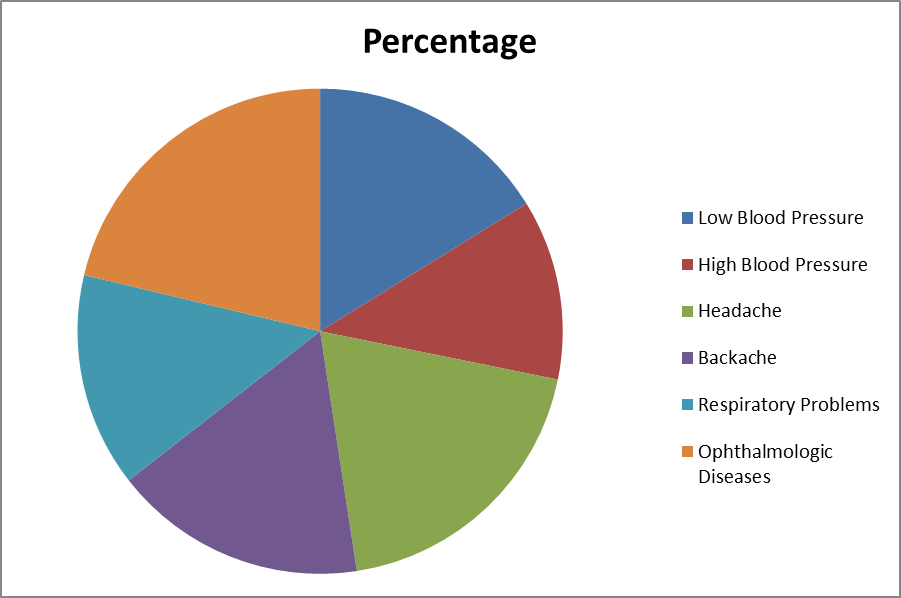
The percentage of different diseases which are found in library professionals through review literature is mentioned in table-1which is as follows:

Table-1- Library Professionals suffering from Diseases

S.No.

Name of Disease

Percentage of Professionals affected (%)

(1)

Low Blood Pressure

68.46

(2)

High Blood Pressure

50.79

(3)

Headache

82

(4)

Backache

71.43

(5)

Respiratory Problems

60.32

(6)

Ophthalmologic Disease

90


The ratio of percentage in the library professionals which are affected by different diseases is nearly above 50% which needs to be a situation of concern for library professionals. This can be easily seen in the pie-chart in figure-1.


Figure-1- Percentage of Library Professionals suffering from Different Diseases


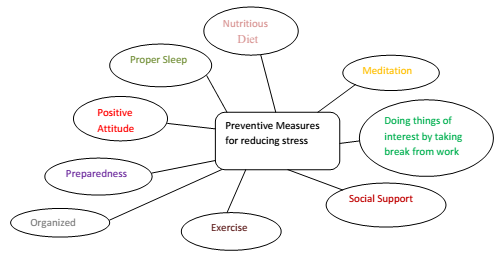
The different preventive measures for reducing the levels of stress through literature review can be seen through figure-2- Different Preventive Measures which reduces stress based on review literature


Figure-2- Different Preventive Measures which reduces stress.


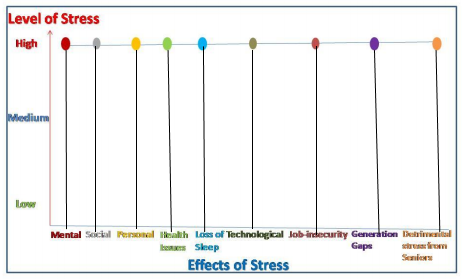
The below table-2 based on review literature shows the percentage of people affected by stress on the professional front in the working environment of the libraries.


Table-2- Effects of stress in working environment of library professionals

S.No.

Effects of Stress

Percentage of people affected by stress (%)

Levels of Stress

(1)

Mental

More than 50

High

(2)

Social

More than 50

High

(3)

Personal

More than 50

High

(4)

Health Issues

More than 50

High

(5)

Loss of Sleep

More than 50

High

(6)

Technological

More than 50

High

(7)

Job- insecurity

More than 50

High

(8)

Generation gaps

More than 50

High

(9)

Detrimental stress from seniors

More than 50

High

The stress of the working professionals in the libraries results high when it starts affecting. The stress can effect mentally, socially, personally resulting in loss of sleep and sometimes serious stress. The stress to cope up with technological advancements in modern libraries is also becoming big reason to health illness. The stress can be detrimental stress also created in the working environment among the library professionals. Every time it’s not possible to have encouragement and feeling of growth and development in and around the working atmosphere. The figure-3 below shows the situation of stress levels when the working environment is stressful and discouragement surrounds the working atmosphere of the library.


RESULTS AND DISCUSSIONS

Work stress can be managed by introducing new skills into professional responsibility, effective communication within environment. Physical health needs technological skills and leads to increased feelings of confidence and competence, attending yoga classes and doing regular exercises to reduce stress. In the group level, staff members are responsible for contributing to well- being and collaboration in the work place.


Routine exercises can make one feel lighter and more energized, leaving to manage stress. Meditation can help brain to be away from negativity. Nourishment of body with right food gives energy needed to tackle what life brings them including stress. Library professionals must maintain a practice of good diet and well eating. Restful sleep is an essential key to stay healthy and strong which must be in a practice. If the professionals are stress free, they can handle stressful situations more calmly at their workplaces. The laughing therapies and pleasant nature can improve the levels of tensions. 


The increased work because of volume and variety of social media contact create overload in the minds of library professionals. The use of personal media intrusion can cause intrusion of work into personal life. The continuous and unpredictable change in social media application and requirements can create uncertainty in using digital products.


There is a limitation in using media. Techno-Stress is a modern disease of adaptation caused by an inability to cope with new computer technologies in a healthy manner. It includes symptoms like inability to concentrate on single issue, increased irritability and feeling of loss of control. Techno-Stress is negative psychological impact between people and introduction of new technologies. 


Some of the major reasons which causes techno-stress are:

  • Lack of proper training

  • Increased workload

  • Lack of standardization within technologies

  • Reliability of hardware and software


Different ways to prevent Techno- Stress in modern libraries are: 

  • The new technology adopted and applied by individual’s job satisfaction and well being increased. As technology was fully embedded and embraced employees it can reduced anxiety and resistance if creative tasks are performed. The resistance to change needs to be forecasted with planning new technology into the work place and it includes how it is communicated, integrated and engaged with.

  • Techno-Stress is a feeling of techno-invasion. Technology has enabled to contact anytime anywhere which gives always exposure to others in a virtual form. No one can do work all time. The work places need to adjust expectations by implementing policies and communication strategies to ensure that a break from work is actively encouraged by management.

  • The use of technology is always being for health and well-being of employer. It is a psychological hazard to have stress on work place. Mindfulness, yoga and resilience workshops can help in avoiding stress up to an extent. 

  • Deliberate and holistic approach is considered where flexible and remote workings are on need to learn technology. Policies and culture needs  to ensure that health and well being is necessary for emerging technologies and new working models.

  • Need to look into psychological aspects by taking time for yourself to be outside for shopping, travelling, entertainment and doing things of own likings and interest can relax and make a stress free mind.

CONCLUSION

Library professionals are facing continuous challenges in their work environment in 21st century. The digital library environment has develop lot of stress for library professionals to cope up with the digital demand of the users. The stress for library professionals is a major concern in digital environment as they have to face many challenges to overcome the stressful situations. Techno- stress has introduced a silent version of stress which is unknowingly entering into the lives of library professionals. The preventive measures against stress and managing stress in a well organized way by adopting various activities like positive attitude, exercises, counseling, proper diet and sleep, regular medical check-ups and break from work environment can effectively reduce the impact of stress in the working environment of library professionals.


Suggestions:

The causes, symptoms and consequences of stress in library professionals must be identified and preventions or measures should be adopted to not bear negative effects. It is important to accept things which are not in our control. The sharing of thoughts can reduce the impact of stress. The issues should be resolved before it became stress crisis. Appreciation is a part which is needed for supportive staff in the professional environment as it works as healing to the stress pressures which developed professionally. Skills must be practiced by library professionals to control over their emotions.


The issues should be known clearly which are creating stress in the working environment and if required the library professionals must take break from their work to be away from stress and restructured their life style. Medical check-ups and meditation or exercises can play a vital role for stress free mind. 


Limitations: 

There is a limitation in study as the data’s are consider by study of articles based on stress. More data can be collected through different research methods from individual on different aspects of stress among large group of library professionals. The time spent can be more on the different study aspects of stress and stress management. 


Scope: 

A qualitative study on stress and stress management can provide better measures to avoid the situation of stress among library professionals. The different preventive measures can be found out to avoid it. The study related to qualitative in-depth levels of stress and experiences among the library professionals can be a part of study for future.

Funding:

No funding sources 

Conflict of interest:

None declared

Ethical approval:

The study was approved by the Institutional Ethics Committee of Library G.B. Pant University of Agriculture and Technology

REFERENCES
  1. Salanova, Marisa, Susana Llorens, and Eva Cifre. "The Dark Side of Technologies: Technostress Among Users of Information and Communication Technologies." International Journal of Psychology, vol. 48, no. 3, 2013, pp. 422-436. https://doi.org/10.1080/00207594.2012.680460.

  2. Jayaprakash, K., A. P. Rekha, and S. Rajendiran. "Work Stress Among Library Professionals in General: A Study." International Journal of Engineering Research and Development, vol. 6, no. 9, 2013, pp. 9-14. https://www.academia.edu/download/31155122/B06090914.pdf.

  3. Cigna. 360 Well Being Survey - Well and Beyond. Kolkata, UNI, 2019, pp. 1-14. https://wellbeing.cigna.com.

  4. Wrike. Statistics of Workplace Stress Impact over Employees in the United States. 2019. https://hrdailyadvisor.blr.com.

  5. Korn, F. "Study: Workplace Stress is on the Rise." Ohio Society of CPAs, 2019. https://ohiocpa.com.

  6. Brill, P. L. "Professional Burnout." Family and Community Health: The Journal of Health Promotion and Maintenance, vol. 6, no. 4, 1986, pp. 12-24.

  7. Schaufeli, Wilmar, and Dirk Enzmann. The Burnout Companion to Study and Practice: A Critical Analysis. CRC Press, 2020.

  8. Haridasan, S., and T. Sultan. "Occupational Stress and Burnout Among the Library Staff of Gorakhpur University: A Survey." Journal of Library and Information Science, vol. 27, no. 1, 2002, pp. 41-52.

  9. Mehra, Satya Prakash. "Health Challenges of the Library Professionals from Rajasthan, India." International Journal of Applied, vol. 5, no. 2, 2018, p. 5. https://doi.org/10.21767/2394-9988.100070.

  10. Raja, K. Dhanush. "Stress Management for Library and Information Professionals." International Journal of Librarianship and Administration, vol. 2, no. 1, 2011, pp. 13-17. http://dx.doi.org/10.2139/ssrn.2569026.

  11. Yojana, P. "Stress Management for Library Professionals." National Research Conference "Explore 2014" - Changing Paradigm of Academic Libraries in the E-environment at MIT School of Management, Pune, Maharashtra, India, 2014. https://doi.org/10.13140/RG.2.1.1323.4004.

  12. Gowda, M. "Satisfaction Levels Related to Management Issues Among LIS Professionals." 2009.

  13. Vanitha, V., et al. "A Study on Organizational Commitment and Stress Among Information Professionals." The IUP Journal of Organizational Behavior, vol. 5, no. 1, January 2006, pp. 1-7.

License
CC BY-NC-ND
Creative Commons Attribution-NonCommercial-NoDerivatives 4.0 International License
Stress Management in Professional Environment for Library Professionals © 2026 by Dr. Geetanjali Rana Kanwar licensed under CC BY-NC-ND 4.0
All papers should be submitted electronically. All submitted manuscripts must be original work that is not under submission at another journal or under consideration for publication in another form, such as a monograph or chapter of a book. Authors of submitted papers are obligated not to submit their paper for publication elsewhere until an editorial decision is rendered on their submission. Further, authors of accepted papers are prohibited from publishing the results in other publications that appear before the paper is published in the Journal unless they receive approval for doing so from the Editor-In-Chief.
Himalayan Journal of Agriculture open access articles are licensed under a Creative Commons Attribution-Share A like 4.0 International License. This license lets the audience to give appropriate credit, provide a link to the license, and indicate if changes were made and if they remix, transform, or build upon the material, they must distribute contributions under the same license as the original.
Advertisement
Recommended Articles
Research Article
Mating behaviour of Cavariella aegopodii
Published: 19/07/2024
Download PDF
Research Article
The Role of Indigenous Microbes and Earthworm in the Bioconversion of Dairy Wastewater Solids into Organic Fertilizer
...
Published: 17/01/2024
Download PDF
Research Article
The Effect of Green Marketing Mix on Purchasing Decisions by Greenly Salad Consumers in Surabaya
...
Published: 30/01/2023
Download PDF
Review Article
Registration of Gute-19 (Late Set) Soybean Varieties (Late Maturity Class)
Published: 10/10/2020
Download PDF
Chat on WhatsApp
Flowbite Logo
Najmal Complex,
Opposite Farwaniya,
Kuwait.
Email: kuwait@iarcon.org

Editorial Office:
J.L Bhavan, Near Radison Blu Hotel,
Jalukbari, Guwahati-India
Useful Links
Order Hard Copy
Privacy policy
Terms and Conditions
Refund Policy
Others
About Us
Team Members
Contact Us
Online Payments
Join as Editor
Join as Reviewer
Subscribe to our Newsletter
Follow us
MOST SEARCHED KEYWORDS
scientific journal
 | 
business journal
 | 
medical journals
 | 
Scientific Journals
 | 
Academic Publisher
 | 
Peer-reviewed Journals
 | 
Open Access Journals
 | 
Impact Factor
 | 
Indexing Services
 | 
Journal Citation Reports
 | 
Publication Process
 | 
Impact factor of journals
 | 
Finding reputable journals for publication
 | 
Submitting a manuscript for publication
 | 
Copyright and licensing of published papers
 | 
Writing an abstract for a research paper
 | 
Manuscript formatting guidelines
 | 
Promoting published research
 | 
Publication in high-impact journals
Copyright © iARCON Internaltional LLP . All Rights Reserved.