Unemployment is a central problem in modern societies. When unemployment is high resources are wasted and people’s incomes are depressed. During such periods, Economic distress also spills over to affect people’s emotions and family lives. Bo city has witnessed a massive influx of people from the provinces due to some unavoidable circumstances. Most of these people are youths who have decided not to return home. High unemployment leads in waste for during recession, when unemployment is high, the economy is not producing as expected. The impact of unemployment in an economy is very discouraging and also indicates that the government of the day is losing. Every year people graduate from schools and tertiary institutions of learning which increase the number of employed youths. These people find it very difficult to have jobs as graduates from universities, teacher training colleges and other technical institutions dominating the work-opening for them. Failure to get jobs can be consequent. Frustration to get jobs, may lead to juvenile delinquencies and negative social vices. A good number of unemployed youths are found in Bo city. Therefore, the research aimed at identifying the coping mechanisms of unemployed youths in Bo city. The study indicated that majority of the sampled respondents are males (66.7%) 0while 33.3% were females. Three-forth (60%) of the sampled respondents were single while two-fifth (40%) were married. A large proportion of the sample respondents were within the modal age bracket 29 to 33 years. The average age of the sampled respondents was 29 years. This means that most of the sampled respondents are young 20% of the respondent had no formal education, 10% had primary education, nearly half (46%) of the respondents had secondary school education, 24% had vocational training, while none had university or college education. Majority 80% of the respondents have never applied for a job before while 20% have applied for a job before. Nearly three-quarters of the respondents have never secured a job before while slightly a quarter has secured a job before. (71%) of the sample respondents are self-employed while the rest 29% have never seek employment. With regards to problems unemployed youths encountered, two-fifth (40%) of the respondents mentioned the difficulty to meet their basic needs, 12% attributed their problems to family pressure, and another 21% of the sample respondents are faced with financial constraints, 16 % attributed their problems to alcohol and drug taking, a small proportion 4% complained of burglary and 7% attributed their problem to theft. On the whole, the most important problems encountered by the unemployed youths are the unavailability to meet their basic needs, financial constraint and family problems. The common mechanisms employed by the sample respondents to cope with their unemployment situations were Garri selling, Palm wine tapping and selling, local cassava breed and fish production, trading, farming (subsistence), intermittent self-employment, assistance from friends and relatives and local fishing. The most prominent suggestion made by the unemployed youths in terms of ending their problems was the creation of job opportunities (30%), 46% considered skills training programmes and 24 wished for a vibrant youth funding project as the fundamental solution to their problems. Finally, authorities in charge of youth unemployment suggested that the only way to solve the problem of youth unemployment is through the formulation of a National Youth Policy Based on the information gathered from the sample respondents (unemployed youth and authorities in charge of youths), the general conclusion that can be stated is that, unemployment had adverse effects on unemployed youths. The government through the ministry of youth and sport must create the ideal enabling environment to tackle unemployment and create a positive working culture in the minds of youth through skills building and development. Based on the key findings of the study, the following recommendations have been suggested to be undertaken in order to address the unemployment situation in Bo city prominent situation in the area. Since many unemployed youths lack formal education, government should undertake skills training programmes so that they can be better employed. Since majority of these unemployed youths in the study area are former combatant from other areas government should undertake development programmes in the rural areas so that majority of these unemployed youths would be motivated to go home. The educational authorities should focus on practical or vocational causes which the 6-3-3-4 system is must try to implement. Government should assist by establishing institutions that will employ the youths after acquiring different skills from vocational institution.
Keywords
Unemployed
Youths
Government
Vocational Institution
INTRODUCTION
There is nothing new about unemployment or about the economic, social and psychological consequences of it. The unemployed have been recognized for centuries. From an economic perspective the loss of output to the economy and the loss of income to the families of unemployed are some of the most important issues at stake. So is the duration of unemployment. Economist would for example analyze the difference in the duration of unemployment for youths and adults. They would calculate the impairment of unemployed individual’s productive potential [1].
If supportive facilities for the unemployed are considered, it will be normal to assume that the principal agencies for welfare will be concerned about the material needs of these unprivileged individuals - they need jobs and they need money. However, these economic analysis of the consequences of unemployment do not eliminate the social and psychological consequences they might experience during their unemployment, The first social-psychological research on the problems of unemployed dated back in early 1930.The depression experienced at that time gave researchers opportunities to investigate the consequences of unemployment. However, Obrien warns that those studies differ considerably from present-day unemployment studies. The profile of the unemployed during those years was predominantly adult males; while today a considerable number of youth and women are unemployed [2].
The literature covering the topic has since expanded substantially. Kelvin and Jarret 1985 asked the human question: What is the point or aim of helping social psychological research on unemployment? There should be no doubt about the undisputable hardship of the great majority of unemployed. Kelvin and Jarret warn that the idea of essentially academic research into another condition may appear almost indecent. They placed that the motivation and purpose of social psychological research on unemployment should unequivocally aim at helping the destitute group of human beings. Although there is a school of thought suggesting that research on the psychosocial effect of unemployment might be of little or no direct help to the unemployed, the possibilities exist that it might create awareness and help other people to be sensitive, and understand the problem of the unemployment. This might only be on a diminutive scale of solutions.
In societies whose socio-economic structure is mainly defined on its importance and division of labor unemployed people are defined by what they are not.
According to the definition, they are not part of the structure that enables people to earn a living, feel productive and part of a structure of economic development, and or experience positive feelings about being engaged in activities that they enjoy: that is, living out vocation interest. Whether the causes of their unemployment are at the macro level (example lack of appropriate qualifications or skills can be due to structural problems in an economy) or at the micro economic level of the individual (example of lack of proper qualifications or skills, it would be normal to expect that unemployment would affect the individual and his or her behavior to a certain extent.
Therefore, the research aims at identifying the coping mechanisms of unemployed youths in Bo city.
Objectives of the Study
The objectives of the study include:
Identify the personal characteristics of unemployed youths in Bo city
Examine the various coping mechanisms adopted by unemployed youths in Bo city
Determine the effect of unemployment on youths
Make recommendations for addressing the unemployment situation in the study area
Justifications of the Study
The major reasons for embarking on this study are:
It is hoped that investigation into the problem of youth unemployment will generate more knowledge and enhance further understanding into the issue
It is further hoped that such information will help policymakers such as Ministry of Social Welfare, Gender and children’s affairs. Ministry of youths and sports, ministry of Labor and Industrial Relations etc, to design appropriate policies that will amicably solve the problems of youth unemployment
It also hoped that this study will broaden our knowledge onto problems of youth unemployment and will he perform the basis for developing appropriate solutions
This study will also serve as a useful reference material for the research students who will like to undertake similar studies on the topic
Discription of Study Area
Centrally located, Bo lies on the main rail line east and south of Freetown which was closed in 1974. From 1930 until independence in 1961, it was the capital of the protectorate of Sierra Leone. The city is the administrative centre of the Southern province. After Freetown, Bo is the leading transportation and commercial centre of Sierra Leone. The inhabitants are known for their resource, resistance and hospitality. The town was named after its generosity. An elephant was killed at what is today known as Bo parking ground. People from the surrounding villages come to receive their share. Because the meat was so large, the hunters spent days distributing and the word “Bo lor” which in Mende means- this is yours, with reference to the meat, was said so much that the elders and visitors decided to name the place Bo [3].
Bo also commonly known as Bo town is the second largest city in Sierra Leone and the largest city in the southern province. Bo is the capital and administrative center of Bo district in the Southern province. Bo is an urban centre and has approximately 160 miles 250 km South East of Freetown. After Freetown Bo is the leading financial, educational, commercial and urban center of Sierra Leone.
The city of Bo is one of Sierra Leone six municipalities and is also locally governed by a directly elected Bo city council, headed by a Mayor and members of the Bo city council. The municipality of Bo had a population based on the 2010 estimated of 214,474 and current estimate of approximately 306,000 [4].
Bo is one of the most ethnically diverse cities in Sierra Leone. The city is home to a significant population of many of Sierra Leonean ethnic groups forming the majority.
MATERIALS AND METHODS
The data collection from the field survey was generated using the following techniques and instruments:
Informal interview, observations, desk research and questionnaire. This involved a one to one interview of selected respondents
The second section was designed to investigate views of authorities on the problems and prospects of unemployed youths
Data collected from the field was analyzed using simple statistical techniques such as histogram, pie chart, and bar chart. Firstly, the information collected was converted to raw scores through frequency tables. Then the raw scores were converted to percentages
RESULTS
Personal Features of Respondents
The vital characteristics of the sample respondents that was taken into consideration regarding their personal features:
Sex
Age
Marital status
Educational status
Sex of Respondents
Table 1: Distribution of Respondents According to Sex
Sex
Numbers
Percentage
Male
60
66.7
Female
30
33.3
Total
90
100
Source: Research 2019
Table 2: Distribution of Respondent According to Age
Age group
Frequency
(x)
(fx)
14-18
2
16
32
19-23
3
21
63
24-28
31
26
806
29-33
48
31
1488
34-38
6
36
216
Total
90
2605
Source: Research 2019
Table 3: Shows The Distribution of Respondents According to Marital Status
Parameters
Sample respondents
Male
Female
Total
Title
No
%
No
%
No
%
Married
15
25
21
70
36
40
Single
45
75
9
30
54
60
Divorced
-
-
-
-
-
-
Separated
-
-
-
-
-
-
Widowed
-
-
-
-
-
-
Total
60
100
30
100
90
100
Source: Research 2019
Table 4: Shows the Distribution of Respondents According to Educational Status
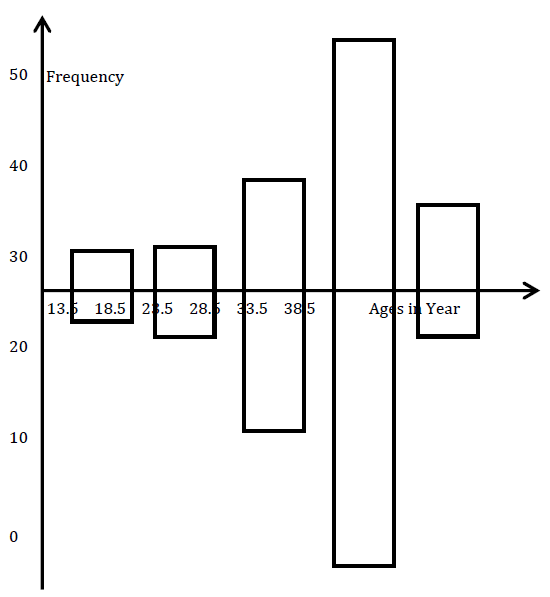
Figure 1: Histogram Showing the Distribution of Respondents According to Age Group
Table 5: Distribution of Resapondents According to Job Application, Number of Job Application, Secured A Job Before and Self Employed Before
Parameters
Respondents
Male
Female
Total
No
%
No
%
No
%
A
Job application
Yes
15
25
3
10
18
20
No
45
75
27
90
72
80
Total
60
100
30
100
90
100
B
No. Of job application
Once
5
28
2
67
7
33
Twice
13
72
1
33
14
67
Thrice
-
-
-
-
-
-
Four times
-
-
-
-
-
-
Five times and more
-
-
-
-
-
-
Total
18
100
3
100
21
100
C
Secured as job before
Yes
22
37
5
17
27
30
No
38
63
25
83
63
70
Total
18
100
3
100
21
100
D
Self-employed before
Yes
39
65
25
83
64
71
No
21
35
5
17
26
29
Total
60
100
30
100
90
100
Table 6: Shows The Problems Faced by Sample Respondents
Parameters
Mentions
Types of problems
No
%
Basic needs difficulty
96
40
Family pressure
28
12
Taking alcohol and drugs
38
16
Theft
17
7
Burglary
10
4
Total
240
100
Source: Research 2019
Table 7: Shows The Coping Mechanisms of Unempoloyed Youths
Coping mechanisms
No
%
Average monthly income
%
Palm wine tapping and selling
10
11.11
1,000,000
14
Local cassava-breed and fry fish production
20
22.22
2,140,000
30
Trading (petty)
10
11.11
2,000,000
28
Intermittent self-employment
20
22.22
900,000
13
Farming (subsistence)
10
11.11
600,000
8
Assistance from friends and relatives
13
14.45
300,000
4
Local fishing
7
7.78
200,000
3
Total
90
100
7,140.000
100
Source: Research 2019
Table 8: Shows Suggestion Made by Sampled Responmdents
Suggested solution
Number
Percentage
Job creation opportunities
27
30
Skills training
41
46
Funding of youth project
22
24
Total
90
100
Source: Research 2019
From the Table 1 the study shows that nearly three-quarters of the sampled respondents are males while slightly above one-quarter are females. The study in sharp contrast to other studies shows that more men are unemployed than women. It is generally that employment opportunities for young women are more limited than those for young men, leading to slightly higher unemployment rates for young women.
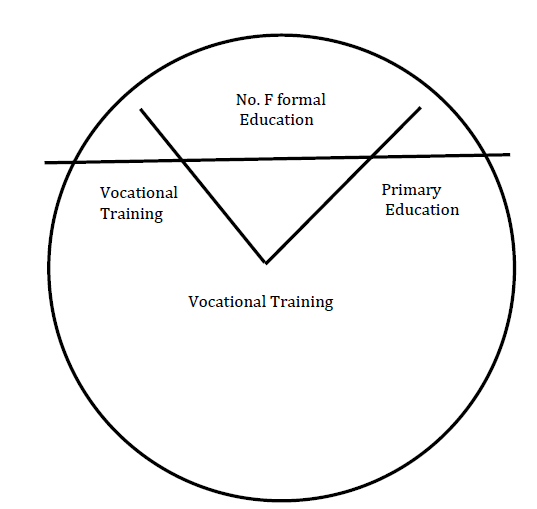
Figure 2: Pie Chart Showing the Distribution of Respondents According to Educational Status
In addition most of the married women are traditionally not allowed to look for employment but rather to serve as housewives [5].
From the table above, the result shows that the minimum and maximum ages of respondents are 18 to 35 years respectively, the range of the distribution is 17 years where as the mean age is 29 years. From the table, we can also see that a large proportion of the sample respondents are within the prime ages of 29=33 years which is the most prominent age bracket that are affected by unemployment.
The study revealed that respondents were far away from the minimum level of the distribution at an
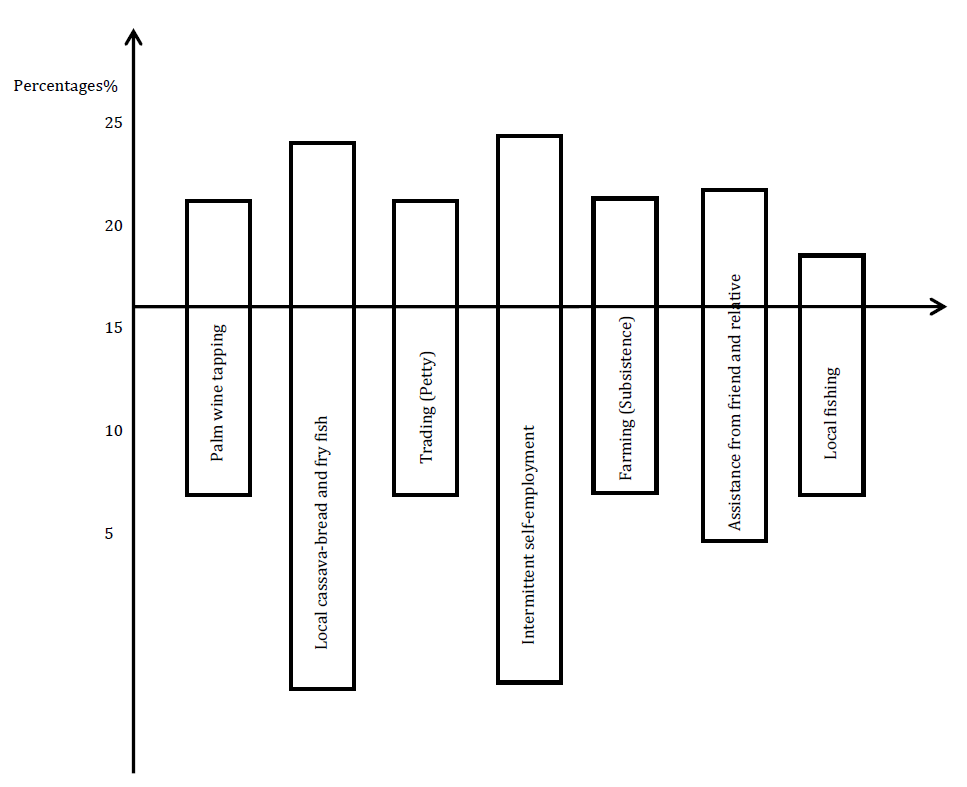
Figure 3: Bar Chart Showing the Distribution of Respondents According to Their Coping Mechanisms
increasing rate where as they fluctuate in the decrease after the class 29 to 33. This suggests that most of the respondents actively search for jobs at their earlier ages but become less active after several years of trials and resort to other ways of earning a living.
The Table 3 reveals that 40% of the respondents are married; with married women accounting for nearly three-quarters of the total married respondents while one-quarter are males. High unemployment predominance accounts for the low-level participation of males into marriage life.
The Table 4 depicts the educational status of the sample respondents, The table shows that one–fifth of the sampled respondents had no formal education.10% of the respondents had primary school education,46% had Secondary School education, nearly one-fourth had vocational training while none of the respondents attained tertiary education.
The low level of formal/tertiary education among the sampled respondents partly explains the reason for the high level of unemployment among them as they lacked technical skills.
Effects of Unemployment on Sample Respondents
This aspect of the chapter determines and discusses the effect of unemployment on sample respondents. The effects considered are:
Job search
Problem faced
Coping mechanisms
Job Application
The table shows that four-fifth of the sampled respondents that have not applied for a job before outnumbered that of respondents one-fifth who have looked for a job before. This result reveals that most of the sample respondents were less actively searching for jobs because they lack formal or tertiary education and technical skills.
Number of Job Application
The results show that one-quarter of the respondents have applied for a job once and three-quarters applied twice.
Secure A Job Before
According to the table, it is clearly seen that nearly three-fourth of the sample respondents have worked before. The results revealed that after several years of trials, only a few people have gained employment.
Self-Employment Before
The table shows that majority 71% of the sample respondents have resorted to some other ways of securing a job before whereas, the rest 29% have never employed themselves in any other activities to earn a living before. The study proves that unemployment is just a misfortune to those of the respondents but if they are giving the chance to learn a trade or employ themselves in some other activities, they will combat the situation.
Problems Faced by Unemployed Youths
The problem faced by different sampled respondents were assessed and given in Table 6
The table highlights some of the perennial problems unemployed youths are facing in Bo city
From the Table 7, we can see that 40% of the sample respondents cannot meet their basic needs like food and s helter as the most important problem they are facing. Most of them are living on shanty dwellings. A good proportion 21% of the respondents are faced with financial constraints, 12% of the respondents come into conflict with their family members, 16 % attributed their problems to alcohol and drug intake.
The other problems that are faced by the sample respondents as a result of unemployment are 7% each complain of theft and 4% complain of burglary
On the whole, the most important problems encountered by unemployed youths and Bo city are the unavailability of their basic needs, financial constraints, family problems and the burglary activity that goes on within the study area. The data in Table 7 is represented in Figure 3.
It can be depicted from the table that most of the respondents (22.22%) receive income from the sales of cassava-breed and fry fish and (22.22%) receive income from intermittent self-employment such as tailoring, hair dressing, gara tie and dyeing. A good number (11.11%) of them also cope by engaging themselves in farming (subsistence) activities that earn them income or benefit while (11.11%) involved in palm wine tapping and selling. The result also shows (14.45%) is the dependency ratio of the unemployed youths.
From the table, it shows that (30%) of the income earned is from cassava-breed and fry fish production, (28%) of the income earned as a coping mechanism is from trading. Also, (13%) of income is earn from intermittent self-employment, 14% of income is earn through palm wine tapping and selling.
Furthermore, 3% of the total income is obtained from fishing while assistance from friends and relatives, subsistence farming contributed 4% and 8% respectively. The result suggest that total earning for unemployed youths is seven million one hundred and forty thousand Leones le 7,140,000 which is very small to ensure that the unemployed youth survive this economic epidemic.
Thus the per capita income of unemployed youths is seventy-nine thousand three hundred and thirty Leones le 79.333 which is also small to ensure that youths meet their basic needs.
From the table above, we can see that on e-third 30% of the sampled respondents considered job creation opportunities as the solution to unemployment, while 46% considered skills training program as the key solution to unemployment and 24% considered the funding of youth’s project s as the fundamental solution to their problem of unemployment
Summary and Recommendations
Summary of Findings: Based on the study, the following findings were obtained:
The study indicated that majority of the sampled respondents were males (66.7%) while 33.3% females
Three-forth (60%) of the sampled respondents were single while two-fifth (40%), married
A large proportion of the sample respondents are within the modal age bracket 29 to 33 years
The average age of the sampled respondents was 29 years. This means that most of the sampled respondents are young
20% of the respondent had no forma l education, 10% had primary education, nearly half (46%) of the respondents had secondary school education, 24% had vocational training, while none had university or college education
Majority 80% of the respondents have never applied for a job before while 20% have applied for a job before
Nearly three-quarters of the respondents have never secured a job before while slightly a quarter has secured a job before
(71%) of the sample respondents are self-employed while the rest 29% have never seek employment
With regards to problems unemployed youths encounter, two-fifth (40%) f the respondents mentioned the difficulty to meet their basic needs, 12% attributed their problems to family pressure, and another 21% of the sample respondents are faced with financial constraints, 16 % attributed their problems to alcohol and drug taking, a small proportion 4% complain of burglary and 7% attributed their problem to theft. On the whole, the acute problems encountered by the unemployed youths are the unavailability to meet their basic needs, financial constraints and family problems.
The common mechanisms employed by the sample respondents to cope with their unemployment situation are: Palm wine tapping and selling, local cassava breed and fry fish production, trading, farming (subsistence), intermittent self-employment, assistance from friends and relatives and local fishing.
The most prominent suggestion made by the unemployed youths in terms of finding solution to their problems, was the creation of job opportunities (30%), 46% considered skills training programmes and 24 wished for a vibrant youth funding project as the fundamental solution to their problems.
Finally, authorities in charge of youth unemployment suggested that the only way to solve the problem of youth unemployment is through the formulation of a National Youth Policy.
Recommendations
The study recommended that:
The government through the ministry of youth and sport must create the ideal and enabling environment to tackle unemployment and create a positive working culture in the minds of youth through skills building and development
Since majority of these unemployed youths in the study area are former combatant from other areas government should undertake development programmes in the rural areas so that majority of these unemployed youths would be motivated to go home
The educational authorities should focus on practical or vocational causes which the 6-3-3-4 system is trying to implement
Government should assist by establishing institutions that will employ the youths after acquiring different skills from vocational institution
REFERENCE
World Bank and Statistic Sierra Leone. "A poverty profile for Sierra Leone." Sierra Leone Integrated Household Survey, June 2013.
Patton, W. "The family and the unemployed adolescent." Science Direct, vol. 12, no. 5, 1991, pp. 85–102.
Statistics Sierra Leone. "Projected population figures for 2014 from the Republic of Sierra Leone population and housing census 2004." Published in November 2006.
Kelvin, P. and Jackson, D. "Unemployment: Its social psychological effects." Science Direct, 1986.
Kelvin, P. and Jarrett, J.E. "Unemployment: Its social psychological effect." Cambridge University Press, Cambridge, 1985, pp. 149.
License
Creative Commons Attribution-NonCommercial-NoDerivatives 4.0 International License
All papers should be submitted electronically. All submitted manuscripts must be original work that is not under submission at another journal or under consideration for publication in another form, such as a monograph or chapter of a book. Authors of submitted papers are obligated not to submit their paper for publication elsewhere until an editorial decision is rendered on their submission. Further, authors of accepted papers are prohibited from publishing the results in other publications that appear before the paper is published in the Journal unless they receive approval for doing so from the Editor-In-Chief.
Himalayan Journal of Education and Literature open access articles are licensed under a Creative Commons Attribution-Share A like 4.0 International License. This license lets the audience to give appropriate credit, provide a link to the license, and indicate if changes were made and if they remix, transform, or build upon the material, they must distribute contributions under the same license as the original.
Recommended Articles
Research Article
Understanding Regional Spaces vis-à-vis “the” Indian Space: A Study of Récits
Himanshu Parmar
Published: 10/02/2026
Download PDF
Cite
x
APA
Parmar, H. (2026). Understanding Regional Spaces vis-à-vis “the” Indian Space: A Study of Récits. Himalayan Journal of Education and Literature, 7(1), 1-5.
MLA
Parmar, Himanshu. "Understanding Regional Spaces vis-à-vis “the” Indian Space: A Study of Récits." Himalayan Journal of Education and Literature 7.1 (2026): 1-5.
Chicago
Parmar, Himanshu. "Understanding Regional Spaces vis-à-vis “the” Indian Space: A Study of Récits." Himalayan Journal of Education and Literature 7, no. 1 (2026): 1-5.
Harvard
Parmar, H. (2026) 'Understanding Regional Spaces vis-à-vis “the” Indian Space: A Study of Récits' Himalayan Journal of Education and Literature 7(1), pp. 1-5.
Vancouver
Parmar H. Understanding Regional Spaces vis-à-vis “the” Indian Space: A Study of Récits. Himalayan Journal of Education and Literature. 2026 Jan;7(1):1-5.
Download PDF
Research Article
Perceptions of Adolescent Pregnancy and Early Motherhood
Lucy Fonjong Udikoh,
Tamfuchia Ferdinard Baba
Published: 30/12/2020
Download PDF
Cite
x
APA
Fonjong Udikoh, L. & Ferdinard Baba, T. (2020). Perceptions of Adolescent Pregnancy and Early Motherhood. Himalayan Journal of Education and Literature, 1(1), 1-7.
MLA
Fonjong Udikoh, Lucy and Tamfuchia Ferdinard Baba. "Perceptions of Adolescent Pregnancy and Early Motherhood." Himalayan Journal of Education and Literature 1.1 (2020): 1-7.
Chicago
Fonjong Udikoh, Lucy and Tamfuchia Ferdinard Baba. "Perceptions of Adolescent Pregnancy and Early Motherhood." Himalayan Journal of Education and Literature 1, no. 1 (2020): 1-7.
Harvard
Fonjong Udikoh, L. and Ferdinard Baba, T. (2020) 'Perceptions of Adolescent Pregnancy and Early Motherhood' Himalayan Journal of Education and Literature 1(1), pp. 1-7.
Vancouver
Fonjong Udikoh L, Ferdinard Baba T. Perceptions of Adolescent Pregnancy and Early Motherhood. Himalayan Journal of Education and Literature. 2020 Jul;1(1):1-7.
Download PDF
Research Article
Pragmatic Formatting of Poetic Discourse According to Al-A’sha: An Analytical Study
التنسيق التداولي للخطاب شعري عند الأعشى: دراسة تحليلية
Neamah Dahash Farhan,
...
Rafid Sabah Al-Tamimi
Published: 28/02/2026
Download PDF
Cite
x
APA
Farhan, N. D., Sadiq, N. Q. & Al-Tamimi, R. S. (2026). Pragmatic Formatting of Poetic Discourse According to Al-A’sha: An Analytical Study
التنسيق التداولي للخطاب شعري عند الأعشى: دراسة تحليلية. Himalayan Journal of Education and Literature, 7(1), 1-10.
MLA
Farhan, Neamah D., Niyazik Q. Sadiq and Rafid S. Al-Tamimi. "Pragmatic Formatting of Poetic Discourse According to Al-A’sha: An Analytical Study
التنسيق التداولي للخطاب شعري عند الأعشى: دراسة تحليلية." Himalayan Journal of Education and Literature 7.1 (2026): 1-10.
Chicago
Farhan, Neamah D., Niyazik Q. Sadiq and Rafid S. Al-Tamimi. "Pragmatic Formatting of Poetic Discourse According to Al-A’sha: An Analytical Study
التنسيق التداولي للخطاب شعري عند الأعشى: دراسة تحليلية." Himalayan Journal of Education and Literature 7, no. 1 (2026): 1-10.
Harvard
Farhan, N. D., Sadiq, N. Q. and Al-Tamimi, R. S. (2026) 'Pragmatic Formatting of Poetic Discourse According to Al-A’sha: An Analytical Study
التنسيق التداولي للخطاب شعري عند الأعشى: دراسة تحليلية' Himalayan Journal of Education and Literature 7(1), pp. 1-10.
Vancouver
Farhan ND, Sadiq NQ, Al-Tamimi RS. Pragmatic Formatting of Poetic Discourse According to Al-A’sha: An Analytical Study
التنسيق التداولي للخطاب شعري عند الأعشى: دراسة تحليلية. Himalayan Journal of Education and Literature. 2026 Jan;7(1):1-10.
Download PDF
Research Article
Interaction of Modern Literature-Paintings and Poetry, Storytelling, Literature
Jackline Njeri Murimi
Published: 27/01/2025
Download PDF
Cite
x
APA
Njeri Murimi, J. (2021). Interaction of Modern Literature-Paintings and Poetry, Storytelling, Literature. Himalayan Journal of Education and Literature, 2(1), 1-5.
MLA
Njeri Murimi, Jackline. "Interaction of Modern Literature-Paintings and Poetry, Storytelling, Literature." Himalayan Journal of Education and Literature 2.1 (2021): 1-5.
Chicago
Njeri Murimi, Jackline. "Interaction of Modern Literature-Paintings and Poetry, Storytelling, Literature." Himalayan Journal of Education and Literature 2, no. 1 (2021): 1-5.
Harvard
Njeri Murimi, J. (2021) 'Interaction of Modern Literature-Paintings and Poetry, Storytelling, Literature' Himalayan Journal of Education and Literature 2(1), pp. 1-5.
Vancouver
Njeri Murimi J. Interaction of Modern Literature-Paintings and Poetry, Storytelling, Literature. Himalayan Journal of Education and Literature. 2021 Jan;2(1):1-5.
Yahaya Fofana, I. & Baindu Fortune, S. (2020). The Coping Mechanisms of Unemployed Youths in Bo City. Himalayan Journal of Education and Literature, 1(1), 1-7.
MLA
Yahaya Fofana, Ibrahim and Stella Baindu Fortune. "The Coping Mechanisms of Unemployed Youths in Bo City." Himalayan Journal of Education and Literature 1.1 (2020): 1-7.
Chicago
Yahaya Fofana, Ibrahim and Stella Baindu Fortune. "The Coping Mechanisms of Unemployed Youths in Bo City." Himalayan Journal of Education and Literature 1, no. 1 (2020): 1-7.
Harvard
Yahaya Fofana, I. and Baindu Fortune, S. (2020) 'The Coping Mechanisms of Unemployed Youths in Bo City' Himalayan Journal of Education and Literature 1(1), pp. 1-7.
Vancouver
Yahaya Fofana I, Baindu Fortune S. The Coping Mechanisms of Unemployed Youths in Bo City. Himalayan Journal of Education and Literature. 2020 Jul;1(1):1-7.



 Download PDF
 Download XML