Strategic marketing serves as a vital tool for corporations aiming to boost product sales and increase awareness among consumers. In the case of Siomay Bandung Wibisana, understanding the market landscape and recognizing challenges, particularly as their product is considered a commodity, is crucial. This involves delving into various analytical frameworks such as Porter’s Five Forces, STP (Segmentation, Targeting, Positioning), SWOT analysis, marketing mix, and the 7Ps. The study encompasses diverse research methods, including descriptive, diagnostic, predictive analytics, and perspective analytical research techniques. It employs both primary and secondary data collection methods to comprehensively gauge market dynamics. Implementing a multifaceted marketing strategy emerges as pivotal for Siomay Bandung Wibisana’s revenue growth. This encompasses strategies like broadening menu variations, dynamic pricing strategies, enhancing online presence, fostering collaborations, and engaging with the community. Through meticulous analysis of internal and external factors, particularly via SWOT analysis, and the application of the 4Ps (Product, Price, Place, Promotion), the brand can carve a distinctive identity, attract its target audience, and effectively navigate the fiercely competitive F&B industry. This holistic approach doesn’t solely aim for immediate sales but strives for sustainable growth by remaining adaptable to evolving market landscapes. Ultimately, the STP process forms the bedrock of a successful strategy by comprehending the market intricacies and precisely targeting the ideal customer base.
Keywords
Siomay Bandung Wibisana
Porter’s Five Forces
STP
SWOT Analysis
Marketing Mix
7P
INTRODUCTION
The Indonesian economy heavily relies on expanding household consumption, particularly in the food and beverage sector, driven by a burgeoning middle-class consumer base. Local firms are excelling as exporters while also attracting foreign companies interested in tapping into the Indonesian market. The evolving lifestyle in metropolitan areas reflects market shifts, with a focus on convenience and healthy food options due to time constraints. Major players like PT Indofood CBP Sukses Makmur Tbk and Garuda Food dominate the market, offering innovative, customized products catering to traditional preferences. As the industry evolves, health-conscious trends among Indonesian youth are driving the demand for fortified products like energy drinks, cereals, and fortified dairy [1].
The industry’s dependence on the domestic market provides some insulation from global market fluctuations, yet local producers remain susceptible to price changes in imported production inputs [2]. Rising costs, including wages and electricity prices, pose challenges, especially for small and medium-sized enterprises. Enhancing operational efficiency, optimizing resources, and improving product quality are strategies to alleviate these pressures [3]. Despite efforts, Indonesian consumers often perceive foreign brands, particularly in baby and children’s food, as superior, highlighting the importance of branding for local products.
The modern food and beverage marketing landscape heavily relies on digital platforms like websites, social media, and e-commerce due to their convenience and efficiency. The widespread internet and social media usage in Indonesia have significantly impacted brand perception and closure rates [4]. Digital marketing operations, including social media, search engines, customer reviews, and websites, play a crucial role in brand research and consumer decision-making. Indonesian e-commerce continues to dominate as a key platform for brand discovery [3].
Indonesia’s diverse culinary landscape, from Mie Aceh in the west to seafood-rich offerings in Papua in the east, reflects the country’s vibrant FnB industry. Despite the vast opportunities, the sector faces intense competition due to substantial demand and ample supply. Each region, like Java with its Javanese and Sundanese cuisines, offers distinct culinary experiences, blending local tastes with influences from other cultures like Chinese Dimsum, adapted to suit local preferences.
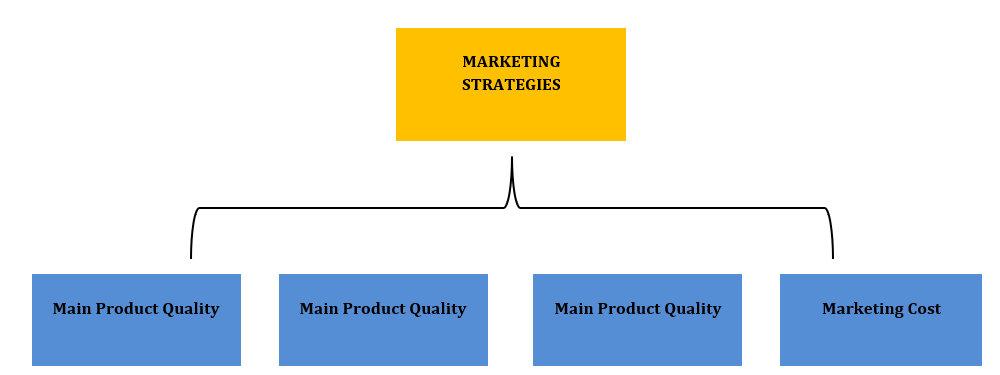
Figure 1: Conceptual Framework
Siomay Bandung Wibisana (SBW) is a small and medium-sized business founded in 1990. SBW’s creator chose Jakarta as the headquarters to reach a significant market opportunity. He took the original Siomay recipe from Bandung and began the business by opening a store in Hero supermarket. SBW expanded to more than 40 outlets in 2000 but was hampered by the demise of Hero Supermarket. The growth of Carrefour and other supermarkets poses a significant challenge to Hero and SBW; in 2005, their shop count was reduced to less than ten. SBW began to reclaim the market by maintaining a store in Soekarno Hatta Airport and another in Mangga Dua while maintaining the original formula and high-quality product. With the problems of the Covid Pandemic Era, SBW began to move into the internet shop and create social media platforms such as Facebook, Instagram and e-commerce platforms such as Gofood, Grabfood, Tokopedia, and Shopee in 2020. SBW has many followers and a large order in this period because most people stay home and buy food online. Their internet store is assisting the offline store, which has seen a significant decrease in revenue due to the pandemic.
Several Research Question are:
Do Siomay Wibisana still exist
What marketing strategies that suitable for Siomay Bandung Wibisana to increase the revenue
How to implement the suitable marketing strategy
The objective of the questions will be starting with collecting data about Siomay Wibisana awareness from their market opportunity, knowing the challenge, especially competitor as Siomay Wibisana product is a commodity item. Then start to correlate with Siomay Wibisana operation and sales to seek opportunity for improvement. How marketing plan variables influence Siomay Bandung Wibisana’s to increase the sales become the main part of this study. Company can boost sales with various kind marketing strategy [5]. Starting from studying internal and external side of the company using several methods, then creating specific marketing strategy in hope to increase the sales. Focus on the strategy will be in strengthen the main product quality, clarify the proper price for the market, pick the media that will be used and calculating the marketing cost that is needed to accomplish the strategy [6].
Siomay Bandung Wibisana’s company concept is to transform local items into products that are well-known throughout the community. Another factor to consider is the opportunity, as Siomay has become a symbol of product sales for all businesses. As a result, the corporation now has both a challenge and an opportunity [7].
Quantitative methods can help gather statistical data on market trends, customer preferences, and demand for specific food products like siomay. This data can be crucial for understanding the size of the target market and identifying potential growth opportunities [8]. Quantitative surveys can be used to collect structured data from a large sample of customers. This method is useful for quantifying customer preferences, behavior, and demographics. For instance, it can help determine what percentage of customers prefer specific flavors or packaging options. Qualitative methods, such as focus groups and in-depth interviews, can provide rich, nuanced insights into customer preferences, emotions, and experiences with Siomay Bandung Wibisana [9]. This information can help in tailoring marketing strategies to meet customer needs effectively [8]. Qualitative research is useful for understanding how customers perceive the brand, the quality of siomay, and the overall dining experiences.
MATERIALS AND METHODS
Problem Identification
The primary issue is the lack of growth in online siomay sales. Despite various efforts and investments, the business has not seen a significant increase in revenue or customer base over time. The increase in marketing expenses has not yielded the expected results. The additional funds allocated to marketing strategies have failed to generate a substantial increase in sales or customer engagement [10]. There may be an issue with attracting and retaining new customers. The business may struggle to reach and convince potential customers to try their siomay, and existing customers may not return frequently enough.
The business might not be effectively analyzing and responding to the strategies of competitors. Understanding the competitive landscape is crucial for adapting and improving your marketing approach. The quality of the siomay or the range of offerings could be a concern. If customers are not satisfied with the product, no amount of marketing can compensate for this. Analyzing customer feedback and reviews could reveal insights into areas where improvement is needed. Negative reviews and comments should be considered seriously. The marketing efforts may not be reaching the right target audience. A clear segmentation strategy is crucial to ensure that marketing messages are tailored to the right customer groups. The siomay business may not effectively communicate what sets it apart from competitors. A lack of unique selling points can hinder growth [11].
The business’s online presence, website, and ordering process could be difficult to navigate or may not be user-friendly, discouraging potential customers. Inadequate tracking and analysis of marketing campaigns can make it challenging to understand which strategies are effective and which are not. Improved data collection and analysis may be necessary. There might be an issue with how resources are allocated. It’s crucial to assess whether funds are being used optimally and whether there are any areas where cost-cutting or redirection of resources is needed [12]. Siomay sales could be influenced by seasonal trends. It's essential to identify and account for any seasonality that might affect sales. To address the stagnant siomay sales, a comprehensive review and adjustment of the marketing strategy, product quality, customer engagement, and competitive positioning are crucial. Additionally, gathering and analyzing data to make informed decisions and regularly seeking feedback from customers can be essential in finding effective solutions to this problem [13].
Analysis
External Analysis:
External analysis is crucial for strategic marketing in an F&B business like Siomay Bandung Wibisana for several reasons. External analysis provides insights into the broader market environment in which the business
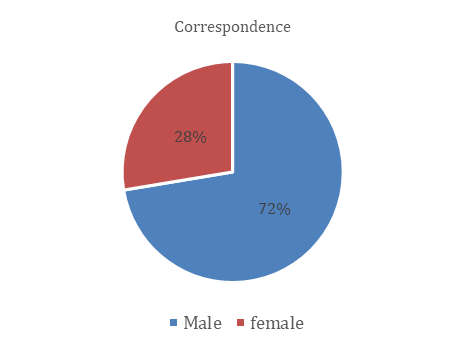
Figure 2: Gender
operates. This includes understanding customer behaviors, preferences, and market trends. This knowledge is vital for tailoring marketing strategies to meet customer needs effectively. It helps in identifying competitors, their strengths and weaknesses, and the competitive dynamics within the F&B industry [14]. Understanding the competitive landscape is essential for positioning the business effectively and developing strategies to stand out. External analysis reveals market opportunities, such as emerging trends, changing consumer preferences, or unmet needs. Recognizing these opportunities allows the business to capitalize on them through marketing initiatives.
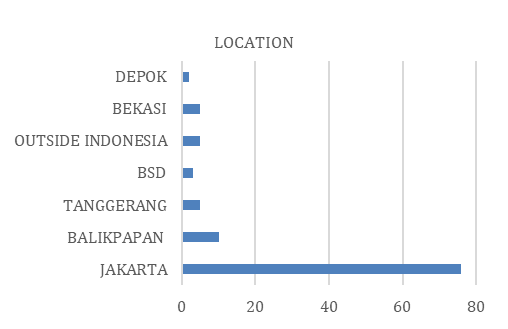
Figure 3: Location
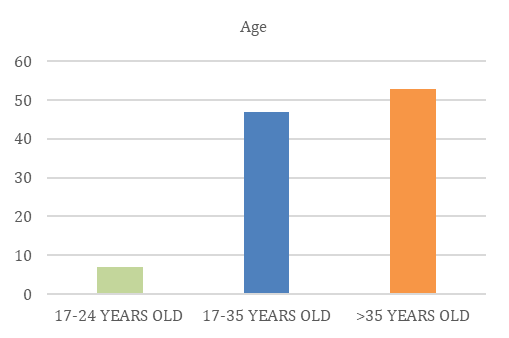
Figure 4: Age
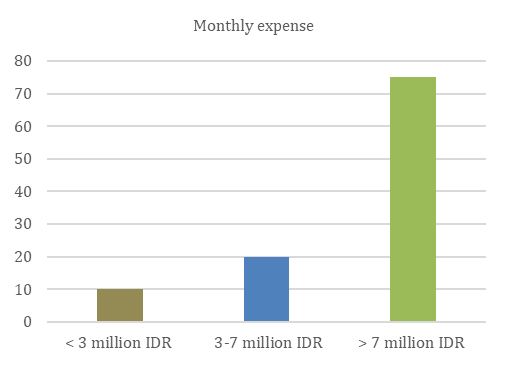
Figure 5: Monthly Expense
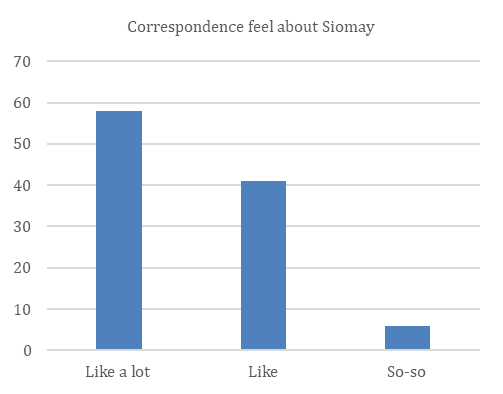
Figure 6: Do You Like Eat Siomay?
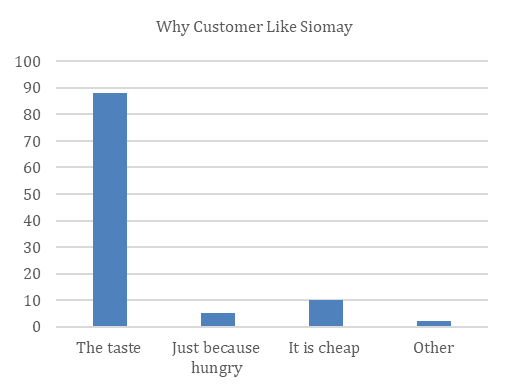
Figure 7: Why Do You Like To Eat Siomay?
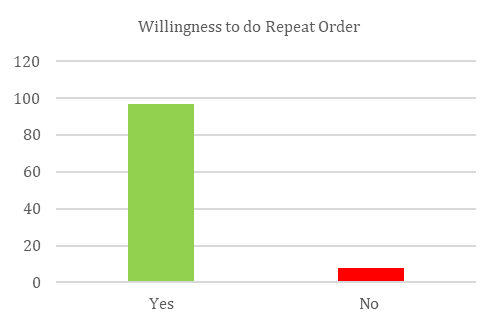
Figure 8: Are You Going To Repeat Order?
External analysis also helps identify potential threats and challenges. This can include economic fluctuations, regulatory changes, or shifts in consumer sentiment. Being aware of threats enables the business to proactively develop strategies to mitigate risks [15]. External analysis provides valuable customer insights, including demographics, psychographics, and buying behavior.
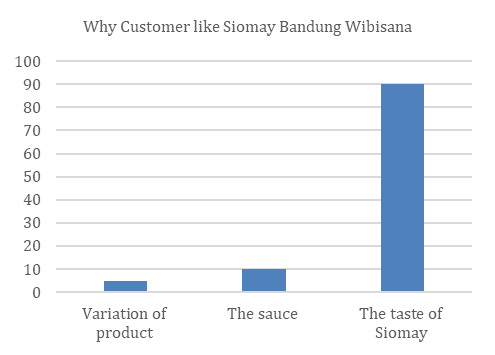
Figure 9. Why Do You Like To Eat Siomay (SBW Product)?
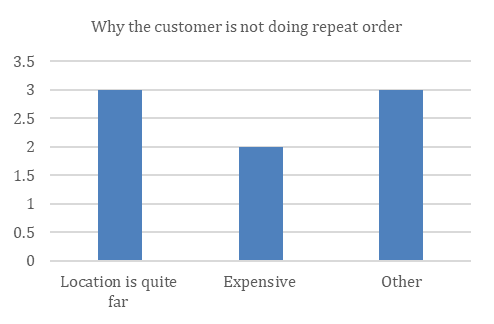
Figure 10. The Reason Customer Is Not Doing Repeat Order
This data allows for more targeted marketing efforts and the creation of customer personas. Understanding the external market environment helps in segmenting the market effectively. This segmentation can lead to the creation of tailored marketing campaigns for different customer groups. By analyzing the external landscape, the business can identify potential partners, suppliers, or collaborators that can enhance its offerings and market reach. This is particularly important in the F&B industry, where sourcing quality ingredients is essential.
External analysis allows for the monitoring of industry trends, which can be integrated into marketing strategies. Staying current with food trends, sustainability movements, and dietary preferences can keep the business relevant and appealing to customers. External analysis helps the business stay informed about changing regulations and compliance requirements in the F&B industry [16]. Compliance is essential to avoid legal issues and maintain trust with customers. If the business plans to expand into new geographic regions, external analysis can provide insights into the local market conditions, competition, and customer behaviors in those areas. External analysis can inspire product innovation and the development of new offerings that align with external trends and customer demands. Assessing external economic factors such as inflation, income levels, and consumer spending patterns helps in setting appropriate pricing strategies and financial planning [17]. In summary, external analysis is vital for Siomay Bandung Wibisana as it provides a comprehensive understanding of the market, customers, competitors, and external factors that impact the business. This knowledge is instrumental in developing strategic marketing plans that are responsive to external opportunities and challenges, positioning the business for success in the dynamic F&B industry.
Customer inside more detail can be analyze through survey that is already been summarized as below:
Correspondence Demograph
Question related to product and Siomay Bandung Wibisana as a brand
Important keys that can be analyze from the questionnaires are more than 90% from the correspondence like siomay product. Not only siomay is one of well-known traditional product from Indonesian culinary but also the customer like the taste of that product. That’s mean the quality or product taste still the main focus to be assured. The second is even Siomay Bandung Wibisana already establised more than 30 years, still need to improve the awareness through the journey since still many of the correspondence that is not know about the brand. Then the third is meantime most of the customer like the taste of Siomay Bandung Wibisana, but the company need to make sure that they reach out their current customer to do repeating order and also to support customer concern to do repeating order, such as the location and price.
Internal Analysis
Internal analysis is crucial for strategic marketing in an F&B business like Siomay Bandung Wibisana for several reasons. It helps the business identify its internal strengths, such as its unique recipes, quality ingredients, skilled team, strong local reputation, and convenient locations. Recognizing these strengths allows the business to leverage them in marketing strategies. Internal analysis also highlights areas that need improvement or development, such as limited menu variety, cost management challenges, or the need for an enhanced online presence. Identifying weaknesses is the first step in addressing and mitigating them to improve overall performance.
By understanding the internal strengths and weaknesses, the business can allocate resources more efficiently. It can invest in areas where it excels and prioritize budget and effort to address weaknesses. Recognizing strengths allows the business to build on its competitive advantages and unique selling points. It can communicate these strengths to customers, differentiating itself from competitors. Identifying weaknesses and potential threats through internal analysis enables the business to proactively manage risks. This can include preparing for cost fluctuations or addressing operational inefficiencies.
The insights gained from internal analysis are essential for making informed strategic decisions. It guides the development of marketing strategies that align with the business's capabilities and market positioning. Internal analysis helps in setting realistic and achievable marketing goals and objectives based on the business's current capabilities. This ensures that objectives are attainable and align with the internal resources available. It aids in making decisions about where to allocate marketing resources effectively. For instance, if the analysis reveals a need to enhance the online presence, the business can allocate resources to develop a user-friendly website and mobile app.
Understanding internal strengths and weaknesses informs how the business can best meet customer needs and preferences. It enables the development of customer-centric marketing strategies. Internal analysis is not a one-time task but an ongoing process. It helps the business continuously evaluate and improve its operations and marketing strategies based on changing internal factors and external market conditions. In summary, internal analysis is essential for Siomay Bandung Wibisana as it provides the foundational knowledge needed to create effective marketing strategies, capitalize on strengths, address weaknesses, and stay competitive in the dynamic F&B industry.
By analyzing the data, we can see that the treatment already being done in terms of online marketing cost, the ads have been boosted by quite huge number from November to January, then January to February. Not only increasing the ads payment but also adding more ads, on the other side increment of sales is not responded in the best way parallel to the increase of marketing cost. November ads cost is IDR 2.583.000, then increase in January to IDR 3.092.000 (20% increase). November Sales is 1.784 pcs, then January sales is 1.929 (8% increase). February ads cost was boosted more for seeing the change to IDR 4.394.00 but on the sales side eventually down to 1.891 pcs. These data showed that the company need to see again their internal strength and weakness and maybe need to rethink the STP and create proper strategy to increase the sales.
The final phase involves formulating a strategy for Siomay Bandung Wibisana, which includes defining new STP, SWOT analysis, marketing mix (4P), with the goal of improving the strategic marketing for F&B of Siomay Bandung Wibisana. Invest in a user-friendly website and mobile app for online ordering and delivery. Leverage social media platforms to engage with customers, run online promotions, and share updates on new menu items. Diversify the menu by introducing new siomay variations, side dishes, and beverages. Cater to different dietary preferences, such as vegetarian or gluten-free options. Maintain consistent quality by sourcing fresh and local ingredients and ensuring that every dish meets the highest standards of taste and presentation. Identify strategic locations for new outlets, targeting areas with high foot traffic and a strong demand for F&B options.
Implement a loyalty program that rewards frequent customers with discounts, free items, or exclusive access to new menu items. Partner with local food bloggers or influencers to generate buzz and drive traffic to the restaurant. Continuously monitor and optimize production costs to maintain a competitive pricing strategy while ensuring profitability. Regularly conduct market research to stay updated on customer preferences and the competitive landscape. By combining the SWOT analysis with the marketing mix (4P), Siomay Bandung Wibisana can develop a comprehensive strategic marketing plan that addresses its strengths, weaknesses, opportunities, and threats while optimizing its product, price, place, and promotion strategies for sustainable growth in the F&B industry.
Siomay Bandung Wibisana’s strategic marketing strategy focuses on establishing robust partnerships with resellers, commencing a cycle every six months from the start of 2024. This plan involves extensive market research to identify compatible partners, crafting compelling proposals, tailored offers, product demonstrations, negotiations, ongoing support, and continuous monitoring for lasting relationships and market growth. A proficient customer service team tailored to the F&B industry is a key aspect, initiated with job role definitions, recruitment, comprehensive training from late 2023, and ongoing refinement to ensure exceptional service. Customized training for the customer service team continues from late 2023 to mid-2024, covering diverse aspects and incorporating continuous feedback loops and post-training evaluations to ensure consistent exceptional service. Nurturing a highly skilled customer service team includes assessing, training, and refining their performance to ensure superior service and satisfaction, every six months from the start of 2024.
Launching an open recruitment campaign, immersive onboarding, and continuous coaching aim to build a high-performing sales force starting from the end of 2023 into early 2024, reflecting commitment to excellence and market expansion. Implementing an extensive sales team training program, spanning late 2023 to mid-2024, involves evaluating skills, designing tailored curriculums, interactive sessions, continuous evaluation, and post-training assessments to expand the market and revenue.
Designing a customized sales team training program, conducted in the first five months of 2024, emphasizing market insights, product knowledge, and customer engagement, ensuring alignment with market demands. Establishing offline stores, beginning in the first half of 2024, includes thorough market analysis, feasibility studies, unique store concepts, partnerships, robust marketing, and continuous assessment for sustained success. Targeted interaction with loyal customers via personalized channels, starting in the first five months of 2024, aims to foster enduring connections and loyalty. Leveraging social media’s power, commencing in the first half of 2024, involves planned content, engaging visuals, storytelling, strategic posting, and analytics for resonance with the audience. Collaborating with influencers, set to begin in the initial months of 2024, includes choosing aligned influencers, personalized outreach, content partnerships, and continuous monitoring for brand visibility and growth. Active participation in food expos, starting in the first half of 2024, comprises meticulous research, engaging experiences, online strategies, networking, and post-event evaluation for expanded brand presence.
CONCLUSION
To boost revenue for Siomay Bandung Wibisana, a variety of strategic marketing initiatives can be implemented. Introduce new variations of siomay or complementary dishes to appeal to a broader customer base. Consider creating special editions or seasonal offerings to generate excitement and attract attention. Implement dynamic pricing based on demand, time of day, or customer segments. Introduce value meal packages or loyalty programs to encourage repeat business. Develop a user-friendly website and mobile app for online orders. Leverage social media platforms for targeted marketing campaigns, engaging content, and customer interaction.
Partner with popular food delivery platforms to expand reach and accessibility. Ensure efficient and reliable delivery services to enhance customer satisfaction. Focus on providing an exceptional in-store experience with clean and inviting ambiance. Train staff to deliver excellent customer service, creating a positive impression. Collaborate with other local businesses or influencers to cross-promote and tap into new customer networks. Consider partnerships with events or organizations to increase brand visibility. Implement limited-time promotions, discounts, or loyalty programs to incentivize purchases. Utilize targeted promotions during slow business periods to stimulate sales.
Participate in local events, sponsor community activities, or host charity initiatives to build a positive brand image. Engage with the local community through partnerships or sponsorships. Implement a feedback system to understand customer preferences and address any issues promptly. Use positive feedback to showcase customer satisfaction and attract new customers. Embrace eco-friendly practices, such as sustainable packaging or sourcing locally, to appeal to environmentally conscious consumers. Communicate the commitment to sustainability in marketing materials to differentiate the brand.
By implementing a combination of these strategies, Siomay Bandung Wibisana can create a more dynamic and responsive marketing approach that aligns with the unique characteristics of the F&B industry and the preferences of its target audience, ultimately driving revenue growth. Furthermore, an in-depth analysis of external factors, including customer and competitor study to see what is the condition. Then start to do internal analysis which are redefining the new STP so the penetration will be more effective, studying internal business's strengths, weaknesses, opportunities, and threats (SWOT analysis), is imperative also. This step aids in crafting a well-informed marketing strategy that aligns with the business’s objectives and the prevailing market conditions.
The ultimate result of this rigorous analysis is the formulation of a robust marketing strategy encompassing the classic 4Ps: Product, Price, Place, and Promotion. Siomay Bandung Wibisana can leverage these elements strategically to differentiate itself, attract target customers, and enhance overall brand visibility in the highly competitive Food and Beverage (F&B) industry. By implementing this holistic marketing strategy, Siomay Bandung Wibisana is poised to overcome the challenges of stagnating sales and position itself for sustainable growth in the dynamic F&B market. This strategic approach ensures that marketing efforts are not only aligned with the company's goals but also responsive to the ever-changing external business environment.
REFERENCE
Lutfi, H. et al. "Strategi pemasaran food and beverage untuk meningkatkan penjualan pada masa pandemi Covid-19 di Cavinton Hotel Yogyakarta, Indonesia." Journal of Tourism and Economic, vol. , no. , 60–72, 2021.
Hetty, K. T. "Program pendampingan strategi pemasaran digital." JSCD: Journal of Sustainable Community Development, vol. , no. , 201–206, 2021.
Adinda, R. H. "Analisis strategi pemasaran produk makcan food di masa pandemi Covid-19." Jurnal Mahasiswa Manajemen, vol. , no. , 51–60, 2022.
Anisa, L. et al. "Marketing mix strategy through SWOT analysis method at PT. Toyo Maitsu Surabaya." Enrichment: Journal of Management, vol. , no. , 2721–7787, 2023.
Chang, G. H. "Relationship between e-marketing mix strategy and integrated marketing communication: A conceptual framework." International Journal of Managerial Studies and Research (IJMSR), vol. , no. , 37–46, 2021.
Andriyanto, L. S. "Analisis pengaruh bauran pemasaran (marketing mix 7-P) terhadap keputusan pembelian di Thiwul Ayu Mbok Sum." Jurnal Dinamika Sosial Ekonomi, vol. , no. , 26–38, 2020.
Dess, G. G. "The role of entrepreneurial orientation in stimulating effective corporate entrepreneurship." Journal Academy of Management Executive, vol. , no. , 147–156, 2005.
Sugiyono. Metode penelitian kombinasi (mix methods). Bandung: Alfabeta, 2015.
Tjiptono, F. Strategi pemasaran. Yogyakarta: Andi, 2017.
Nurul, H. et al. "Pengaruh segmentasi, targeting, positioning (STP) yang diintervening promosi pemasaran terhadap penjualan di UMKM Rocket Cafe." MABIS: Jurnal Manajemen Bisnis Syariah, vol. , no. , 1–6, 2023.
Kotler, P. A. Marketing management. London: Pearson Education, 2016.
Waehama, A. "Analisis strategi pemasaran dengan metode SWOT analysis dan marketing mix (studi kasus di UKM Susu Sapi Segar Wijaya)." Jurnal Agroindustri Pangan, vol. , no. , 32–45, 2022.
Victor, V. et al. "SWOT analysis as a determinant of marketing strategy case." Almana: Jurnal Manajemen dan Bisnis, vol. , no. , 87–94, 2022.
Yanmei, A. "On the impact of market segmentation and marketing mix strategy on enterprises." China Business and Commerce, vol. , no. , 22–23, 2014.
Adhaghassani, F. S. Strategi bauran pemasaran (marketing mix) 7P (product, price, place, promotion, people, process, physical evidence) di Cherrykabakery. Yogyakarta: Universitas Negeri Yogyakarta, 2016.
Rimes, J. M. "Analisis strategis e-business untuk strategi pemasaran dan penjualan." AITI: Jurnal Teknologi Informasi, vol. , no. , 111–124, 2023.
Zhaohui, X. "On the application of SWOT marketing strategy in marketing." Economic Research Guide, vol. , no. , 55–56, 2017.
License
Creative Commons Attribution-NonCommercial-NoDerivatives 4.0 International License
All papers should be submitted electronically. All submitted manuscripts must be original work that is not under submission at another journal or under consideration for publication in another form, such as a monograph or chapter of a book. Authors of submitted papers are obligated not to submit their paper for publication elsewhere until an editorial decision is rendered on their submission. Further, authors of accepted papers are prohibited from publishing the results in other publications that appear before the paper is published in the Journal unless they receive approval for doing so from the Editor-In-Chief.
Himalayan Journal of Economics and Business Management open access articles are licensed under a Creative Commons Attribution-Share A like 4.0 International License. This license lets the audience to give appropriate credit, provide a link to the license, and indicate if changes were made and if they remix, transform, or build upon the material, they must distribute contributions under the same license as the original.
Recommended Articles
Research Article
Influence of Leadership on Poverty Reduction in the Devolved Government in Trans-Nzoia County, Kenya
Kinisu Sifuna,
...
Peter Simotwo
Published: 30/06/2021
Download PDF
Cite
x
APA
Sifuna, K., Lwangale, D. W., Simotwo, P., Sifuna, K., Lwangale, D. W. & Simotwo, P. (2021). Influence of Leadership on Poverty Reduction in the Devolved Government in Trans-Nzoia County, Kenya. Himalayan Journal of Economics and Business Management, 2(1), None-None.
MLA
Sifuna, Kinisu, et al. "Influence of Leadership on Poverty Reduction in the Devolved Government in Trans-Nzoia County, Kenya." Himalayan Journal of Economics and Business Management 2.1 (2021): None-None.
Chicago
Sifuna, Kinisu, David W. Lwangale, Peter Simotwo, Kinisu Sifuna, David W. Lwangale and Peter Simotwo. "Influence of Leadership on Poverty Reduction in the Devolved Government in Trans-Nzoia County, Kenya." Himalayan Journal of Economics and Business Management 2, no. 1 (2021): None-None.
Harvard
Sifuna, K., Lwangale, D. W., Simotwo, P., Sifuna, K., Lwangale, D. W. and Simotwo, P. (2021) 'Influence of Leadership on Poverty Reduction in the Devolved Government in Trans-Nzoia County, Kenya' Himalayan Journal of Economics and Business Management 2(1), pp. None-None.
Vancouver
Sifuna K, Lwangale DW, Simotwo P, Sifuna K, Lwangale DW, Simotwo P. Influence of Leadership on Poverty Reduction in the Devolved Government in Trans-Nzoia County, Kenya. Himalayan Journal of Economics and Business Management. 2021 Jan;2(1):None-None.
Download PDF
Research Article
Modelling Structure Job Quality, Job Design and Job Satisfaction
Moch Nurhadi,
...
Avi Sunani
Published: 30/08/2022
Download PDF
Cite
x
APA
Nurhadi, M., Bisyri Effendi, M., Saiful Ulum, A. & Sunani, A. (2022). Modelling Structure Job Quality, Job Design and Job Satisfaction. Himalayan Journal of Economics and Business Management, 3(2), 1-4.
MLA
Nurhadi, Moch, et al. "Modelling Structure Job Quality, Job Design and Job Satisfaction." Himalayan Journal of Economics and Business Management 3.2 (2022): 1-4.
Chicago
Nurhadi, Moch, Moch Bisyri Effendi, Achmad Saiful Ulum and Avi Sunani. "Modelling Structure Job Quality, Job Design and Job Satisfaction." Himalayan Journal of Economics and Business Management 3, no. 2 (2022): 1-4.
Harvard
Nurhadi, M., Bisyri Effendi, M., Saiful Ulum, A. and Sunani, A. (2022) 'Modelling Structure Job Quality, Job Design and Job Satisfaction' Himalayan Journal of Economics and Business Management 3(2), pp. 1-4.
Vancouver
Nurhadi M, Bisyri Effendi M, Saiful Ulum A, Sunani A. Modelling Structure Job Quality, Job Design and Job Satisfaction. Himalayan Journal of Economics and Business Management. 2022 Jul;3(2):1-4.
Download PDF
Research Article
Accountability and Transparency of Village Fund Management in Lumajang District
Nurina Ayuningtiyas,
...
Muhammad Miqdad
Published: 28/12/2023
Download PDF
Cite
x
APA
Ayuningtiyas, N., Santosa Putra, H. & Miqdad, M. (2023). Accountability and Transparency of Village Fund Management in Lumajang District. Himalayan Journal of Economics and Business Management, 4(2), 1-4.
MLA
Ayuningtiyas, Nurina, Hendrawan Santosa Putra and Muhammad Miqdad. "Accountability and Transparency of Village Fund Management in Lumajang District." Himalayan Journal of Economics and Business Management 4.2 (2023): 1-4.
Chicago
Ayuningtiyas, Nurina, Hendrawan Santosa Putra and Muhammad Miqdad. "Accountability and Transparency of Village Fund Management in Lumajang District." Himalayan Journal of Economics and Business Management 4, no. 2 (2023): 1-4.
Harvard
Ayuningtiyas, N., Santosa Putra, H. and Miqdad, M. (2023) 'Accountability and Transparency of Village Fund Management in Lumajang District' Himalayan Journal of Economics and Business Management 4(2), pp. 1-4.
Vancouver
Ayuningtiyas N, Santosa Putra H, Miqdad M. Accountability and Transparency of Village Fund Management in Lumajang District. Himalayan Journal of Economics and Business Management. 2023 Jul;4(2):1-4.
Download PDF
Research Article
Proposed Digital Marketing Strategy to Enhance Engineering Consultancy Company Revenue
Alfarisy, K. A.,
Wandebori, H.
Published: 30/04/2024
Download PDF
Cite
x
APA
K. A., A. & H., W. (2024). Proposed Digital Marketing Strategy to Enhance Engineering Consultancy Company Revenue. Himalayan Journal of Economics and Business Management, 5(1), 1-18.
MLA
K. A., Alfarisy, and Wandebori, H.. "Proposed Digital Marketing Strategy to Enhance Engineering Consultancy Company Revenue." Himalayan Journal of Economics and Business Management 5.1 (2024): 1-18.
Chicago
K. A., Alfarisy, and Wandebori, H.. "Proposed Digital Marketing Strategy to Enhance Engineering Consultancy Company Revenue." Himalayan Journal of Economics and Business Management 5, no. 1 (2024): 1-18.
Harvard
K. A., A. and H., W. (2024) 'Proposed Digital Marketing Strategy to Enhance Engineering Consultancy Company Revenue' Himalayan Journal of Economics and Business Management 5(1), pp. 1-18.
Vancouver
K. A. A, H. W. Proposed Digital Marketing Strategy to Enhance Engineering Consultancy Company Revenue. Himalayan Journal of Economics and Business Management. 2024 Jan;5(1):1-18.
Goenawan, T. (2023). Strategic Marketing for F&B Business “Siomay Bandung Wibisana”. Himalayan Journal of Economics and Business Management, 4(2), 1-7.
MLA
Goenawan, Theodorus. "Strategic Marketing for F&B Business “Siomay Bandung Wibisana”." Himalayan Journal of Economics and Business Management 4.2 (2023): 1-7.
Chicago
Goenawan, Theodorus. "Strategic Marketing for F&B Business “Siomay Bandung Wibisana”." Himalayan Journal of Economics and Business Management 4, no. 2 (2023): 1-7.
Harvard
Goenawan, T. (2023) 'Strategic Marketing for F&B Business “Siomay Bandung Wibisana”' Himalayan Journal of Economics and Business Management 4(2), pp. 1-7.
Vancouver
Goenawan T. Strategic Marketing for F&B Business “Siomay Bandung Wibisana”. Himalayan Journal of Economics and Business Management. 2023 Jul;4(2):1-7.



 Download PDF
 Download XML