This study employs the PRISMA (Preferred Reporting Items for Systematic Reviews and Meta-Analyses) method to meticulously curate articles based on specific parameters, delving into the prevalence and characteristics of long COVID. Spanning from January 1, 2021, to April 30, 2023, our analysis of 34 peer-reviewed articles utilizes descriptive statistics to illuminate the diverse impact of long COVID across various organ systems, including neurological, psychological, respiratory, cardiovascular, ENT, gastrointestinal, and dermatological domains. A primary focus emerges on neurological symptoms, with fatigue prominently identified as the most prevalent manifestation. This study, characterized by a systematic and transparent approach guided by the PRISMA method, contributes valuable insights into the intricate features of long COVID, persisting for a duration of six to twelve months post-COVID contraction. The methodological rigor of PRISMA in article selection ensures precision in data extraction and enhances the reliability of our findings. Through descriptive statistics, this study provides a quantitative foundation for understanding the multifaceted nature of long COVID, offering crucial baseline information. The results of this research not only contribute to the scholarly discourse on long COVID but also lay the groundwork for informed strategies to address the enduring impact on individuals' health and well-being.
This study underscores the imperative need to comprehensively grasp the diverse spectrum of long-term COVID-19 symptoms and employs the PRISMA (Preferred Reporting Items for Systematic Reviews and Meta-Analyses) method to refine our understanding systematically. Rooted in the novel severe acute respiratory syndrome-coronavirus-2 (SARS-CoV-2), COVID-19 manifests as an acute respiratory disorder characterized by symptoms of varying intensity [1].
The clinical presentation of COVID-19 spans from moderate symptoms, such as fever, dyspnea, and myalgia, to severe complications like acute respiratory distress syndrome (ARDS), sepsis, septic shock (2), and respiratory distress. Beyond the acute phase, symptoms persist, leading to the classification of long COVID-19 (LC) [3].
Acknowledged as a global health concern, LC significantly impacts cognitive and physical capacities in survivors [4-5], exemplified by diminished health-related quality of life (HRQoL) during acute COVID-19 infection [6-8], with the potential for improvement over time [9]. Cardiopulmonary manifestations encompass mild pulmonary impairments progressing to post-COVID pulmonary fibrosis (PCPF), heart disorders, and cardiac complications resulting from myocardial injury [10-11]. Neurological complications range from persistent headaches and anosmia/ageusia to impairments in cognition, memory, learning, and severe manifestations like stroke, encephalopathy, brain tissue edema, and viral encephalitis [12]. Beyond the physiological aspects, the enduring psychological and social ramifications revolve around the persistent risk of SARS-CoV-2 contraction. These ramifications extend to cultural perspectives, self-worth, and interpersonal connections, ultimately eroding community social cohesion [13].
The recent lifting of the health emergency status by the World Health Organization (WHO) for COVID-19 introduces new global challenges, especially in addressing the evolving health hazards associated with LC. Integrating the PRISMA method, this study a ims to systematically identify and analyze pertinent literature, contributing to a more nuanced comprehension of LC. a
A comprehensive investigation into the prevalent long-term symptoms of COVID-19 across various bodily systems, including the ear, nose, throat, gastrointestinal tract, and dermatology, was systematically conducted following the guidelines outlined in the Preferred Reporting Items for Systematic Reviews and Meta-Analyses (PRISMA) of 2009 [14].
Search Strategy and Eligibility Criteria
Using database-specific search terms, articles relevant to the prevalence of long-term COVID-19 symptoms were extracted from open-access databases, including PubMed, Science Direct, and Google Scholar, covering the period from January 1, 2021, to April 30, 2023. The eligibility criteria encompassed the following: [1] Cross-sectional and cohort study designs; [2] self-reported or PCR-confirmed COVID-19 survivors; and [3] A minimum sample size of 30 COVID-19 survivors [4] A minimum duration of four weeks for follow-up, [5] Access to demographic data, and [6] Utilization of clinical test parameters and/or survey questionnaires, medical records, and diagnostic tests.
Study Selection
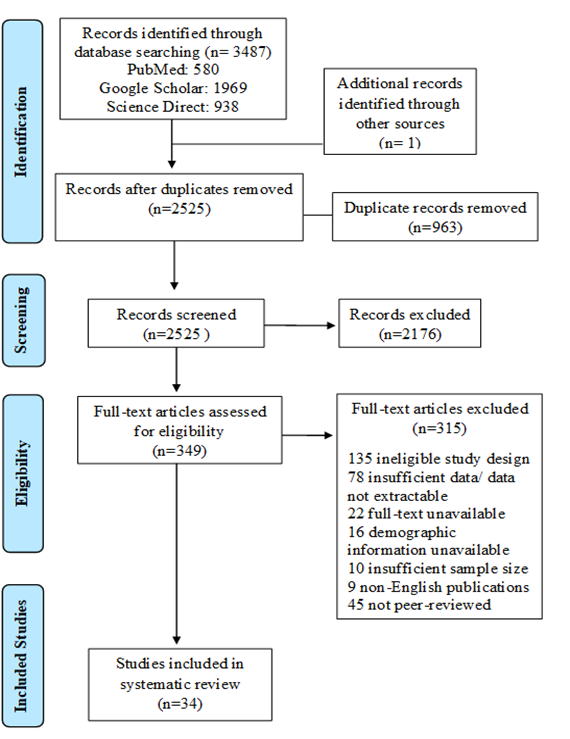
The database search yielded 3,487 studies, with an additional study discovered by chance, bringing the total to 3,488. After eliminating duplicate records, titles and abstracts underwent preliminary screening, resulting in the assessment of 2525 studies for long-term COVID outcomes. Subsequently, 2176 studies were excluded for various reasons, leaving 349 for full-text analysis. Among these, 315 studies were excluded due to reasons such as non-peer-reviewed status, ineligible study designs, insufficient data, absence of full-text and demographic information, inadequate sample sizes, and non-English publications (Figure 1).
Data Extraction and Synthesis
Characteristics such as gender, age, number of smokers, comorbidities, comorbidities associated with COVID-19, study design, sample size, and the longest follow-up period were extracted from all included studies. Symptoms of LC were documented following the categories outlined in the COVID-19 rapid guideline: managing the long-term effects of COVID-19 [15] of the National Institute for Health and Care Excellence. The narrative synthesis of prevalent LC symptoms and qualitative data were obtained from studies reporting key findings, assessment strategies, risk factors, and practical implications.
Risk of Bias Assessment
Two evaluators independently assessed the quality of included studies using the Newcastle-Ottawa Scale (NOS) [16], an instrument for evaluating study quality across domains of selection, comparability, and outcome. A star system assigned points based on specified criteria, categorizing studies into excellent, fair, or substandard quality based on their ratings in the three domains.
Excellent quality: one to two stars in the comparability domain, three to four stars in the outcome/exposure domain, and one to four stars in the selection domain.
Two stars in the selection domain, one to two stars in the comparability domain, and two to three stars in the outcome/exposure domain constitute fair quality.
Substandard quality, as indicated by a rating of 0 or 1 star in either the selection or comparability domains or 0 or 1 star in the outcome or exposure domain.
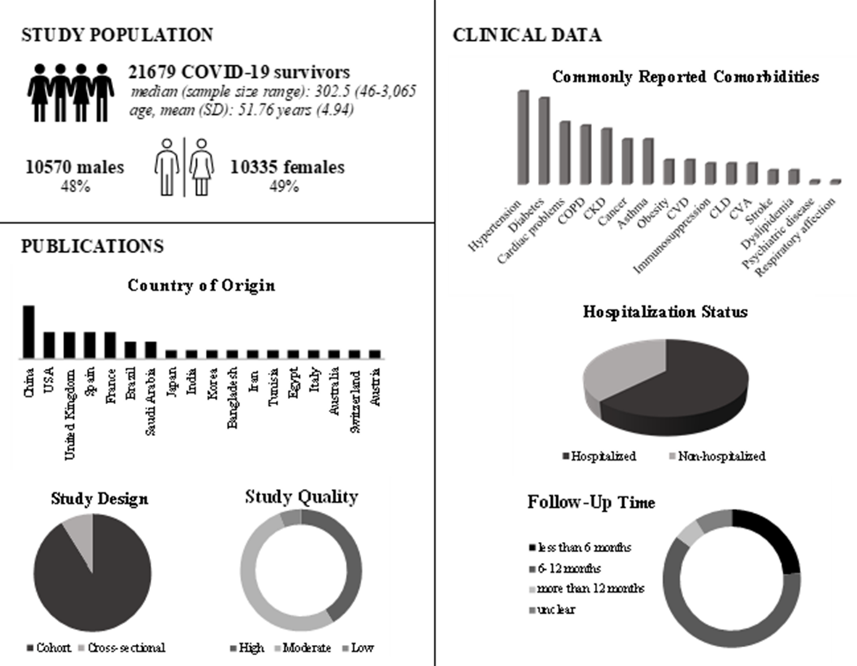
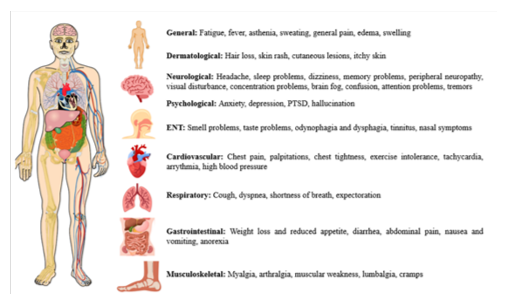
The extensive literature search conducted between January 1, 2021, and April 30, 2023, reveals a surge in Long COVID (LC) research, with 34 representative studies [17-50] analyzed in this narrative synthesis (Figures1-2]. The prevalence of LC symptoms, identified through these studies, exceeds 50%, emphasizing their significant impact on the quality of life for COVID-19 survivors [51]. This impact is further supported by correlations between post-acute COVID-19 and diminished quality of life in LC patients [52]. Figure 3 provides an insightful overview of the distribution of symptoms across various body systems.
General and Musculoskeletal Symptoms
Fatigue stands out as the predominant and pervasive symptom in LC, affecting more than 50% of individuals [53]. Recent studies suggest a potential cellular biochemical origin, emphasizing its profound influence on work productivity and overall well-being in the post-pandemic era [54-55]. Chronic fatigue poses substantial risks, including reduced work output, prolonged absenteeism, and potential incapacity, thereby impacting financial stability and overall quality of life [56]. The statistical representation corroborates the significance of fatigue, with a frequency of 28 and an average value of 155.3, indicating its high prevalence and severity (14.8%).
While less prevalent, symptoms such as fever, asthenia, and sweating persist in a proportion of the studied cohort, complicating the clinical picture. The statistics show lower frequencies for these symptoms, with fever at 11, asthenia at 5, and sweating at 4, highlighting their relatively lower prevalence (0.4%, 0.7%, and 1.3% respectively).
Musculoskeletal symptoms, particularly arthralgia and myalgia, play a significant role in diminishing the overall quality of life [57]. These symptoms, resembling fatigue, may hinder work attendance, contributing to financial strain. Chronic musculoskeletal issues can lead to reduced social engagement, affecting mental well-being, and potentially causing psychological distress. The statistical data supports this observation, with myalgia having a frequency of 24 and an average value of 66.7, indicating a significant impact (5.4%). Arthralgia, with a frequency of 18 and an average value of 55.6, also contributes substantially (3.4%). Muscular weakness, though less prevalent, has a high average value of 207.7, suggesting its severity for those who experience it (2.1%).
Neuropsychological and ENT Symptoms
LC unveils a diverse array of neuropsychological and Ear, Nose, and Throat (ENT) symptoms, with neurological manifestations dominating the landscape [58].

Figure 1. PRISMA flow diagram

Figure 2. Characteristics of included studies

Figure 3. Distribution of LC symptoms in the human body
Headaches, sleep disorders, and dizziness are prevalent, with sleep disturbances significantly impairing daily functionality and health [59]. Challenges related to concentration, memory, and brain fog impact work performance and overall well-being [60-61]. Anxiety and depressive symptoms are prevalent, affecting concentration, task execution, and overall quality of life [62-63]. Less common but noteworthy are Post-Traumatic Stress Disorder (PTSD) symptoms, underscoring the necessity for tailored assistance [64].
While less prevalent, ENT symptoms like odynophagia, dysphagia, and disturbances in smell and taste are reported (65). These symptoms, influencing breathing, sleep, and appetite, collectively contribute to decreased overall quality of life. Alterations induced by SARS-CoV-2 on the central and peripheral nervous systems underlie these symptoms [66-67], involving endothelium dysfunction, systemic inflammation, immunological abnormalities, and blood clot abnormalities [68-69]. The statistical data aligns with these observations, with headaches having a frequency of 28 and an average value of 63.3 (6.0%). Sleep problems, with a frequency of 20 and an average value of 100.4, highlight the significant impact on daily functionality (6.8%). Anxiety, with a frequency of 10 and an average value of 89.5, and depression, with a frequency of 8 and an average value of 99.9, indicate the prevalence and severity of psychological symptoms (3.0% and 2.7%, respectively).
Cardiopulmonary Symptoms
Prevalent cardiovascular symptoms, including chest pain and palpitations, may lead to more intricate complications if not effectively managed [70]. Chronic cardiovascular symptoms correlate with autonomic nervous system dysfunction and psychological disorders [71]. Dyspnea and shortness of breath post-COVID negatively impact the quality of life, hindering routine tasks [72-73]. The added burden of fatigue and malaise further contributes to the complex interplay between physical and mental well-being. Diagnostic tests, particularly radiological imaging, assume a crucial role in evaluating health outcomes for cardiopulmonary LC [74].
The statistical representation of cardiopulmonary symptoms supports these observations, with chest pain having a frequency of 18 and an average value of 52.8 (3.2%). Palpitation, with a frequency of 13 and an average value of 72.0, indicates a substantial impact (3.2%). Exercise intolerance, with a frequency of 3 and an average value of 236.7, highlights the severity of this symptom (2.4%).
Gastrointestinal Symptoms
Certain gastrointestinal symptoms, such as nausea, vomiting, weight loss, decreased appetite, diarrhea, and abdominal pain, are reported in a minority of the study population [75]. These symptoms adversely affect sleep, dietary habits, and work performance. Gastrointestinal LC symptoms emerge as the most bothersome, impacting the psychological well-being of affected individuals.
The statistical data aligns with the discussion, with weight loss and reduced appetite having a frequency of 14 and an average value of 19.4 (0.9%). Diarrhea, with a frequency of 10 and an average value of 17.6, indicates a relatively lower impact (0.6%). Abdominal pain, with a frequency of 8 and an average value of 25.3, highlights its significance (0.7%).
Dermatological Symptoms
Hair loss emerges as the most frequently reported dermatological concern, with significant implications for self-esteem and overall quality of life [76-77]. While less common, skin rashes may cause discomfort and concern. These dermatological manifestations, though infrequent, underscore the need for attentive care in the post-pandemic period, acknowledging their potential impact on productivity and well-being.
The statistical representation supports this, with hair loss having a frequency of 10 and an average value of 45.3 (1.5%). Skin rash, though less prevalent, has a frequency of 6 and an average value of 19.2 (0.4%). The statistical insights provide a nuanced understanding of the prevalence and severity of symptoms, contributing valuable insights for both clinical management and further research in the realm of Long COVID. The intersection of statistical data and clinical observations enhances our comprehension of the multifaceted nature of LC and aids in tailoring effective interventions for those affected.
Factors Contributing to Prevalence and Development of Long COVID (LC)
This study elucidates various clinical outcomes and demographic factors contributing to the heightened susceptibility to Long COVID (LC). A holistic approach to mitigating the health effects of LC demands a comprehensive understanding of these risk factors, aligning with evidence-based recommendations including emerging pharmacological therapies and rehabilitation strategies [78-79].
Consistently observed across numerous studies is a heightened probability of persistent symptoms post-COVID-19 contraction. However, the precise mechanisms driving these associations remain elusive. Differences in hormonal factors and immune responses, particularly in individuals over 50 and females, may underlie the observed associations. Females typically exhibit a more robust antibody response to viral infections [80-82], contributing to the lower risk of severe outcomes observed in males. Immune changes associated with aging may also extend the recovery period for individuals aged 50-70 years.
Beyond age and gender, individuals across various age groups with pre-existing health conditions may experience prolonged symptoms due to underlying health issues [83-84]. This extends beyond the geriatric population, highlighting the impact of comorbidities on symptomatology. Disease severity and ICU admission are identified as significant risk factors for LC, aligning with recent study conclusions [85]. Cardiovascular and respiratory complications requiring ICU care, including non-invasive or invasive mechanical ventilation, are frequently linked to the severity of the disease, impacting long-term functioning and mental well-being [86].
Despite initial suggestions, smoking and vaping were found to lack substantial support in the available literature as individual risk factors for LC. Conversely, social isolation emerged as an autonomous correlate with unfavorable mental health consequences among individuals affected by COVID-19 [87-88], potentially leading to enduring psychological complications [89, 13].
Healthcare Implications of LC Symptoms
The qualitative analysis reveals an extensive array of health ramifications, emphasizing the significant strain LC places on global healthcare infrastructures. Given the widespread disregard for LC and its associated health consequences, raising public awareness is crucial [90]. The presence of well-equipped medical facilities capable of treating individuals with persistent acute COVID-19 symptoms is essential for effective LC management [91]. Healthcare clinicians need the ability to discern long-term symptom predominance and predictive factors to engage in suitable healthcare planning.
Given the diverse symptomatology of LC, a multidisciplinary approach is imperative for its management. This is particularly crucial for symptoms that co-occur, such as cognitive impairment and pulmonary disease [92]. Timely interventions for commonly reported symptoms, including neurological symptoms and fatigue, can significantly enhance the quality of life for affected individuals and alleviate negative impacts on their mental and physical health. This comprehensive strategy aligns with the principle of equal regard, considering both the somatic and mental health dimensions of LC.
Discussion on Gender Lens and Intersectionality
An important consideration for future research involves implementing a gender lens to explore nuances and needs among males, females, and various intersectionality. The existing data underscores the necessity for more studies that specifically examine the differential impacts of LC on diverse gender identities and intersecting demographics. This gender-informed approach could unravel potential variations in susceptibility, symptom presentation, and healthcare needs, fostering tailored interventions that address the unique challenges faced by different groups.
The study highlights the intricate landscape of LC, emphasizing the importance of nuanced research approaches and a gender-informed lens for a comprehensive understanding. The dearth of comparable studies reinforces the urgent call for further investigations to unravel the complexities of long-term COVID-19 effects and inform targeted interventions across diverse populations.
Limitations and Future Directions
It is crucial to acknowledge the limitations identified in the 34 publications, notably the reliance on survey questionnaires, introducing subjective assessments of LC symptoms. Sample size limitations, self-reporting/recall bias, and potential underrepresentation of LC symptom prevalence are noteworthy issues. The meager number of comparable studies based on PRISMA steps inhibits further subgroup analysis, emphasizing the urgent need for more robust and diverse research endeavors.
This comprehensive analysis of enduring COVID-19 symptoms, conducted in accordance with the Preferred Reporting Items for Systematic Reviews and Meta- Analyses (PRISMA) guidelines of 2009 (14), provides valuable baseline information. Beyond its clinical implications, this data serves as a crucial foundation for designing wellness programs aimed at monitoring and supporting COVID survivors.
The insights garnered here can guide the development of targeted wellness initiatives, focusing on the specific bodily systems affected, such as the ear, nose, throat, gastrointestinal tract, and dermatology. Tailored programs can be crafted to address the persistent symptoms identified in this study, ensuring a holistic approach to survivor well-being.
Table 1. Frequency, average, and percentage distribution of LC symptoms among the included studies
| LC Symptom | Frequency | n | Average | % |
| a. General | ||||
| Fatigue | 28 | 4348 | 155.3 | 14.8 |
| Fever | 11 | 113 | 10.3 | 0.4 |
| Asthenia | 5 | 205 | 41.0 | 0.7 |
| Sweating | 4 | 382 | 95.5 | 1.3 |
| b. Musculoskeletal | ||||
| Myalgia | 24 | 1600 | 66.7 | 5.4 |
| Arthralgia | 18 | 1001 | 55.6 | 3.4 |
| Muscular weakness | 3 | 623 | 207.7 | 2.1 |
| c. Neurological | ||||
| Headache | 28 | 1771 | 63.3 | 6.0 |
| Sleep problems | 20 | 2007 | 100.4 | 6.8 |
| Dizziness | 18 | 1231 | 68.4 | 4.2 |
| Memory problems | 13 | 936 | 72.0 | 3.2 |
| Peripheral neuropathy | 9 | 342 | 38.0 | 1.2 |
| Visual disturbances | 8 | 269 | 33.6 | 0.9 |
| Concentration problems | 7 | 603 | 86.1 | 2.0 |
| Brain fog | 6 | 385 | 64.2 | 1.3 |
| Confusion | 5 | 234 | 46.8 | 0.8 |
| d. Psychological | ||||
| Anxiety | 10 | 895 | 89.5 | 3.0 |
| Depression | 8 | 799 | 99.9 | 2.7 |
| PTSD | 7 | 141 | 20.1 | 0.5 |
| e. Respiratory | ||||
| Cough | 23 | 818 | 35.6 | 2.8 |
| Dyspnea | 18 | 1326 | 73.7 | 4.5 |
| Shortness of breath | 10 | 1600 | 160.0 | 5.4 |
| Expectoration | 7 | 86 | 12.3 | 0.3 |
| f. Cardiovascular | ||||
| Chest pain | 18 | 951 | 52.8 | 3.2 |
| Palpitation | 13 | 936 | 72.0 | 3.2 |
| Chest tightness | 5 | 249 | 49.8 | 0.8 |
| Exercise intolerance | 3 | 710 | 236.7 | 2.4 |
| Tachycardia | 3 | 192 | 64.0 | 0.7 |
| ENT | ||||
| Smell problems | 24 | 1513 | 63.0 | 5.1 |
| Taste problems | 21 | 676 | 32.2 | 2.3 |
| Odynophagia and dysphagia | 15 | 541 | 36.1 | 1.8 |
| Tinnitus | 7 | 528 | 75.4 | 1.8 |
| Nasal symptoms | 6 | 132 | 22.0 | 0.4 |
| g. Gastrointestinal | ||||
| Weight loss and reduced appetite | 14 | 272 | 19.4 | 0.9 |
| Diarrhea | 10 | 176 | 17.6 | 0.6 |
| Abdominal pain | 8 | 202 | 25.3 | 0.7 |
| Nausea and vomiting | 7 | 111 | 15.9 | 0.4 |
| h. Dermatological | ||||
| Hair loss | 10 | 453 | 45.3 | 1.5 |
| Skin rash | 6 | 115 | 19.2 | 0.4 |
Moreover, in anticipating future pandemics and the potential emergence of new viruses, this data becomes instrumental in brewing ideas for resilience programs. In understanding the prolonged impact of COVID-19, we can design forward-thinking resilience strategies that account for both physical and mental health aspects. These programs can incorporate lessons learned from the current pandemic to enhance preparedness, response, and recovery measures in the face of future health crises. In essence, this study not only contributes to our understanding of long-term COVID-19 effects but also acts as a strategic resource and baseline data for shaping proactive wellness and resilience programs.
Acknowledgment
The authors wish to express their appreciation to the Institute for Peace and Development in Mindanao (IPDM), Mindanao State University-Iligan Institute of Technology, the Department of Science and Technology-Accelerated Science and Technology Human Resource Development Programme (DOST-ASTHRDP), and the Centre of Integrative Health of the Premier Research Institute of Science and Mathematics (PRISM) for their invaluable assistance and facilities throughout this research.
Kutsuna, S. "Clinical Manifestations of Coronavirus Disease 2019." JMA Journal, vol. 4, no. 2, 2021, pp. 76–80.
Department of Health. Interim Guidelines on the COVID-19 Disease Classification and Management. 21 July 2020, https://doh.gov.ph/sites/default/files/health-update /dm2020-0381.pdf.
Ziauddeen, N., et al. "Characteristics and Impact of Long COVID: Findings from an Online Survey." PLOS ONE, vol. 17, no. 3, 2022, e0264331.
Najafi, M.B., and S.H. Javanmard. "Post-COVID-19 Syndrome Mechanisms, Prevention and Management." International Journal of Preventive Medicine, vol. 14, no. 59, 2023, pp. 1–4.
Tang, J., et al. "Recent Advancements on Long COVID in China: A Narrative Review." International Journal of General Medicine, vol. 16, 2023, pp. 2585–2593.
Malesevic, S., et al. "Impaired Health-Related Quality of Life in Long-COVID Syndrome After Mild to Moderate COVID-19." Scientific Reports, vol. 13, 2023, p. 7717.
Scholz, U., et al. "Social Stigma, Mental Health, Stress, and Health-Related Quality of Life in People with Long COVID." International Journal of Environmental Research and Public Health, vol. 20, no. 5, 2023.
Winter, A.L., et al. "Impairment of Quality of Life Due to COVID-19 Induced Long-Term Olfactory Dysfunction." Frontiers in Psychology, vol. 14, 2023, p. 1165911.
Deesomchok, A., et al. "Long-Term Impacts of COVID-19 Pneumonia on Quality of Life: A Single Institutional Pilot Study." Healthcare (Basel), vol. 11, no. 13, 2023, p. 1963.
Ambardar, S.R., et al. "Post-COVID-19 Pulmonary Fibrosis: Novel Sequelae of the Current Pandemic." Journal of Clinical Medicine, vol. 10, no. 11, 2021, p. 2452.
Siripanthong, B., et al. "The Pathogenesis and Long-Term Consequences of COVID-19 Cardiac Injury." JACC: Basic to Translational Science, vol. 7, no. 3, 2022, pp. 294–308.
Kumar, S., et al. "Neuropsychiatric and Cognitive Sequelae of COVID-19." Frontiers in Psychology, vol. 12, 2021, p. 577529.
Joaquim, R.M., et al. "Bereavement and Psychological Distress duringg COVID-19 Pandemics: The Impact of Death Experience on Mental Health." Current Research in Behavioral Sciences, vol. 2, 2021, p. 100019.
Moher, D., et al. "Preferred Reporting Items for Systematic Reviews and Meta-Analyses: The PRISMA Statement." BMJ, vol. 339, 2009, p. b2535.
National Institute for Health and Care Excellence. COVID-19 Rapid Guideline: Managing the Long-Term Effects of COVID-19. 2020, https://www.nice.org.uk /guidance /ng188.
Wells, G.A., et al. The Newcastle-Ottawa Scale (NOS) for Assessing the Quality of Nonrandomized Studies in Meta-Analyses. 2021, https://www.ohri.ca/programs/clin ical_epidemiology/oxford.asp.
Asadi-Pooya, A.A., et al. "Long COVID Syndrome-Associated Brain Fog." Journal of Medical Virology, vol. 94, no. 3, 2022, pp. 979–984.
Bell, M.L., et al. "Post-Acute Sequelae of COVID-19 in a Non-Hospitalized Cohort: Results from the Arizona CoVHORT." PLOS ONE, vol. 16, no. 8, 2021, e0254347.
Cassar, M.P., et al. "Symptom Persistence Despite Improvement in Cardiopulmonary Health: Insights from Longitudinal CMR, CPET, and Lung Function Testing Post-COVID-19." EClinicalMedicine, vol. 41, 2021, p. 101159.
Chelly, S., et al. "Symptoms and Risk Factors for Long COVID in Tunisian Population." BMC Health, vol. 23, no. 1, 2023, p. 487.
De Oliveira, J.F., et al. “Persistent Symptoms, Quality of Life, and Risk Factors in Long COVID: A Cross-Sectional Study of Hospitalized Patients in Brazil.” International Journal of Infectious Diseases, vol. 122, 2022, pp. 1044–1051.
Elmazny, A., et al. “Neuropsychiatric Post-Acute Sequelae of COVID-19: Prevalence, Severity, and Impact of Vaccination.” European Archives of Psychiatry and Clinical Neuroscience, vol. 273, no. 6, 2023, pp. 1349–1358.
Fang, X., et al. “Post-Sequelae One Year after Hospital Discharge among Older COVID-19 Patients: A Multi-Center Prospective Cohort Study.” The Journal of Infection, vol. 84, no. 2, 2022, pp. 179–186.
Fortini, A., et al. “COVID-19: Persistence of Symptoms and Lung Alterations after 3–6 Months from Hospital Discharge.” Infection, vol. 49, no. 5, 2021, pp. 1007–1015.
Frontera, J.A., et al. “Prevalence and Predictors of Prolonged Cognitive and Psychological Symptoms Following COVID-19 in the United States.” Frontiers in Aging Neuroscience, vol. 13, 2021, p. 690383.
Garout, M.A., et al. “Post-COVID-19 Syndrome: Assessment of Short-and Long-Term Post-Recovery Symptoms in Recovered Cases in Saudi Arabia.” Infection, vol. 50, no. 6, 2022, pp. 1431–1439. Doi 10.1007/s15010-022-01788-w.
González, J., et al. “Pulmonary Function and Radiologic Features in Survivors of Critical COVID-19: A 3-Month Prospective Cohort.” Chest, vol. 160, no. 1, 2021, pp. 187–198.
Gurbani, N., et al. “Clinical Outcomes and Lung Ultrasound Findings in COVID-19 Follow-Up: Calm Comes after the Storm?” Respiratory Medicine and Research, vol. 82, 2022, p. 100907.
Han, X., et al. “Six-Month Follow-Up Chest CT Findings after Severe COVID-19 Pneumonia.” Radiology, vol. 299, no. 1, 2021, pp. E177–E186.
Hodgson, C.L., et al. “The Impact of COVID-19 Critical Illness on New Disability, Functional Outcomes and Return to Work at 6 Months: A Prospective Cohort Study.” Critical Care, vol. 25, 2021, p. 382.
Holdsworth, D.A., et al. “Comprehensive Clinical Assessment Identifies Specific Neurocognitive Deficits in Working-Age Patients with Long-COVID.” PLOS ONE, vol. 17, no. 6, 2022, p. e0267392.
Hossain, M.A., et al. “Prevalence of Long COVID Symptoms in Bangladesh: A Prospective Inception Cohort Study of COVID-19 Survivors.” BMJ Global Health, vol. 6, no. 12, 2021, p. e006838.
Huang, L., et al. “1-Year Outcomes in Hospital Survivors with COVID-19: A Longitudinal Cohort Study.” Lancet (London, England), vol. 398, no. 10302, 2021, pp. 747–758.
Huang, L., et al. “Health Outcomes in People 2 Years after Surviving Hospitalisation with COVID-19: A Longitudinal Cohort Study.” The Lancet. Respiratory Medicine, vol. 10, no. 9, 2022, pp. 863–876.
Karaarslan, F., Güneri, F.D., and Kardeş, S. “Long COVID: Rheumatologic/Musculoskeletal Symptoms in Hospitalized COVID-19 Survivors at 3 and 6 Months.” Clinical Rheumatology, vol. 41, no. 1, 2022, pp. 289–296.
Kim, Y., et al. “Post-Acute COVID-19 Syndrome in Patients after 12 Months from COVID-19 Infection in Korea.” BMC Infectious Diseases, vol. 22, no. 1, 2022, p. 93.
Kingery, J.R., et al. “Health Status, Persistent Symptoms, and Effort Intolerance One Year after Acute COVID-19 Infection.” Journal of General Internal Medicine, vol. 37, no. 5, 2022, pp. 1218–1225.
Liu, T., et al. “Twelve-Month Systemic Consequences of COVID-19 in Patients Discharged from Hospital: A Prospective Cohort Study in Wuhan, China.” Clinical Infectious Diseases, vol. 74, no. 11, 2022, pp. 1953–1965.
Meije, Y., et al. “Long-Term Outcomes of Patients Following Hospitalization for Coronavirus Disease 2019: A Prospective Observational Study.” Clinical Microbiology and Infection, vol. 27, no. 8, 2021, pp. 1151–1157.
Menges, Dominik, et al. "Burden of Post-COVID-19 Syndrome and Implications for Healthcare Service Planning: A Population-Based Cohort Study." PLoS One, vol. 16, no. 7, 2021, e0254523.
Noel-Savina, E., et al. "Severe SARS-CoV-2 Pneumonia: Clinical, Functional and Imaging Outcomes at 4 Months." Respiratory Medicine and Research, vol. 80, 2021, 100822.
Perisse, Audrey, et al. "Symptoms of Long-COVID 1-Year after a COVID-19 Outbreak among Sailors on a French Aircraft Carrier." Infectious Diseases Now, vol. 53, no. 4, 2023, 104673.
Rass, Verena, et al. "Neurological Outcome and Quality of Life 3 Months after COVID‐19: A Prospective Observational Cohort Study." European Journal of Neurology, vol. 28, no. 10, 2021, pp. 3348–3359.
Shukla, A. K., et al. "An Observational Multi-Centric COVID-19 Sequelae Study among Healthcare Workers." The Lancet Regional Health. Southeast Asia, vol. 10, 2023, 100129.
Stephenson, T., et al. "Physical and Mental Health 3 Months after SARS-CoV-2 Infection (Long COVID) among Adolescents in England (CLoCk): A National Matched Cohort Study." The Lancet. Child & Adolescent Health, vol. 6, no. 4, 2022, pp. 230–239.
Sugiyama, Akihiko, et al. "Long COVID Occurrence in COVID-19 Survivors." Scientific Reports, vol. 12, no. 1, 2022, 6039.
Titze-de-Almeida, Rita, et al. "Persistent, New-Onset Symptoms and Mental Health Complaints in Long COVID in a Brazilian Cohort of Non-Hospitalized Patients." BMC Infectious Diseases, vol. 22, no. 1, 2022, 133.
Tleyjeh, Imad M., et al. "Prevalence and Predictors of Post-Acute COVID-19 Syndrome (PACS) after Hospital Discharge: A Cohort Study with 4 Months Median Follow-Up." PLoS One, vol. 16, no. 12, 2021, e0260568.
Zayet, Selim, et al. "Post-COVID-19 Syndrome: Nine Months after SARS-CoV-2 Infection in a Cohort of 354 Patients: Data from the First Wave of COVID-19 in Nord Franche-Comté Hospital, France." Microorganisms, vol. 9, no. 8, 2021, 1719.
Zhao, Yue, et al. "Follow-Up Study on COVID-19 Survivors One Year after Discharge from Hospital." International Journal of Infectious Diseases, vol. 112, 2021, pp. 173–182.
Aloè, Tiziana, et al. "Prevalence of Long COVID Symptoms Related to SARS-CoV-2 Strains." Life, vol. 13, 2023, 1558.
Malik, Pankaj, et al. "Post-Acute COVID-19 Syndrome (PCS) and Health-Related Quality of Life (HrQoL): A Systematic Review and Meta-Analysis." Journal of Medical Virology, vol. 94, 2021, pp. 253–262.
Sandler, Carolyn X., et al. "Long COVID and Post-Infective Fatigue Syndrome: A Review." Open Forum Infectious Diseases, vol. 10, no. 8, 2021, 0fab440.
Prasada-Kabekkodu, S., et al. "Severe Acute Respiratory Syndrome Coronaviruses Contributing to Mitochondrial Dysfunction: Implications for Post-COVID Complications." Mitochondrion, vol. 69, 2023, pp. 43–56.
Razdan, Kulbhushan, and Vineet Raina. "Long-Covid: An Outcome of Mitochondrial Dysfunction (A Brief Narrative Review)." International Journal of Scientific Research, vol. 11, no. 9, 2022, pp. 22–27.
Priya, S., et al. "Impact of Fatigue on Quality of Life among COVID-19 Survivors." International Journal of Science and Healthcare Research, vol. 6, no. 3, 2021, pp. 327–352.
El-Tallawy, Sarah N., et al. "Management of Musculoskeletal Pain: An Update with Emphasis on Chronic Musculoskeletal Pain." Pain and Therapy, vol. 10, no. 1, 2021, pp. 181–209.
Reiss, Allison B., et al. "Long COVID, the Brain, Nerves, and Cognitive Function." Neurology International, vol. 15, 2023, pp. 821–841.
Alqahtani, Jaber S., et al. "Sleep Quality, Insomnia, Anxiety, Fatigue, Stress, Memory, and Active Coping during the COVID-19 Pandemic." International Journal of Environmental Research and Public Health, vol. 19, no. 9, 2022, 4940.
Koushik, V., and Shubha Kane. "Ability + Motivation: Understanding Factors That Influence People with Cognitive Disabilities in Regularly Practicing Daily Activities." W4A '23: Proceedings of the 20th International Web for All Conferences, Association for Computing Machinery, 2023, pp. 122–133.
Jennings, G., A. Monaghan, F. Xue, E. Dunggan, and R. Romero-Ortuño. "Comprehensive Clinical Characterisation of Brain Fog in Adults Reporting Long COVID Symptoms." Journal of Clinical Medicine, vol. 11, no. 12, 2022, p. 3440.
Fu, S.Q., L.M. Greco, A.C. Lennard, and N. Dimotakis. "Anxiety Response to the Unfolding COVID-19 Crisis: Patterns of Change in the Experience of Prolonged Exposure to Stressors." The Journal of Applied Psychology, vol. 106, no. 1, 2021, pp. 48–61.
Leleikienė, A., J. Požėrienė, and D. Požėrienė. "Relationship Between the Quality of Life and Physical Activity in Patients with Depression Disorder." Baltic Journal of Sport and Health Sciences, vol. 2, no. 109, 2018.
Hoque, M., M. Moukhyer, M. Lohani, B. Siddig, E. Miguen, S. Alam, et al. "The Prevalence of Post-Traumatic Stress Disorder (PTSD) Among Healthcare Workers Following COVID-19 Pandemic in Jazan Region, KSA." Journal of Biosciences and Medicines, vol. 11, 2023, pp. 186–193.
Osman, A., and S. Rugină. "The Impact of ENT Manifestation in COVID-19 Patients." Romanian Journal of Infectious Diseases, vol. 25, no. 3, 2022, pp. 81–86.
Wan, D, et al. "Neurological Complications and Infection Mechanism of SARS-CoV-2." Signal Transduction and Targeted Therapy, vol. 6, no. 1, 2021, p. 406.
Aktan Suzgun, et al. "Parainfectious Autoimmune Encephalitis Related to SARS-CoV-2 Infection, Presenting with Catatonia." International Journal of Psychiatry in Medicine, vol. 58, no. 4, 2023, pp. 403–410.
Kenny, G., et al. "Long COVID: Clinical Characteristics, Proposed Pathogenesis and Potential Therapeutic Targets." Frontiers in Molecular Biosciences, vol. 10, 2023, p. 1157651.
Leng, A, et al. "Pathogenesis Underlying Neurological Manifestations of Long COVID Syndrome and Potential Therapeutics." Cells, vol. 12, no. 5, 2023, p. 816.
Mandal, K. "Symptoms, Challenges and Consequences of COVID-19 Sequelae and Their Suggestive Reforms: An Overview." Journal of Chemical Studies, vol. 10, no. 6, 2022, pp. 25–28.
Christopher, J., et al. "A-151 Cognitive Sequelae of ‘Long COVID-19’ in Older Adults with Cerebrovascular Risk Factors: A Case Series." Archives of Clinical Neuropsychology, vol. 37, no. 6, 2022, p. 1305.
Calvo-Paniagua, J., M. Díaz-Arribas, J. Valera-Calero, M. Gallardo-Vidal, C. Fernández-de-Las-Peñas, I. López-de-Uralde-Villanueva, et al. "A Tele-Health Primary Care Rehabilitation Program Improves Self-Perceived Exertion in COVID-19 Survivors Experiencing Post-COVID Fatigue and Dyspnea: A Quasi-Experimental Study." PLoS One, vol. 17, no. 8, 2022, p. e0271802.
Faghy, M.A., et al "COVID-19 Patients Require Multi-Disciplinary Rehabilitation Approaches to Address Persisting Symptom Profiles and Restore Pre-COVID Quality of Life." Expert Review of Respiratory Medicine, vol. 16, no. 5, 2022, pp. 595–600.
Alghamdi, F., et al. "Post-Acute COVID Syndrome (Long COVID): What Should Radiographers Know and the Potential Impact for Imaging Services." Radiography (London, England: 1995), vol. 28, Suppl. 1, 2022, pp. S93–S99.
Freedberg, D.E., and L. Chang. "Gastrointestinal Symptoms in COVID-19: The Long and the Short of It." Current Opinion in Gastroenterology, vol. 38, no. 6, 2022, pp. 555–561.
Accorsi, D.X, et al. "COVID-19 Stress on Mental and Hair Health: A Marker for Diseases in the Post-Pandemic Era." Coronaviruses, vol. 3, no. 3, 2022, p. e080422203322.
Giuliano, M, et al. "Italian Good Practice Recommendations on Management of Persons with Long-COVID." Frontiers in Public Health, vol. 11, 2023, p. 1122141.
Perumal, R., et al. "Long COVID: An Approach to Clinical Assessment and Management in Primary Care." African Family Practice, vol. 65, no. 1, 2023, pp. e1–e10.
Scully, E.P, et al "Considering How Biological Sex Impacts Immune Responses and COVID-19 Outcomes." Nature Reviews: Immunology, vol. 20, no. 7, 2020, pp. 442–447.
Takahashi, T, et al. "Sex Differences in Immune Responses That Underlie COVID-19 Disease Outcomes." Nature, vol. 588, no. 7837, 2020, pp. 315–320.
Arnold, C.G, et al "Immune Mechanisms Associated with Sex-Based Differences in Severe COVID-19 Clinical Outcomes." Biology of Sex Difference, vol. 13, no. 1, 2022, p. 7.
Hovagemyan, F, et al "Psychiatric Consequences and Issues of Long COVID on Patients with Prior Psychiatric Comorbidities: A Scoping Review." Frontiers in Psychiatry, vol. 14, 2023, p. 1181767.
Tauekelova, A.T, et al. "Associations of Lung Fibrotic Changes and Cardiological Dysfunction with Comorbidities in Long COVID-19 Cohort." International Journal of Environmental Research and Public Health, vol. 20, no. 3, 2023, p. 2567.
Menezes, A.S., et al. "Acute COVID-19 Syndrome Predicts Severe Long COVID-19: An Observational Study." Cureus, vol. 14, no. 10, 2022, p. e29826.
Boelens, Y.N, et al. "Poor Physical Recovery After Critical Illness: Incidence, Features, Risk Factors, Pathophysiology, and Evidence-Based Therapies." Current Opinion in Critical Care, vol. 28, no. 4, 2022, pp. 409–416.
Ooi, L.L, et al "Social Isolation, Loneliness, and Positive Mental Health Among Older Adults in Canada During the COVID-19 Pandemic." Health Promotion and Chronic Disease Prevention in Canada: Research, Policy and Practice, vol. 43, no. 4, 2023, pp. 171–181.
Sun, Y., Zeng, H, et al. "Social Isolation, Psychological Distress, and Resilience of Chinese College Students During the COVID-19 Pandemic." Biotechnology & Genetic Engineering Reviews, 2023, pp. 1–16.
Brooks, S.K, et al. "The Psychological Impact of Quarantine and How to Reduce It: Rapid Review of the Evidence." The Lancet, vol. 395, no. 10227, 2020, pp. 912–920.
Laestadius, L.I, et al "State Health Department Communication About Long COVID in the United States on Facebook: Risks, Prevention, and Support." Journal of Environmental Research and Public Health, vol. 19, no. 10, 2022, p. 5973.
Groves-Kirkby, N, et al. "Large-Scale Calibration and Simulation of COVID-19 Epidemiologic Scenarios to Support Healthcare Planning." Epidemics, vol. 42, 2023, p. 100662.
Dodd, J.W. "Lung Diseases as a Determinant of Cognitive Decline and Dementia." Alzheimer's Research & Therapy, vol. 7, no. 1, 2015, p. 32.