Obesity is a multi-faceted metabolic disorder associated with excess adipose tissue and a close association with type 2 diabetes and cardiovascular disorders, dyslipidaemia, inflammation, and other metabolic disorders. While there are conventional pharmacological interventions, issues concerning adverse effects, long-term safety and limited therapeutic efficacy have led to an increased focus on medicinal plants and bioactive compounds as alternative or complementary means of managing obesity. The present review is an attempt to present the anti-obesity potential of medicinal plants and their major phytochemicals (polyphenols, flavonoids, alkaloids, terpenoids, saponins and other bioactive compounds). These natural products have the potential to affect several pathways in adipogenesis, lipogenesis, lipolysis, energy metabolism, oxidative stress, and inflammation by modulating key molecular targets like peroxisome proliferator-activated receptor-γ (PPARγ), CCAAT/enhancer-binding protein-α (C/EBPα), sterol regulatory element-binding protein-1 (SREBP-1), AMP-activated protein kinase (AMPK), and oxidative stress pathways. The review also covers the emerging field of green nanotechnology, especially the production of metallic nanoparticles using plants and how this could be used to enhance the stability, bioavailability, cellular interactions and therapeutic efficacy of plant derived bioactive compounds. The green-synthesized nanoparticles could offer new avenues for targeting adipocyte differentiation, lipid accumulation, oxidative stress, and metabolic dysfunction. However, the evidence to date for the use of nanoparticles for obesity treatment is still very preliminary and there are significant gaps in the understanding of the mechanisms, standardization, reproducibility, toxicity, biodistribution and clinical validation of these interventions. In conclusion, combining medicinal plant-based phytochemicals and green nanotechnology is an emerging and promising strategy for obesity management. Safety, efficacy, and translational potential of these plant based nanotherapeutic approaches should be further investigated through future well-designed mechanistic studies, preclinical investigations and clinical trials.
Keywords
Obesity
Nanoparticles
Phytochemicals
Oxidative stress
Molecular mechanism
INTRODUCTION
Obesity: A growing health problem in India
Obesity is now one of the greatest public health problems in the 21st century. The World Health Organization states that obesity is defined as abnormal or excessive fat accumulation, which is measured by body mass index (BMI) and that it poses a risk to health (Lin & Li, 2021). Rapid urbanization, sedentary lifestyle and unhealthy dietary habits and low levels of physical activity have been making obesity an important public health concern in India. Over-eating of energy dense processed foods, genetic and metabolic influences has led to an escalating number of overweight and obese individuals and children. Metabolic disorders, including type 2 diabetes, cardiovascular diseases, hypertension and dyslipidemia are highly linked to obesity. Hence, it is the need of the hour to look into safe and effective approaches like lifestyle interventions and therapeutic use of plants for the prevention and managing of obesity in the Indian population.
Ethnomedicinal values of plants in Vidarbha
Vidarbha is a region of Maharashtra state of India. Major tribes of the area are Gond and Madiya. The lives of most of the people are dependent on the minor forest produce all through the year. The antimicrobial activity of common, worldwide plant species has been examined in previous years. Ethnopharmacological methods have been found to be effective in either in vivo or in vitro studies. In accordance with the studies made during the years it now became quite apparent that plant has certain pharmacologically important compounds. constituents e.g. phenolic compounds, alkaloids, tannins, flavonoids, saponins, vitamins, volatile oils etc (Chaturvedi, 2010).
Ethnopharmacological Significance of Medicinal Plants
Many of these are the major secondary metabolites and are of ethnomedical importance. Pharmacological studies have been promising in establishing the pharmacological effects of important chemical constituents from these plants. The extracts of various medicinal plants were used for inhibiting growth of microbials and various diseases. Traditional knowledge of several tribes, from thousands of years has provided us with a better understanding of the numerous medicinal properties (Jain, 2007). Various disease was traditionally cured by the extracts of medicinal plants. From ethnopharmacological approaches and ethnobotanical perspectives, this prior knowledge is further tested. The positive outcomes achieved indicate the many uses of plants as medicinal plants for the prevention and treatment of diseases. The medicine used for curing disease and sickness. Ethanopharmacological observation and knowledge of ethnobotany are playing a role in the timely selection of plant species with medicinal importance. These plant species have extensive medicinal properties that are used in developing plant-based medicines, called phototherapeutic medicines. Ethnopharmacological studies have demonstrated the safety and efficacy of phytochemicals as antimicrobials, in many cases. With a high level of biodiversity, the countries have a high probability of developing medicines based on plants, if they have enough extensive and applied research (Fennell et al. 2004).
Prominent pharmacological properties helpful in treating diabetes mellitus have been noticed in plant species of the Fabaceae family and the Asteraceae family (Lahlou et al. 2024). It is important to note that before the advent of the use of phytoconstituents and medicinal plants for treating the persons with obesity, there was a large field of medicine that dealt with obesity. It is good to note that before the use of phytoconstituents and medicinal plants to cure the obese people there was a vast field of medicine dealing with obesity. More research has to be done in this area. Combination of different disciplines of science for testing the pharmacological and biological aspects of medicinal plants with A variety of potential antiobesity agents can prove very useful. Hence the ethnopharmacological approach holds the utmost importance. Some important plants that have demonstrated the antiobesity effects are discussed.
Plants with Reported Anti-Obesity Activities
Hibiscus sabdariffa L. ("Hibiscus") is a member of family Malvaceae. The leaves of Hibiscus contain good number of polyphenolic compounds which are known to have considerable effect on obesity. Studies conducted by Omar et al. (2018) on a group of obese mice showed that the aqueous extracts of flower of Hibiscus sabdariffas lower the weight gain process. Further studies confirmed these observations and showed the reduction in total body fat and fats from liver in humans along with the reduction in waist: hip ratio (Chang et al. 2014). Calyces of the H. sabdariffa plant are sun dried and used as a good source of polyphenols and have profound effect on 3T3-L1 adipocytes (Herranz-López et al. 2017). The study further confirmed the substantial effect of aqueous extract of the plant on inhibition of accumulation of triglyceride and adipokine secretion. Cinnamomum verum J. Presl also known as canela-da-índia is an important plant species because of its high polyphenols content (Pagliari et al. 2023). The plant is quite efficient and safe in the treatment of diabetes and as it increases the glucose level in blood by absorption of more glucose after meal and stimulated insulin release, it also plays a role in increasing the HDL (high density lipoprotein) in blood. Cinnamomum zeylanicum in crude form is useful in reduction of the concentration of leptin and lipid in serum however in diabetic rats it increases the level of adiponectin (Mollazadeh & Hosseinzadeh, 2016). Chamomiles cultivated mainly in the areas of Jammu and Kashmir, Assam, in some parts of Uttar Pradesh and also grown South Indian regions. It is propagated by seeds and the crop gets ready in about 4 to 6 months. The plant contains several active chemical substances like chamazulene, bisabol, Apigenin and luteolin. Ayurvedic literature of India mentions that Wrightia tinctoria seeds with the property of fat reduction. The research studies conducted found the presence of lipid, phenol, tannin, saponin, flavonoid, alkaloid, steroid, and some other important chemical constituents (Durge et al. 2024).
Cranberries are found to be effective in in vitro studies using adipocytes in their precursor and mature state. It is shown to be equally effective on lipogenesis and lipolysis. The in vitro studies of phytoconstituents in cranberries carried out and the effects on lipid synthesis, lipolysis in precursor and mature adipocytes were studied. The results obtained showed the effect of cranberries on the expression of adipogenic transcription factors (Kowalska et al. 2014). Furthermore, the research studies indicated that the presence of chief molecular markers such as peroxisome proliferator activated receptor gamma (PPARc) and sterol regulatory element binding protein 1 (SREBP1) along with, CCAAT/enhancer binding protein alfa (C/ EBPa) are directly affecting the development of fat cell. Fenugreek seeds are suggested by many leading dieticians as an excellent choice for weight loss. It contains a water-soluble compound known as galactomannan. it is a well-known heteropolysaccharide involved in reducing the accumulation of fat. According to study approximately 91.4 % galactomannan was isolated from seed coat of 0.5 mm mesh (Nalbantova et al. 2024).
Moringa leaf extract is another good choice for controlling body weight gain in persons on high fat diet. It is proved to be involved in lowering the state of obesity. Additional effects such as improvements in metabolic hormones, liver function and lipid fractions in serum are also established on prolonged use of Moringa leaf extract (Othman et al. 2019). Apart from these, Nelumbo nucifera (Kamal), Cumin seeds, virgin olive oil, Pomegranate (Punica granatum L.), turmeric, Garciniaindica (Kokum), Cosmos caudatus also showed antiobesity activities (Table 1).
Table 1 Medicinal plants of Vidarbha region showing potential antiobesity potential
Sr. No.
Plant
Family
Major bioactive constituents
Reported anti-obesity activity/mechanism
1
Hibiscus sabdariffa
Malvaceae
Polyphenols, anthocyanins
Reduces weight gain and body fat accumulation
2
Cinnamomum verum
Lauraceae
Polyphenols, cinnamaldehyde
Improve lipid metabolism
3
Wrightia tinctoria
Apocynaceae
Phenols, flavonoids, tannins, saponins
Traditionally associated with fat reduction
4
Trigonella foenum-graecum
Fabaceae
Galactomannan, saponins
Fat reduction and lipid metabolism control
5
Moringa oleifera
Moringaceae
Polyphenols, flavonoids
Improves lipid profile
6
Nelumbo nucifera
Nelumbonaceae
Flavonoids, alkaloids
Inhibition of adipogenesis
7
Cuminum cyminum
Apiaceae
Terpenes, flavonoids
Supports body-weight and lipid regulation
8
Punica granatum
Lythraceae
Punicalagins, polyphenols
May regulate lipid metabolism and oxidative stress
9
Curcuma longa
Zingiberaceae
Curcumin
Influences lipid metabolism
10
Garcinia indica
Clusiaceae
Hydroxycitric acid, polyphenols
Reduce fat accumulation
11
Cosmos caudatus
Asteraceae
Phenolic compounds, flavonoids
Have antiobesity and antioxidant properties
12
Camellia sinensis
Theaceae
Catechins, EGCG
It increases fat oxidation
13
Garcinia cambogia
Clusiaceae
Hydroxycitric acid
Inhibit fatty acid synthesis
14
Zingiber officinale
Zingiberaceae
Gingerols, shogaols
It improves thermogenesis and inflammation
15
Allium sativum
Amaryllidaceae
Allicin, organosulfur compounds
It improves lipid profile and metabolic parameters
Ethnomedicinal Plants and Nanotechnology integration
The growing attention in medicinal plants for the control of metabolic diseases has also opened the door for their combination with nanotechnology. Phytochemicals from plants have been shown to have biological activity and also to be able to reduce and stabilize metal nanoparticles in green synthesis. Thus, the ethnomedicinal plants could be useful in the preparation of nanoparticles that have improved physicochemical and pharmacological properties (Zangeneh et al. 2020). Nanoparticles have focused a great deal of interest in the field of metabolic research, as the physical size, surface area, and surface characteristics of the nanoparticles can affect their delivery and biological availability of therapeutic compounds. The nanoparticles produced by the synthesis with medicinal plant extracts could have plant derived phytochemicals on their surface which might be responsible for the bioactivity of the nanoparticles. This type of nanomaterials might therefore offer an interesting way to study lipid accumulation, adipogenesis, oxidative stress and other processes related to obesity. The particles of sizes below 100 nm are termed as nanoparticles. Nanoparticles can play a positive role as an effective mediator in addressing obesity. The generation of particles of the range of 1-100 nm and the effective application of these particles in the medical field is widely known (Horikoshi & Serpone, 2013). Mostly the gold nanoparticles (AuNPs) which are most stable NPs are widely used in medical field. They are characterized by being biocompatible, magnetic, nontoxic and electronic materials. Nanoparticles can be synthesized biologically by using algae, fungi, plants and bacteria (Roy et al. 2022). Utilization of natural plants is gaining attention due to the safe and eco-friendly approach of synthesis. Natural medicinal plants have been proved to have double action both as capping and reducing agents which enhanced the pharmacoefficacy and stability of AuNPs. The need for the plant-based synthesis of metallic NPS is an increasingly marketable one because of its applicability in various fields. Including such fields as chemistry, medicine, energy, catalysis, electronics and cosmetics.
Molecular Mechanisms of Adipogenesis and Anti-Obesity Activity
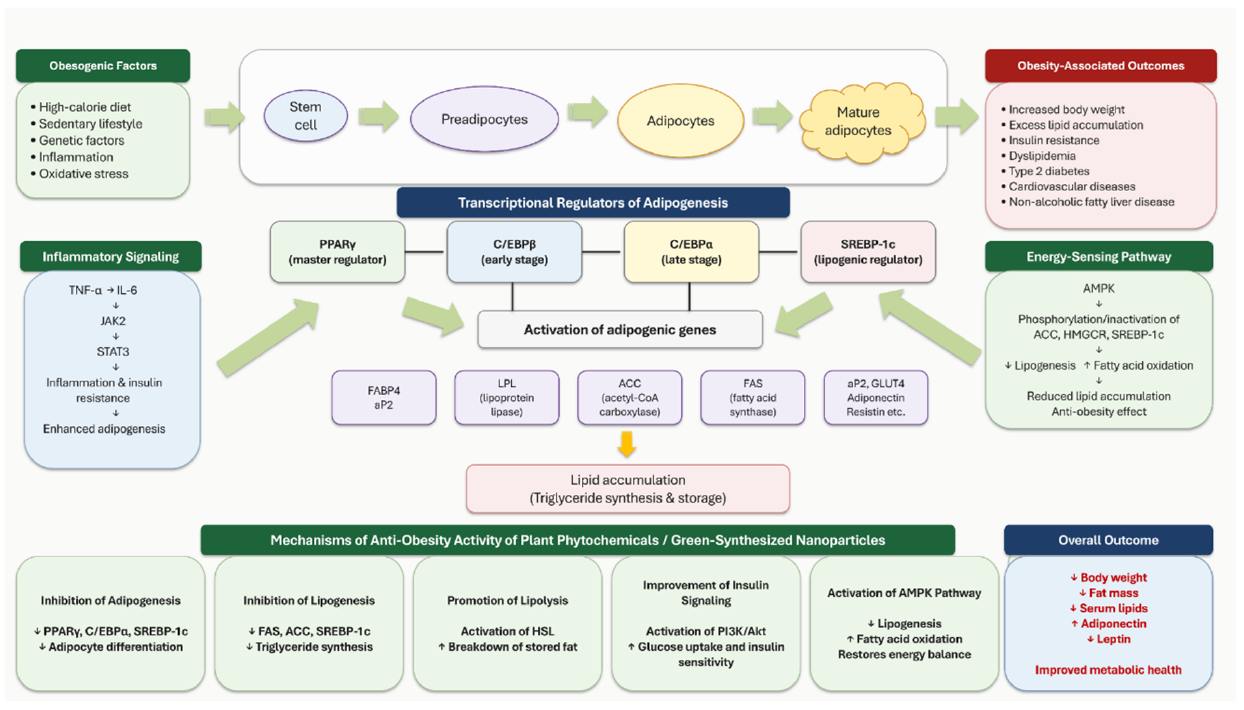
Obesity is a disease where the process of adipocyte differentiation, lipid synthesis, lipid storage and energy metabolism is complicated. PPARγ, C/EBPα and SREBP-1 are important transcription factors that are involved in adipogenesis and lipid accumulation. Thus, alterations in the expression of these molecular markers could be of great significance with respect to the anti-adipogenic effects of plant-based compounds and green synthesized nanoparticles. Numerous previous studies are known to show the antiobesity properties of the silver nanoparticles. AuNPs with a size of 10-20 nm could decrease the triglyceride content and negatively regulated the adipogenesis by gene downregulation of 3T3-L1 cells were analyzed for the expression of PPARy, CEBPα, Jak2, STAT3 and ap2 (Yi et al. 2020) (Fig 1). Based on this, it was hypothesized that the phenolics found in the plant extracts coated the surface of the gold nanoparticles and has the ability to reduce the excess amount of lipid in cell lines.
Figure 1: Molecular mechanism of Adipogenesis and lipid accumulation
In India, since ancient times Bhasma’s are being used by local saints which is generally a metallic preparation having decoction of medicinal important herbs and extensively used in treating various diseases. So, this is the widespread practice utilized by tribal and native people for curing diseases. These formulations of Bhasma are mentioned from times immemorial in Ayurveda e.g. Swarna bhasma, Tamra bhasma, Abhrak bhasma, Muktashukti bhasma etc effective against many human ailments (Pal et al., 2016; Sharma and Prajapati, 2016)
Therefore, this study focuses on the medicinal plants which are widespread in Gadchiroli district and since ancient times are being utilized to treat infections and various disorders. Although the use of these was prevalent in some part of the world and culture in India, but their study was not done in a great detail. Important phytoconstituents of some medicinal plants will be studied for its inhibitory effect on the growth of microbes. In addition, the nanoparticles prepared using the biogenic methods are less toxic and environmentally friendly, as well as have good stability, size and polydispersity. Out of these biogenic methods, the “Green Synthesis” method of Nanoparticle preparation using medicinally important plant extract is the most interesting. This has attended much prominence in the last few decades. In this approach, mild reaction conditions, and oxidation/reduction metal ions (capping agents) have been oxidized/reduced with plant extracts. which are nontoxic precursors and thus regarded as being the most environment friendly method.
Metallic nanoparticles research
The use of gold nanoparticles has been dated back to Roman Empire, where gold nanoparticles were used to design glasses. In modern era, the credit to elucidate properties and functions of colloidal gold solutions over bulk gold solution possibly goes to the Michael Faraday. Notwithstanding, in biological filed Gold (Au) has been reported as a nontoxic and reliable metal to treat various diseases in its nanoparticle form. Such green synthesized nanoparticles have been extensively studied since many decades against various medical ailments in humans including cancer, diabetes, cardiovascular diseases etc. due to their nontoxic nature. Gold particles synthesized from green methodology have been studied for anti-lipogenic activity, glucose uptake and downregulation of PPARγ and CEBPα transcription factors in 3T3L1 cells in few parts of the world (Gao et al. 2020; Akter et al. 2022).
Antibacterial activity of silver nanoparticles (AgNPs) on the species Acinetobacter baumannii is tested and is found to be highly sensitive to the effect of green synthesized AgNPs. The remarkable inhibition of growth of A. baumannii on testing with AgNPs was observed by Khan et al. 2022. Furthermore, the AgNPs manifested promising anti-tumor activity against the breast cancer cell line MCF7 (Geremew et al. 2022)
Although these components exhibit vital applications, sometimes their inhibitor factor decreases their mode of action against diseases. Rather, nanoparticles can specifically/vigorously target the desired cell/tissue. If these nanoparticles are supposed to have functional phytochemicals capped on them it would increase the quality of treatment for targeting specific area only. Thus, the application of nanoparticles such as Gold (Au), Silver (Ag), Palladium (Pd), Zinc (Zn), Copper (Cu) and Iron (Fe) have been used for the high localized surface plasmon resonance which makes them attractive for study by researchers around the world to determine treatment against a number of diseases.
Other nanoparticle which are widely used to explore biological functions include Zinc (Zn) and Silver (Ag). But, certain unique properties of gold nanoparticles such as a high surface area to volume ratio, size and shape (spherical, non-spherical, rod) specific electrical and optical characteristics and most importantly the modifiable surface through ligands, various functional groups (amines, thiols, phosphines etc), peptides, polysaccharides, DNA molecules etc. make this metal a perfect choice in treatment related medicinal research.
The surface modification of nanoparticles is important in cellular penetration. It has been reported that a size of nanoparticles ranging from 5 nm to 60 nm can effectively penetrate the cellular membranes. Literature on gold nanoparticle suggests its easy penetration via cellular membranes when they are capped. The use of medicinal plants in treating diseases in India can be traced back to 6,000-4000 BCE (Prasad et al. 2024). Since then, Indians have preserved their traditional knowledge of medicinal plants in several ancient literature such as Atharvaveda, Rasa Vaisesika, Charaka Samhita and Sushruta Samhita. In addition, due to varied Indian cultural and traditional differentiation each ethnic group has maintained their unique practices about the traditional knowledge on regional medicinal plants.
More than 6000 plants are used in India in traditional and folk medicine to treat various diseases like obesity, atherosclerosis, inflammation, cancer, piles, abdominal pain, pancreatistis etc. Such prosperity of traditional knowledge about regional medicines of Vidarbha region have also been accumulated by indigenous people. Through this study, we are compiling this traditional knowledge by selecting some medicinal plants which have been known for anti-obesity in Vidarbha region with nanotechnology. As different plant can have different oxidation and reduction potentials, we are postulating this study to bring out best possible capping of gold nanoparticles with selected ethnomedicinal plants against anti-obesity.
Oxidative stress and nanoparticles
Oxidative stress, which is thought to be relevant to obesity and metabolic dysfunction, is becoming increasingly recognized. Overproduction of ROS and RNS can impact mitochondrial function, lipid metabolism and adipocyte activity (Abou-Rjeileh & Contreras, 2021). Oxidative stress is an imbalance between reactive oxygen and nitrogen species (RONS) and enzymatic and non-enzymatic anti-oxidants. Electrons leaked during electron transport chain (ETC) can react with oxygen or nitrogen atoms responsible for RONS generation. Therefore, the antioxidant activity of phytochemicals related to medicinal plant extracts and green synthesized nanoparticles could be another mechanism related to their anti-obesity activity. Gargantuan studies on animal models suggests the direct role of oxidative stress not only in the etiology but also in the pathophysiology of obesity; as mitochondria is chiefly responsible for the lipid modulations and RONS generation. Hence, research should focus on the status of oxidative stress in the fat cells with and without treatment of metal nanoparticles.
Lack of research and limitations of nanoparticles in obesity management
Due to lack of research in the field of obesity and its associated comorbidities with respect to nanotechnology at genetic level, this study aims to target some transcriptional factors and their associated adipokines gene expression in addition to detection of various enzymatic and biochemical parameters in presence of green synthesised gold/ other metal nanoparticles. Despite the fact that green synthesized Nanoparticles from medicinal plants have demonstrated promising biological activities, but there are a number of limitations. It is possible that the reported results may differ depending on difference in plant phytochemical composition, size of nanoparticles, morphology, surface properties and experimental conditions. Moreover, more research is needed to elucidate molecular mechanisms and potential long-term safety and use of these nanomaterials in the management of obesity (Li et al. 2022).
REFERENCE
Abou-Rjeileh, U., & Contreras, G. A. (2021). Redox regulation of lipid mobilization in adipose tissues. Antioxidants, 10(7), 1090.
Akter, R., Ling, L., Rupa, E. J., KyuPark, J., Mathiyalagan, R., Nahar, J., & Kwak, G. Y. (2022). Binary effects of gynostemma gold nanoparticles on obesity and inflammation via downregulation of PPARγ/CEPBα and TNF-α gene expression. Molecules, 27(9), 2795.
Chang, H. C., Peng, C. H., Yeh, D. M., Kao, E. S., & Wang, C. J. (2014). Hibiscus sabdariffa extract inhibits obesity and fat accumulation, and improves liver steatosis in humans. Food & function, 5(4), 734-739.
Chaturvedi, A. (2010). Ethnobotanical observations of Euphorbiaceae species from Vidarbha region, Maharashtra, India. Ethnobotanical leaflets.
Durge, A. A., Dongre, U., & Moon, U. R. (2024). Antimicrobial activity of silver nanoparticles synthesized from Wrightia tinctoria fruit extracts. Environment Conservation Journal, 25(1), 16-21.
Fennell, C. W., Lindsey, K. L., McGaw, L. J., Sparg, S. G., Stafford, G. I., Elgorashi, E. E., & Van Staden, J. (2004). Assessing African medicinal plants for efficacy and safety: pharmacological screening and toxicology. Journal of ethnopharmacology, 94(2-3), 205-217.
Gao, L., Hu, Y., Hu, D., Li, Y., Yang, S., Dong, X., & Liu, H. (2020). Anti-obesity activity of gold nanoparticles synthesized from Salacia chinensis modulates the biochemical alterations in high-fat diet-induced obese rat model via AMPK signaling pathway. Arabian Journal of Chemistry, 13(8), 6589-6597.
Geremew, A., Carson, L., & Woldesenbet, S. (2022). Biosynthesis of silver nanoparticles using extract of Rumex nepalensis for bactericidal effect against food-borne pathogens and antioxidant activity. Frontiers in Molecular Biosciences, 9, 991669.
Herranz-López, M., Olivares-Vicente, M., Encinar, J. A., Barrajón-Catalán, E., Segura-Carretero, A., Joven, J., & Micol, V. (2017). Multi-targeted molecular effects of Hibiscus sabdariffa polyphenols: An opportunity for a global approach to obesity. Nutrients, 9(8), 907.
Horikoshi, S., & Serpone, N. (2013). Introduction to nanoparticles. Microwaves in nanoparticle synthesis: fundamentals and applications, 1-24.
Jain, S. K. (2007, September). Ethnobotany and research on medicinal plants in India. In Ciba Foundation Symposium 185‐Ethnobotany and the Search for New Drugs: Ethnobotany and the Search for New Drugs: Ciba Foundation Symposium 185 (pp. 153-168). Chichester, UK: John Wiley & Sons, Ltd.
Khan, I., Bawazeer, S., Rauf, A., Qureshi, M. N., Muhammad, N., Al-Awthan, Y. S., ... & Rengasamy, K. R. (2022). Synthesis, biological investigation and catalytic application using the alcoholic extract of Black Cumin (Bunium Persicum) seeds-based silver nanoparticles. Journal of Nanostructure in Chemistry, 12(1), 59-77.
Kowalska, K., Olejnik, A., Rychlik, J., & Grajek, W. (2014). Cranberries (Oxycoccus quadripetalus) inhibit adipogenesis and lipogenesis in 3T3-L1 cells. Food chemistry, 148, 246-252.
Lahlou, R. A., Carvalho, F., Pereira, M. J., Lopes, J., & Silva, L. R. (2024). Overview of ethnobotanical–pharmacological studies carried out on medicinal plants from the Serra da Estrela Natural Park: Focus on their antidiabetic potential. Pharmaceutics, 16(4), 454.
Li, J., Duan, H., Liu, Y., Wang, L., & Zhou, X. (2022). Biomaterial-based therapeutic strategies for obesity and its comorbidities. Pharmaceutics, 14(7), 1445.
Lin, X., & Li, H. (2021). Obesity: epidemiology, pathophysiology, and therapeutics. Frontiers in endocrinology, 12, 706978.
Mollazadeh, H., & Hosseinzadeh, H. (2016). Cinnamon effects on metabolic syndrome: a review based on its mechanisms. Iranian journal of basic medical sciences, 19(12), 1258.
Nalbantova, V., Benbassat, N., & Delattre, C. (2024). Fenugreek Galactomannan and its versatile applications. Polysaccharides, 5(3), 478-492.
Omar, M. H., Shamsahal, N., Muhammad, H., Ahmad, W. A. N. W., & Wasiman, M. I. (2018). Anti-obesity and haematological effects of Malaysia Hibiscus sabdariffa L. aqueous extract on obese Sprague Dawley rats. Functional Foods in Health and Disease, 8(6), 340.
Othman, A. I., Amer, M. A., Basos, A. S., & El-Missiry, M. A. (2019). Moringa oleifera leaf extract ameliorated high-fat diet-induced obesity, oxidative stress and disrupted metabolic hormones. Clinical phytoscience, 5(1), 48.
Pagliari, S., Forcella, M., Lonati, E., Sacco, G., Romaniello, F., Rovellini, P., ... & Bruni, I. (2023). Antioxidant and anti-inflammatory effect of cinnamon (Cinnamomum verum J. Presl) bark extract after in vitro digestion simulation. Foods, 12(3), 452.
Pal, R., Chakraborty, B., Nath, A., Singh, L. M., Ali, M., Rahman, D. S., & Sengupta, M. (2016). Noble metal nanoparticle-induced oxidative stress modulates tumor associated macrophages (TAMs) from an M2 to M1 phenotype: An in vitro approach. International immunopharmacology, 38, 332-341.
Prasad, R. D., Prasad, R. S., Prasad, R. B., Prasad, S. R., Singha, S. B., Singha, D., ... & Navathe, G. J. (2024). A review on modern characterization techniques for analysis of nanomaterials and biomaterials. ES Energy and Environment, 23, 1087.
Roy, A., Pandit, C., Gacem, A., Alqahtani, M. S., Bilal, M., Islam, S., & Jameel, M. (2022). Biologically derived gold nanoparticles and their applications. Bioinorganic Chemistry and Applications, 2022(1), 8184217.
Sharma, R., & Prajapati, P. K. (2016). Nanotechnology in medicine: Leads from Ayurveda. Journal of Pharmacy and Bioallied Sciences, 8(1), 80-81.Sharma, R., & Prajapati, P. K. (2016). Nanotechnology in medicine: Leads from Ayurveda. Journal of Pharmacy and Bioallied Sciences, 8(1), 80-81.
Yi, M. H., Simu, S. Y., Ahn, S., Aceituno, V. C., Wang, C., Mathiyalagan, R., & Yang, D. C. (2020). Anti-obesity effect of gold nanoparticles from Dendropanax morbifera Léveille by suppression of triglyceride synthesis and downregulation of PPARγ and CEBPα signaling pathways in 3T3-L1 mature adipocytes and HepG2 cells. Current Nanoscience, 16(2), 196-203.
Zangeneh, A., Zangeneh, M. M., & Moradi, R. (2020). Ethnomedicinal plant‐extract‐assisted green synthesis of iron nanoparticles using Allium saralicum extract, and their antioxidant, cytotoxicity, antibacterial, antifungal and cutaneous wound‐healing activities. Applied Organometallic Chemistry, 34(1), e5247.
License
Creative Commons Attribution-NonCommercial-NoDerivatives 4.0 International License
All papers should be submitted electronically. All submitted manuscripts must be original work that is not under submission at another journal or under consideration for publication in another form, such as a monograph or chapter of a book. Authors of submitted papers are obligated not to submit their paper for publication elsewhere until an editorial decision is rendered on their submission. Further, authors of accepted papers are prohibited from publishing the results in other publications that appear before the paper is published in the Journal unless they receive approval for doing so from the Editor-In-Chief.
Himalayan Journal of Applied Medical Sciences and Research open access articles are licensed under a Creative Commons Attribution-Share A like 4.0 International License. This license lets the audience to give appropriate credit, provide a link to the license, and indicate if changes were made and if they remix, transform, or build upon the material, they must distribute contributions under the same license as the original.
Recommended Articles
Research Article
Intellident – Identification System
Srishti Mishra,
...
Skand Sao
Published: 30/06/2026
Download PDF
Cite
x
APA
Mishra, S., Chandra, A., Karpathak, S., Pradhan, S., Godbole, S. & Sao, S. (2026). Intellident – Identification System. Himalayan Journal of Applied Medical Sciences and Research, 7(2), 1-4.
MLA
Mishra, Srishti, et al. "Intellident – Identification System." Himalayan Journal of Applied Medical Sciences and Research 7.2 (2026): 1-4.
Chicago
Mishra, Srishti, Anukrity Chandra, Shilpi Karpathak, Sonia Pradhan, Shambhavi Godbole and Skand Sao. "Intellident – Identification System." Himalayan Journal of Applied Medical Sciences and Research 7, no. 2 (2026): 1-4.
Harvard
Mishra, S., Chandra, A., Karpathak, S., Pradhan, S., Godbole, S. and Sao, S. (2026) 'Intellident – Identification System' Himalayan Journal of Applied Medical Sciences and Research 7(2), pp. 1-4.
Vancouver
Mishra S, Chandra A, Karpathak S, Pradhan S, Godbole S, Sao S. Intellident – Identification System. Himalayan Journal of Applied Medical Sciences and Research. 2026 Jul;7(2):1-4.
Download PDF
Research Article
Dento-Vault: A Universal Cloud-Based Dental Record System for Lifelong, Interoperable Patient Care
Anukrity Chandra,
...
Achint Chhabra
Published: 23/08/2026
Download PDF
Cite
x
APA
Chandra, A., Mishra, S., Pradhan, S., Karpathak, S., Mishra, A. & Chhabra, A. (2026). Dento-Vault: A Universal Cloud-Based Dental Record System for Lifelong, Interoperable Patient Care. Himalayan Journal of Applied Medical Sciences and Research, 7(2), 1-6.
MLA
Chandra, Anukrity, et al. "Dento-Vault: A Universal Cloud-Based Dental Record System for Lifelong, Interoperable Patient Care." Himalayan Journal of Applied Medical Sciences and Research 7.2 (2026): 1-6.
Chicago
Chandra, Anukrity, Srishti Mishra, Sonia Pradhan, Shilpi Karpathak, Avantika Mishra and Achint Chhabra. "Dento-Vault: A Universal Cloud-Based Dental Record System for Lifelong, Interoperable Patient Care." Himalayan Journal of Applied Medical Sciences and Research 7, no. 2 (2026): 1-6.
Harvard
Chandra, A., Mishra, S., Pradhan, S., Karpathak, S., Mishra, A. and Chhabra, A. (2026) 'Dento-Vault: A Universal Cloud-Based Dental Record System for Lifelong, Interoperable Patient Care' Himalayan Journal of Applied Medical Sciences and Research 7(2), pp. 1-6.
Vancouver
Chandra A, Mishra S, Pradhan S, Karpathak S, Mishra A, Chhabra A. Dento-Vault: A Universal Cloud-Based Dental Record System for Lifelong, Interoperable Patient Care. Himalayan Journal of Applied Medical Sciences and Research. 2026 Jul;7(2):1-6.
Download PDF
Research Article
Digital Implantology: Current Concepts, Clinical Applications, Limitations and Future Directions - A Narrative Review
Anukrity Chandra
Published: 30/07/2026
Download PDF
Cite
x
APA
Chandra, A. (2026). Digital Implantology: Current Concepts, Clinical Applications, Limitations and Future Directions - A Narrative Review. Himalayan Journal of Applied Medical Sciences and Research, 7(2), 1-7.
MLA
Chandra, Anukrity. "Digital Implantology: Current Concepts, Clinical Applications, Limitations and Future Directions - A Narrative Review." Himalayan Journal of Applied Medical Sciences and Research 7.2 (2026): 1-7.
Chicago
Chandra, Anukrity. "Digital Implantology: Current Concepts, Clinical Applications, Limitations and Future Directions - A Narrative Review." Himalayan Journal of Applied Medical Sciences and Research 7, no. 2 (2026): 1-7.
Harvard
Chandra, A. (2026) 'Digital Implantology: Current Concepts, Clinical Applications, Limitations and Future Directions - A Narrative Review' Himalayan Journal of Applied Medical Sciences and Research 7(2), pp. 1-7.
Vancouver
Chandra A. Digital Implantology: Current Concepts, Clinical Applications, Limitations and Future Directions - A Narrative Review. Himalayan Journal of Applied Medical Sciences and Research. 2026 Jul;7(2):1-7.
Download PDF
Research Article
Study of the Role of Serum Interleukin-6 in Inflammation among Pregnant Women with COVID-19
Aynar Talib Samad,
Yossra Saleh Khudhur
Published: 27/07/2021
Download PDF
Cite
x
APA
Talib Samad, A. & Khudhur, Y. S. (2021). Study of the Role of Serum Interleukin-6 in Inflammation among Pregnant Women with COVID-19. Himalayan Journal of Applied Medical Sciences and Research, 2(2), 1-6.
MLA
Talib Samad, Aynar and Yossra Saleh Khudhur. "Study of the Role of Serum Interleukin-6 in Inflammation among Pregnant Women with COVID-19." Himalayan Journal of Applied Medical Sciences and Research 2.2 (2021): 1-6.
Chicago
Talib Samad, Aynar and Yossra Saleh Khudhur. "Study of the Role of Serum Interleukin-6 in Inflammation among Pregnant Women with COVID-19." Himalayan Journal of Applied Medical Sciences and Research 2, no. 2 (2021): 1-6.
Harvard
Talib Samad, A. and Khudhur, Y. S. (2021) 'Study of the Role of Serum Interleukin-6 in Inflammation among Pregnant Women with COVID-19' Himalayan Journal of Applied Medical Sciences and Research 2(2), pp. 1-6.
Vancouver
Talib Samad A, Khudhur YS. Study of the Role of Serum Interleukin-6 in Inflammation among Pregnant Women with COVID-19. Himalayan Journal of Applied Medical Sciences and Research. 2021 Jul;2(2):1-6.
Durge, A. A. & Dongre, U. J. (2026). Ethnomedicinal Plants for Obesity Management - Phytochemicals, Molecular Targets and Prospects of Green Nanotechnology. Himalayan Journal of Applied Medical Sciences and Research, 7(1), 1-6.
MLA
Durge, Arpana Ashokrao and Utpal Jagdish Dongre. "Ethnomedicinal Plants for Obesity Management - Phytochemicals, Molecular Targets and Prospects of Green Nanotechnology." Himalayan Journal of Applied Medical Sciences and Research 7.1 (2026): 1-6.
Chicago
Durge, Arpana Ashokrao and Utpal Jagdish Dongre. "Ethnomedicinal Plants for Obesity Management - Phytochemicals, Molecular Targets and Prospects of Green Nanotechnology." Himalayan Journal of Applied Medical Sciences and Research 7, no. 1 (2026): 1-6.
Harvard
Durge, A. A. and Dongre, U. J. (2026) 'Ethnomedicinal Plants for Obesity Management - Phytochemicals, Molecular Targets and Prospects of Green Nanotechnology' Himalayan Journal of Applied Medical Sciences and Research 7(1), pp. 1-6.
Vancouver
Durge AA, Dongre UJ. Ethnomedicinal Plants for Obesity Management - Phytochemicals, Molecular Targets and Prospects of Green Nanotechnology. Himalayan Journal of Applied Medical Sciences and Research. 2026 Jan;7(1):1-6.



 Download PDF
 Download XML