Background: Adults in Shimla have been reported to have poor sleeping patterns and habits. As a result, we designed this study to evaluate the Interrupted sleep pattern among Adult Population of Shimla city and its associated socio-demographic characteristics as well as sleeping habits. Methods: It was a Cross sectional community based study conducted in Shimla city from Nov 2021- April 2022 among Adult population having age between 18-60 years. A pre-tested self-administered, anonymous, semi-structured questionnaire was used to evaluate the sleep pattern and sleep habits. The collected Data was thoroughly screened and entered in Microsoft Excel spreadsheet 2007 and analyzed by using Epi Info v7 software. Results: In the present study a total of 408 adults age between 18-60 years selected from all 34 municipal wards of Shimla city were participated. Among the total, 119(29.2%) had interrupted sleep while 289(70.8%) did not have interrupted sleep. In Our study interrupted sleep pattern was statistically significantly associated with the males, Urban area , with the time to sleep and wake up, habit of using mobile before going to sleep, Mobile Use and Watching TV/Computer/ Laptop >2 hours in a day, Problem of dreams while sleeping, Trouble of going back to sleep once awakened, Easily awakened by noise , intake of sleeping pills and Habit of Smoking and taking alcohol (p<0.05) In the present study, there was no statistically significant difference in the interrupted sleep pattern according to age groups, level of education, religion, read book or magazines or watched TV before going to sleep, slept alone and who slept with family members, sleep duration, time gap between eating and sleeping, day time sleeping habits, number of cups of coffee or tea intake, pills for mental/psychiatric disorders or any other problems, exercise or yoga pattern and snoring pattern (p>0.05). Conclusion: Our study concluded that interrupted sleep pattern was statistically significantly associated with the males, Urban area, with the time to sleep and wake up, habit of using mobile before going to sleep, Mobile Use and Watching TV/Computer/ Laptop >2 hours in a day, Problem of dreams while sleeping, Trouble of going back to sleep once awakened, Easily awakened by noise, intake of sleeping pills and Habit of Smoking and taking alcohol.
Keywords
Evaluation
Interrupted Sleep Pattern
Adult Population
Shimla City
Association Socio-Demographic Characteristics
Sleeping Habits
INTRODUCTION
During sleep, the brain conducts memory consolidation and integration; adequate and quality sleep eliminates concentration difficulties without which, judgments, mood, and ability to learn and retain information are weakened. Sleep disturbance is frequently considered the most serious consequence of environmental noise by WHO. It is believed that there is a reverse relationship between sleep efficiency (quality of sleep) and increasing age [1].
The main effects of sleep deprivation include physical effects (sleepiness, fatigue, hypertension), cognitive impairment and mental health complications. Such inadequate rest impairs the ability to think, to handle stress, to maintain a healthy immune system, and to moderate emotions (WHO) [2].
Alcohol consumption, smoking, vigorous physical activity, loud music or taking a nap after 6 o’clock in the evening can reduce sleep quality. Using electronic gadget for watching movies, gaming, viewing television (TV), talking on the phone and text messaging have all been shown to adversely affect sleep patterns and quality. Several other factors, like social and customs, cultural and climatic factors, appear to affect sleep duration in adults. Activities in bed, such as reading or watching television, have also been associated with subjective measurements of poor sleep [3-5].
Other lifestyle habits affecting sleep is cigarette smoking. It leads to sleep problems like having difficulty in falling asleep and maintaining asleep. Caffeine intake lengthens sleep latency, reduces sleep efficiency, and decreases sleep duration in adults. Pattern of sleep varies according to various factors like age, type of employment, physiological characteristics, mental status and other associated physical disease. The cut throat competition, escalating level of stress, hectic schedule and expectations by family members affects our health and also the normal physiological process like sleep. Therefore, good quality sleep and adequate amount of sleep are important in order to have better cognitive performance and avoid health problems and psychiatric disorders [6].
While the majority of sleep studies have been conducted in affluent countries, little is known about interrupted sleep patterns and practices in developing countries. Adults in Shimla have been reported to have poor sleeping patterns and habits. As a result, we designed this study to evaluate the Interrupted sleep pattern among Adult Population of Shimla city and its associated socio-demographic characteristics as well as sleeping habits.
Aims and Objectives
To evaluate the Interrupted sleep pattern among Adult Population of Shimla city and its associated socio-demographic characteristics as well as sleeping habits.
MATERIALS AND METHODS
Study Design
It was a Cross sectional community based study.
Study Area
The study was conducted in Shimla which is the capital city of Himachal Pradesh located in the south-western ranges of the Himalayas at 31.61°N 77.10°E. It has an average altitude of 2,206 meters (7,238 ft) above mean sea level.
Study Period
The time Duration for the study was 6 months i.e Nov 2021- April 2022
Study Population
Adult population having age between 18-60 years of Shimla city were included in the study.
Sample Size Calculation
Though data was available data on the sleeping pattern in non-hilly area, but there was a paucity of data regarding the same in hilly area like Shimla. So, the sample size was calculated by assuming that 50% of the adult population of Shimla city have adequate Sleeping pattern, 5% Absolute error, 95% Confidence level, our sample size came out to be 384. By taking 5% Non-Response Rate our total sample size came out to be 408. So the total sample size of our study was 408
The equation for calculating sample size is as follows:
N = Z2 P (1-P)/ e2
Where:
Z : Level of confidence (1.96)
P : Prevalence of the disease
e : Margin of error or precision
Sampling Technique
There are total 34 Municipal wards in Shimla city. We equally divided the sample size according to municipal wards i.e.12 Adult persons from each municipal ward. We took 12 Adult persons from each municipal ward by simple random sampling. For this we selected first house from each ward by simple random sampling. Then we went in anticlockwise direction to select next household to complete sample size of 12 Adult persons from each ward. From each household we selected only one adult person by simple random sampling.
Study Tool
A pre-tested self-administered, anonymous, semi-structured questionnaire was used to evaluate the interrupted sleep pattern and sleep habits among adult population of Shimla city.
Part A
included close ended questions to elicit information regarding basic Socio-demographics of study population including age, sex, education, family type, occupation etc.
Part B
included close ended questions regarding interrupted sleep pattern and habits.
Data Collection Procedure
We provided participant information sheet to every selected adult and also explained them the purpose and objectives of the study. We ensured them for anonymity and confidentiality. After that we administered them the study questionnaire and we advised them to read every question carefully and answer accurately. We also provided them any help if they had any problem in understanding any question. Then we gave 15 minutes to the study participants complete the questionnaire. After completing the questionnaire, we collected it and kept it in safe and secure manner.
Inclusion Criteria
Adult person between 18 to 60 years of age
Those who had given their consent to participate in the study
Exclusion Criteria
Those who refused to give consent to fill the questionnaire.
Statistical Analysis
The collected Data was thoroughly screened and entered in Microsoft Excel spreadsheet 2007. Statistical analysis was done by using Epi Info 7. Descriptive statistics, frequency percentages were determined for categorical variables. Mean and standard deviation were determined for quantitative variables. The association of various factors associated with sleep pattern and habits was assessed with univariate analysis. To assess the differentials in relation to categorical variables, chi square test/fisher’s exact test was used. A p value of <.05 was taken as significant.
Ethical Aspects
Objectives of study were explained to the participants during the visit. Informed consent was taken from all the adults participating in the study. Participants were fully assured regarding the confidentiality and anonymity of the information provided by them. Participation in the survey was voluntary, with neither reward nor penalty. All respondents were informed that they were free to continue or quit at any time, and the submission of the questionnaire would be regarded as consent to participate. Confidentiality of information gathered from study subjects was maintained in accordance with the principles embodied in the declaration of Helsinski and International guidelines for ethical review of epidemiological studies.
RESULTS AND OBSERVATION
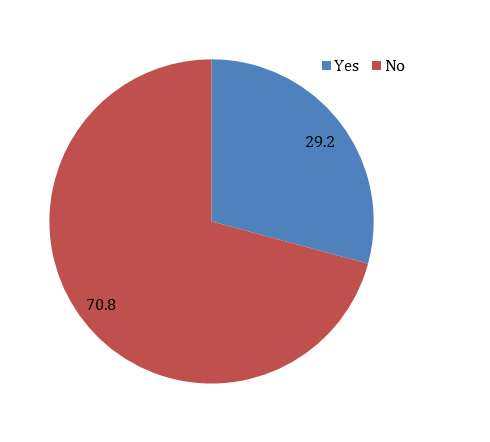
In the present study a total of 408 adults age between 18-60 years selected from all 34 municipal wards of Shimla city were participated with the objective to evaluate the interrupted sleep pattern and sleep habits. Table 1 showed that a total of 408 participants responded to the survey. Out of which, 210(51.5%) were males and 198(48.5%) were females. Among those, 292(71.6%) participants belong to 18-30 years old age group, 57(14.0%) in 31-40 years old age group, 30(7.4%) were 41-50 years old age group and 29(7.1%) were 51-60 years old age group. 141(34.6%) participants had graduate degree followed by 123(30.1%) participants were having postgraduate degree whereas 6(1.5%) participants were illiterate. According to Occupation status, 242(59.3%) participants did not mentioned their profession i.e they chosen others group whereas 74(18.1%) were employee, 44(10.8%) were professional, 29(7.1%) were businessmen, 18(4.4%) were farmers and 1(0.2%) were labourer. According to Religion, majority of the participants 379(92.9%) were Hindus Figure 1 showed that among the total 408 participants 119(29.2%) had interrupted sleep while 289(70.8%) did not have interrupted sleep.
In the present study, among 18-40 years, 104(28.8%) participants had interrupted sleep pattern while 245(70.2%) didn’t have interrupted sleep pattern while among 41-60 years, 15(25.4%) had interrupted sleep pattern and 44(74.6%) didn’t have interrupted sleep pattern. There was no statistically significant difference in the interrupted sleep pattern among both age groups (p = 0.49).
In the present study, 74(35.2%) males had interrupted sleep pattern while 136(64.8%) didn’t have interrupted sleep pattern whereas 45(22.7%) female had interrupted sleep pattern while 153(77.3%) didn’t have interrupted sleep pattern. There was statistically significant difference in the interrupted sleep pattern among males and females (p = 0.006).
Table 1: Distribution of The Participants According to Socio-Demographic Characteristics
Parameters
Frequency
Percent
Age
18-30 years
292
71.6
31-40 years
57
14.0
41-50 years
30
7.4
51-60 years
29
7.1
Gender
Female
198
48.5
Male
210
51.5
Education
Illiterate
6
1.5
Primary
2
0.5
Middle
4
1.0
Matriculate
20
4.9
Intermediate
112
27.5
Graduate
141
34.6
Post graduate
123
30.1
Occupation
Businessman
29
7.1
Employee
74
18.1
Farmer
18
4.4
Labourer
1
0.2
Other
242
59.3
Professional
44
10.8
Religion
Hindu
379
92.9
Muslim
3
0.7
Others
21
5.1
Sikh
5
1.2
-
Total
408
100.0
Table 2: Association of Interrupted Sleep Pattern with Socio-Demographic Variables
Parameters
Interrupted sleep
Total
p-value
No
Yes
Age group
18-40 years
245(70.2%)
104(29.8%)
349
0.49
41-60 years
44(74.6%)
15(25.4%)
59
Gender
Female
153(77.3%)
45(22.7%)
198
0.006
Male
136(64.8%)
74(35.2%)
210
Education
≤12
103(71.5%)
41(28.5%)
144
0.824
≥Graduate
186(70.5%)
78(29.5%)
264
Occupation
Professional/ Employee
79(66.9%)
39(33.1%)
118
0.275
Student/Other
210(72.4%)
80(27.6%)
290
Area
Rural
142(77.6%)
41(22.4%)
183
0.008
Urban
147(65.3%)
78(34.7%)
225
Religion
Hindu
268(70.7%)
11(29.3%)
379
0.868
Other Religions
21(72.4%)
8(27.6%)
29
Total
298(73%)
110(27%)
408
-
Table 3: Association of Interrupted Sleep Pattern with Sleeping Habits
Parameters
Interrupted sleep
Total
p-value
No
Yes
Average time to Sleep
Between 9pm-12am
222(74.8%)
75(25.2%)
297
0.005
After 12 am
67(60.4%)
44(39.6%)
111
Average time to wake up
Before 8am
202(73.9%)
71(26.1%)
273
0.048
After 8 am
87(64.4%)
48(35.6%)
135
Read books/magazines before going to sleep
No
215(68.5%)
99(31.5%)
314
0.070
Yes
74(78.7%)
20(21.3%)
94
Use mobile before going to sleep
No
76(79.2%)
20(20.8%)
96
0.041
Yes
213(68.3%)
99(31.7%)
312
Watch TV before going to sleep
No
201(72.0%)
78(28.0%)
279
0.482
Yes
88(68.2%)
41(31.8%)
129
Mobile Use in a day
≤2 hour
84(79.2%)
22(20.8%)
106
0.025
>2 hours
205(67.9%)
97(32.1%)
302
Watch TV/Compute/Laptop in a day
≤2 hours
208(74.1%)
73(25.9%)
281
0.037
>2 hours
81(63.8%)
46(36.2%)
127
Sleep alone or with family member
Alone
158(67.2%)
77(32.8%)
235
0.078
With family member
131(75.7%)
42(24.3%)
173
Sleep Duration
<6/>8 Hours
71(64.5%)
39(35.5%)
110
0.110
6-8 hours
218(73.2%)
80(26.8%)
298
Total
298(73%)
110(27%)
408
-
Table 4: Association of Interrupted Sleep Pattern with Sleeping Habits
Parameters
Interrupted sleep
Total
p-value
No
Yes
Time gap between eating and sleeping
>120 min
100(69.4%)
44(30.6%)
144
0.648
0-120 min
189(71.6%)
75(28.4%)
264
Habit of day time sleeping
No
184(73.0%)
68(27.0%)
252
0.220
Yes
105(67.3%)
51(32.7%)
156
Problem of dreams while sleeping
No
117(78.0%)
33(22.0%)
150
0.014
Yes
172(66.7%)
86(33.3%)
258
Felt fresh after wake up in the morning?
No
60(63.8%)
34(36.2%)
94
0.094
Yes
229(72.9%)
85(27.1%)
314
Cups of coffee/tea in a day
≤2 Cups
239(72.6%)
90(27.4%)
329
0.107
>2 Cups
50(63.3%)
29(36.7%)
79
Taking sleeping pills
No
287(72.5%)
109(27.5%)
396
0.000
Yes
2(16.7%)
10(83.3%)
12
Taking pills for mental/psychiatric disorder
No
284(71.4%)
114(28.6%)
398
0.164
Yes
5(50.0%)
5(50.0%)
10
Taking pills for any other problem
No
264(71.2%)
107(28.8%)
371
0.705
Yes
25(67.6%)
12(32.4%)
37
Total
289(70.8%)
119(29.2%)
408
-
Similarly, there was no statistically significant difference in the interrupted sleep pattern based on the different level of education (p = 0.824) and education (0.275).
According to area, there was statistical significant difference in the interrupted sleep pattern among rural and urban participants (p = 0.008). But there was no statistical significant difference in the interrupted sleep pattern among Hindu and participants belong to other religion (p = 0.868).
Inter group comparison shows that there was statistically significant difference in the Interrupted sleep pattern among participants who slept between 9 pm -12 am and who slept after 12 am (p = 0.005). Similarly, in the present study, there was statistical significant difference between wake-up time before 8am and after 8am in the morning (p = 0.048).
Table 5: Association of Interrupted Sleep Pattern with Associated Sleeping Habits.
Parameters
Interrupted sleep
Total
p-value
No
Yes
Habit of Smoking
No
265(73.2%)
97(26.8%)
362
0.005
Yes
24(52.2%)
22(47.8%)
46
Habit of taking alcohol
No
259(72.4%)
90(25.8%)
349
0.001
Yes
30(50.8%)
29(49.2%)
59
Habit of exercise regularly
No
200(71.4%)
80(28.6%)
280
0.725
Yes
89(69.5%)
39(30.5%)
128
Habit of yoga regularly
No
236(69.4%)
104(30.6%)
340
0.189
Yes
53(77.9%)
15(22.1%)
68
Trouble of going back to sleep once awakened
No
215(81.7%)
48(18.3%)
263
0.000
Yes
74(51.0%)
71(49.0%)
145
Easily awakened by noise
No
178(80.5%)
43(19.5%)
221
0.000
Yes
111(59.4%)
76(40.6%)
87
Problem of snoring
No
22(73.0%)
82(27.0%)
304
0.105
Yes
67(64.4%)
37(35.6%)
104
Total
289(70.8%)
119(29.2%)
-
Figure 1: Distribution of Participants According to Interrupted Sleep Pattern
Among the participants, there was no statistical significant difference between the participants who read books or magazines and who did not read book or magazines before going to sleep in bed (p = 0.070)
In the present study there was statistical significant difference between the participants who have used mobile for chatting on social media/ playing games/watching movie before going to sleep in bed and who did not use mobile for chatting on social media/ playing games/watching movie before going to sleep in bed (p = 0.041).
On the contrary, there was no statistical significant difference between the participants who stay awake late at night and watched TV before going to sleep in bed and who did not awake late at night and watched TV before going to sleep in bed (p = 0.482)
In the present study, there was statistical significant difference between the participants who used ≤2 hrs mobile in a day and who used ≥2 hrs mobile in a day (p = 0.025). Similarly, there was statistical significant difference between the participants who watched TV/computer/laptop for ≤2 hrs in a day and who watched for ≥2 hrs in a day (P = 0.037).
In the current study, there was no statistical significant difference between the participants who slept alone and who slept with family members (p = 0.078). Similarly, there was no statistical significant difference between the participants who had inadequate sleep duration and who had adequate sleep duration (6-8 hours) (p = 0.110).
Inter group comparison shows that there was no statistical significant difference between participants who have >120 minutes time gap between eating and sleeping and those who have <120 minutes time gap (p = 0.648). Similarly, in the present study, there was no statistical significant difference between the participants who had habit of day time sleeping and who did not have habit of day time sleeping (p = 0.220).
In our study, there was statistical significant difference between the participant who had problem of dreams and who did not have problems of dream while sleeping (p = 0.014). On contrary, in the current study, there was no statistical significant difference between the participant who did not feel fresh and those who felt fresh after wake up in the morning (p = 0.094).
In our study, there was no statistical significant difference between the participant who took less than 2 cups of coffee or tea and those who took more than 2 cups of coffee or tea in a day (p = 0.107).
In the present study, there was statistical significant difference between the participant who used sleeping pills for sleep and who did not use sleeping pills or pills for mental/psychiatric disorder (p = 0.000). On the contrary there was no statistical significant difference between the participant who took pills and those who did not take pills for mental/psychiatric disorders (p = 0.164). Also, there was no statistical significant difference between the participant who took pills and those who did not take pills for any other problems (p = 0.705).
Inter group comparison shows that there was statistical significant difference in Interrupted sleep pattern between the participant who smoke and those who did not smoke (p = 0.005). Similarly, there was a statistical significant difference in sleep duration between the participant who took alcohol and those who did not consume alcohol (p = 0.001).
In the present study, there was no statistical significant difference between the participant who done exercise regularly and those who didn’t have habit of regular exercise (p = 0.725). Similarly, there was no statistical difference between the participants who did yoga regularly and those who did not have habit of yoga regularly (p = 0.189).
In the present study, there was statistical difference between the participant who had trouble of going back to sleep once awake and those who didn’t have trouble of going back to sleep once awake (p = 0.000) Similarly, there was statistical significant difference between the participant who easily awakened by noise and those who did not easily awakened by noise (p = 0.000).
In the present study, there was no statistical significant difference between the participant who had problem of snoring and those who did not have problem of snoring (p = 0.105).
DISCUSSION
Disorders related to sleep are an issue of major concern and has long term social and demographic consequences. Sleep is a physiological process essential to life. Its quality is strongly related to psychological and physical health and other measures of well-being. Sleep deprivation and symptoms related to sleep disorders have not only been ignored but also inadequately understood. Almost one third of adults report difficulty in sleep [4-6].
The pattern of sleep and wakefulness in different subjects is known to vary with their age, the demands of their occupation, their physiological and psychosocial characteristics, psychiatric illness, and some types of physical illness [5]. In the last few years, there has been a growing attention to sleep and sleeplessness related problems. This interest is mainly due to the recognition that sleepiness and fatigue are becoming endemic in the population. There have been reports of poor sleep patterns and sleep habits among adults in Shimla city. Therefore, this study was planned to evaluate the sleep pattern and sleep habits among adult population in Shimla city.
In this study, 119(29.2%) participants have interrupted sleep while 289(70.8%) participants did not have interrupted sleep pattern. The implications of interrupted sleep can be significant with impacts not just on sleep quality but also numerous aspects of individual health. People who have interrupted sleep tend not to get enough overall sleep. Research has found a strong correlation between sleep continuity and total sleep time indicating that people with disturbed sleep are at a higher risk of not sleeping enough hours [7]. Similar findings were also found in our study.
Similar to our study findings, many research studies also reported that interrupted Sleep is often a problem for older adults and significantly associated with daytime sleepiness and Snoring that is loud and/or involves gasping or choking sounds, Drinking alcohol within four hours of bedtime, Eating within a few hours of bedtime and Consuming too much caffeine (in coffee, tea, and sodas) [8].
In addition to daytime sleepiness, missing or interrupted sleep can cause irritability, decreased creativity, increased stress, decreased accuracy, tremors, aches, and memory lapses or loss. It can even cause symptoms similar to ADHD and contribute to increased heart rate variability and risk of heart disease and stroke. Quality sleep is good not only for the sound mind, but all of organs. A number of studies have determined that quality sleep leads to longer, healthier lives [9].
CONCLUSION
In the present study, it was concluded that the interrupted sleep pattern was significantly associated with the males, Urban area, with the time to sleep and wake up, habit of using mobile before going to sleep, Mobile Use and Watching TV/Computer/ Laptop >2 hours in a day, Problem of dreams while sleeping, Trouble of going back to sleep once awakened, Easily awakened by noise, intake of sleeping pills and Habit of Smoking and taking alcohol.
REFRENCES
Medic, Goran et al. "Short- and long-term health consequences of sleep disruption." Nature and Science of Sleep, vol. 9, 2017, pp. 151–161. Published 19 May 2017.
Murugesan, G et al. "Sleep patterns, hygiene and daytime sleepiness among adolescent school-goers in three districts of Tamil Nadu: A descriptive study." National Medical Journal of India, vol. 31, 2018, pp. 196–200.
Giri, P et al. "Study of sleep habits and sleep problems among medical students of Pravara Institute of Medical Sciences Loni, Western Maharashtra, India." Annals of Medical and Health Sciences Research, vol. 3, no. 1, 2013, pp. 51–54.
John, B. "Sleep-patterns, sleep hygiene behaviors and parental monitoring among Bahrain-based Indian adolescents." Journal of Family Medicine and Primary Care, vol. 4, no. 2, 2015, pp. 232–237.
Brick, Cameron A et al. "Association between sleep hygiene and sleep quality in medical students." Behavioral Sleep Medicine, vol. 8, no. 2, 2010, pp. 113–121.
“Interrupted sleep.” Sleep Foundation, https://www.sleep foundation.org/sleep-deprivation/interrupted-sleep#:~:text=Scattershot%20sleep%20schedules%2C%20excess%20consumption,grinding%2C%20may%20interfere%20with%20sleep. Accessed 13 June 2022.
“Get your rest: Why interrupted sleep affects more than your alertness.” Newswise, https://www.newswise.com /articles/ get-your-rest-why-interrupted-sleep-affects-more-than-your-alertness. Accessed 13 June 2022.
“Top 4 reasons why you're not sleeping through the night.” Harvard Health Publishing, https://www.health.harvard .edu/staying-healthy/top-4-reasons-why-youre-not sleeping-through-the-night. Accessed 13 June 2022.
License
Creative Commons Attribution-NonCommercial-NoDerivatives 4.0 International License
All papers should be submitted electronically. All submitted manuscripts must be original work that is not under submission at another journal or under consideration for publication in another form, such as a monograph or chapter of a book. Authors of submitted papers are obligated not to submit their paper for publication elsewhere until an editorial decision is rendered on their submission. Further, authors of accepted papers are prohibited from publishing the results in other publications that appear before the paper is published in the Journal unless they receive approval for doing so from the Editor-In-Chief.
Himalayan Journal of Applied Medical Sciences and Research open access articles are licensed under a Creative Commons Attribution-Share A like 4.0 International License. This license lets the audience to give appropriate credit, provide a link to the license, and indicate if changes were made and if they remix, transform, or build upon the material, they must distribute contributions under the same license as the original.
Recommended Articles
Research Article
Intellident – Identification System
Srishti Mishra,
...
Skand Sao
Published: 30/06/2026
Download PDF
Cite
x
APA
Mishra, S., Chandra, A., Karpathak, S., Pradhan, S., Godbole, S. & Sao, S. (2026). Intellident – Identification System. Himalayan Journal of Applied Medical Sciences and Research, 7(2), 1-4.
MLA
Mishra, Srishti, et al. "Intellident – Identification System." Himalayan Journal of Applied Medical Sciences and Research 7.2 (2026): 1-4.
Chicago
Mishra, Srishti, Anukrity Chandra, Shilpi Karpathak, Sonia Pradhan, Shambhavi Godbole and Skand Sao. "Intellident – Identification System." Himalayan Journal of Applied Medical Sciences and Research 7, no. 2 (2026): 1-4.
Harvard
Mishra, S., Chandra, A., Karpathak, S., Pradhan, S., Godbole, S. and Sao, S. (2026) 'Intellident – Identification System' Himalayan Journal of Applied Medical Sciences and Research 7(2), pp. 1-4.
Vancouver
Mishra S, Chandra A, Karpathak S, Pradhan S, Godbole S, Sao S. Intellident – Identification System. Himalayan Journal of Applied Medical Sciences and Research. 2026 Jul;7(2):1-4.
Download PDF
Research Article
Dento-Vault: A Universal Cloud-Based Dental Record System for Lifelong, Interoperable Patient Care
Anukrity Chandra,
...
Achint Chhabra
Published: 23/08/2026
Download PDF
Cite
x
APA
Chandra, A., Mishra, S., Pradhan, S., Karpathak, S., Mishra, A. & Chhabra, A. (2026). Dento-Vault: A Universal Cloud-Based Dental Record System for Lifelong, Interoperable Patient Care. Himalayan Journal of Applied Medical Sciences and Research, 7(2), 1-6.
MLA
Chandra, Anukrity, et al. "Dento-Vault: A Universal Cloud-Based Dental Record System for Lifelong, Interoperable Patient Care." Himalayan Journal of Applied Medical Sciences and Research 7.2 (2026): 1-6.
Chicago
Chandra, Anukrity, Srishti Mishra, Sonia Pradhan, Shilpi Karpathak, Avantika Mishra and Achint Chhabra. "Dento-Vault: A Universal Cloud-Based Dental Record System for Lifelong, Interoperable Patient Care." Himalayan Journal of Applied Medical Sciences and Research 7, no. 2 (2026): 1-6.
Harvard
Chandra, A., Mishra, S., Pradhan, S., Karpathak, S., Mishra, A. and Chhabra, A. (2026) 'Dento-Vault: A Universal Cloud-Based Dental Record System for Lifelong, Interoperable Patient Care' Himalayan Journal of Applied Medical Sciences and Research 7(2), pp. 1-6.
Vancouver
Chandra A, Mishra S, Pradhan S, Karpathak S, Mishra A, Chhabra A. Dento-Vault: A Universal Cloud-Based Dental Record System for Lifelong, Interoperable Patient Care. Himalayan Journal of Applied Medical Sciences and Research. 2026 Jul;7(2):1-6.
Download PDF
Research Article
Ethnomedicinal Plants for Obesity Management - Phytochemicals, Molecular Targets and Prospects of Green Nanotechnology
Arpana Ashokrao Durge,
Utpal Jagdish Dongre
Published: 25/03/2026
Download PDF
Cite
x
APA
Durge, A. A. & Dongre, U. J. (2026). Ethnomedicinal Plants for Obesity Management - Phytochemicals, Molecular Targets and Prospects of Green Nanotechnology. Himalayan Journal of Applied Medical Sciences and Research, 7(1), 1-6.
MLA
Durge, Arpana Ashokrao and Utpal Jagdish Dongre. "Ethnomedicinal Plants for Obesity Management - Phytochemicals, Molecular Targets and Prospects of Green Nanotechnology." Himalayan Journal of Applied Medical Sciences and Research 7.1 (2026): 1-6.
Chicago
Durge, Arpana Ashokrao and Utpal Jagdish Dongre. "Ethnomedicinal Plants for Obesity Management - Phytochemicals, Molecular Targets and Prospects of Green Nanotechnology." Himalayan Journal of Applied Medical Sciences and Research 7, no. 1 (2026): 1-6.
Harvard
Durge, A. A. and Dongre, U. J. (2026) 'Ethnomedicinal Plants for Obesity Management - Phytochemicals, Molecular Targets and Prospects of Green Nanotechnology' Himalayan Journal of Applied Medical Sciences and Research 7(1), pp. 1-6.
Vancouver
Durge AA, Dongre UJ. Ethnomedicinal Plants for Obesity Management - Phytochemicals, Molecular Targets and Prospects of Green Nanotechnology. Himalayan Journal of Applied Medical Sciences and Research. 2026 Jan;7(1):1-6.
Download PDF
Research Article
Digital Implantology: Current Concepts, Clinical Applications, Limitations and Future Directions - A Narrative Review
Anukrity Chandra
Published: 30/07/2026
Download PDF
Cite
x
APA
Chandra, A. (2026). Digital Implantology: Current Concepts, Clinical Applications, Limitations and Future Directions - A Narrative Review. Himalayan Journal of Applied Medical Sciences and Research, 7(2), 1-7.
MLA
Chandra, Anukrity. "Digital Implantology: Current Concepts, Clinical Applications, Limitations and Future Directions - A Narrative Review." Himalayan Journal of Applied Medical Sciences and Research 7.2 (2026): 1-7.
Chicago
Chandra, Anukrity. "Digital Implantology: Current Concepts, Clinical Applications, Limitations and Future Directions - A Narrative Review." Himalayan Journal of Applied Medical Sciences and Research 7, no. 2 (2026): 1-7.
Harvard
Chandra, A. (2026) 'Digital Implantology: Current Concepts, Clinical Applications, Limitations and Future Directions - A Narrative Review' Himalayan Journal of Applied Medical Sciences and Research 7(2), pp. 1-7.
Vancouver
Chandra A. Digital Implantology: Current Concepts, Clinical Applications, Limitations and Future Directions - A Narrative Review. Himalayan Journal of Applied Medical Sciences and Research. 2026 Jul;7(2):1-7.
Kumar, A. & Sachdeva, A. (2022). Evaluation of Interrupted Sleep Pattern among Adult Population of Shimla City and its Correlates. Himalayan Journal of Applied Medical Sciences and Research, 3(2), 1-6.
MLA
Kumar, Ashwani and Amit Sachdeva. "Evaluation of Interrupted Sleep Pattern among Adult Population of Shimla City and its Correlates." Himalayan Journal of Applied Medical Sciences and Research 3.2 (2022): 1-6.
Chicago
Kumar, Ashwani and Amit Sachdeva. "Evaluation of Interrupted Sleep Pattern among Adult Population of Shimla City and its Correlates." Himalayan Journal of Applied Medical Sciences and Research 3, no. 2 (2022): 1-6.
Harvard
Kumar, A. and Sachdeva, A. (2022) 'Evaluation of Interrupted Sleep Pattern among Adult Population of Shimla City and its Correlates' Himalayan Journal of Applied Medical Sciences and Research 3(2), pp. 1-6.
Vancouver
Kumar A, Sachdeva A. Evaluation of Interrupted Sleep Pattern among Adult Population of Shimla City and its Correlates. Himalayan Journal of Applied Medical Sciences and Research. 2022 Jul;3(2):1-6.



 Download PDF
 Download XML