Contents
Download PDF
pdf Download XML
1072 Views
145 Downloads
Share this article
Research Article | Volume 2 Issue 2 (July-Dec, 2021) | Pages 1 - 4
Maintaining Spontaneous Breathing and the Effects of General Anesthesia during Breathing through an Intubation Tube
 ,
 ,
1
Anesthetist, Baghdad Teaching Hospital, Baghdad, Iraq
2
Anesthetist, Ghazi Al-Hariri Hospital for Specialized Surgery, Baghdad, Iraq
3
Anesthetist, Al-Wasiti Teaching Hospital for Reconstructive Surgery, Baghdad, Iraq
Under a Creative Commons license
Open Access
Received
Aug. 26, 2021
Revised
Oct. 18, 2021
Accepted
Nov. 14, 2021
Published
Nov. 30, 2021
Abstract

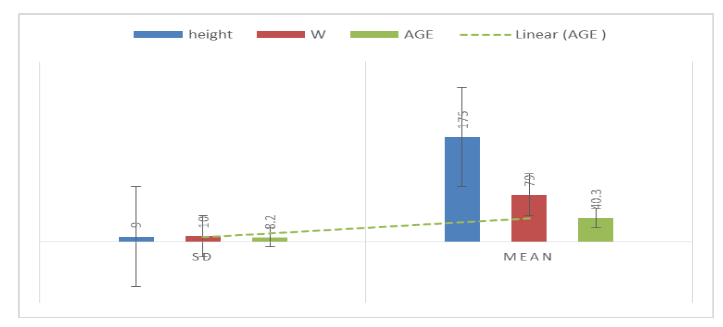
One hundred samples were collected from Baghdad Hospital. It was intended to know the detection, efficiency, and safety of intubation protocol with flexible bronchoscopy in patients with a difficult airway. METHODS: Models reviewed the medical records of patients diagnosed with airway difficulty who underwent flexible bronchoscopy for intubation on spontaneous ventilation and anesthesia with fentanyl, with a mean age of 40.3 ± 8.2 patients with airway difficulty (45%) Endotracheal intubation is the tube placement into the windpipe, either through the mouth (intubation tracheostomy) or nose (endotracheal intubation). Although airway maintenance and adequate ventilation are not synonymous with intubation, this secures and protects the airway while providing a closed ventilation system. Although intubation is a reasonably safe procedure in a stable patient and adequately oxygenated, it is not a technique without serious complications.

Keywords
Important Note:

Key findings:

The abstract discusses the evaluation of intubation protocol with flexible bronchoscopy in patients with difficult airways. Among 100 samples from Baghdad Hospital, 45% had airway difficulty. Intubation, crucial for airway protection and ventilation, poses risks despite its safety in stable, well-oxygenated patients, highlighting the need for caution during the procedure.


What is known and what is new?

The abstract discusses the evaluation of intubation protocol with flexible bronchoscopy in patients with difficult airways, drawn from a sample of 100 patients at Baghdad Hospital. It highlights the importance of intubation for airway security and ventilation, noting its safety in stable, well-oxygenated patients while acknowledging the risks of serious complications.


What is the implication, and what should change now?

The study underscores the importance of assessing the detection, efficiency, and safety of intubation protocols using flexible bronchoscopy in patients with difficult airways. As intubation carries risks despite its necessity, there's a call for continuous improvement in techniques and protocols to enhance safety and minimize complications, ensuring optimal patient outcomes.

INTRODUCTION:

Endotracheal intubation ensures safe breathing during resuscitation. Knowledge of the role of the tracheal intubation and insertion technique is critical for any physician involved in emergency resuscitation; endotracheal intubation provided the necessary safety of the airway in different resuscitation scenarios [1, 2].


In resuscitation scenarios, endotracheal intubation is seen as the best way to ensure and maintain a clean and safe airway. However, in inexperienced hands, attempts at endotracheal intubation can have negative consequences for the patient. The incidence of improper intubation varies with experience. Some studies show that the incidence of unintentional esophageal intubation can be as high as 50% in inexperienced hands [3].


In an emergency, endotracheal intubation should only be attempted by trained and qualified physicians. At least one member of the intensive care unit must be trained in endotracheal intubation. It is important to stress that avoiding patient ventilation with simple airways and a bag-valve-mask is unacceptable. Failure to intubate the patient is considered much less severe. Remember that being able to ventilate the patient is a priority [4].


An emergency is not suitable for practicing intubation. Intubation is likely to be more complex than the chosen position and is exacerbated by the risk of laryngospasm, regurgitation, and vomiting. Attempts to intubate by an inexperienced physician can result in prolonged interruptions in chest pressure, unrecognized esophageal intubation, and a high risk of failure [5, 6].


Resuscitation Council guidelines suggest that endotracheal intubation should only be used when trained personnel are available to perform the procedure and have a high level of skill and confidence [7].


However, endotracheal intubation during CPR by a trained practitioner ensures a safe airway and is the most effective airway management technique.


Airway patency is the primary priority because, without adequate airway patency, the lungs are not oxidized or ventilated; therefore, gas exchange in the blood cannot occur independently of cardiac output. Hypoxia from undiagnosed airway obstruction can damage peripheral organs, lead to cardiac arrest, and eventually death [8].


When the patient cannot maintain a stable airway, the maneuvers described below may be performed to ensure oxygen is delivered through the airway. These are:


Simple maneuvers to open the airway (head tilt, chin lift, jaw thrust) Assisted airway techniques (aspiration, pharyngeal patency, nasopharyngeal patency).


If spontaneous breathing is insufficient or absent, you should begin artificial ventilation as soon as possible [9-11].


Industrial ventilation (pocket mask ventilation, mask ventilation with bag and valve) Additional options for airway safety during ongoing resuscitation attempts include Alternative airway devices


Endotracheal intubation, commonly referred to as intubation, is the placement of a flexible plastic tube into the windpipe (windpipe) to keep the airway open or serve as a conduit through certain medications. It is frequently performed in critically injured, sick, or anesthetized patients to facilitate ventilation of the lungs, including mechanical ventilation, and to prevent the possibility of suffocation or airway obstruction [12].


The most commonly used route is the endotracheal tube, in which an endotracheal tube is passed through the mouth and vocal tract into the windpipe. In the endotracheal procedure, an endotracheal tube is passed through the nose and vocal tract into the windpipe. Other intubation methods include surgery, thyroidotomy (used almost exclusively in emergencies), and tracheostomy, primarily used in cases where prolonged airway support is anticipated [13, 14].


MATERIAL AND METHOD:

Patient Sample 

100 patients were collected from Baghdad Hospital, and Respiratory support was performed under anesthesia through Samples collected


Research Design 

The patient consisted of 100 patients, and the ages were calculated by relying on the statistical analysis program by knowing the value of the mean and the standard regression of the samples equal 40.3 ± 8.2. The material consisted of gloves, light-reducing clothing (blanket or the like). O 2 source, Ventilation bag with reservoir and masks of different sizes, Oropharyngeal cannulas, Endotracheal tubes of various sizes, Antibacterial filter, Semi-rigid lock, 10ml syringe, Laryngoscope with curved and straight laryngoscope blades of different sizes, Sterile disposable lubricant Water-soluble, Magill or Kelly forceps, stethoscope, bandage, scissors, aspirator, and sterile suction catheter of various catheters, sterile drape. (Figure 1) (Table 1, 2, 3)


Endotracheal intubation is the definitive method of airway obstruction and isolation, allowing:

  • Give oxygen at a sufficient concentration and tidal volume to maintain adequate lung inflation.
  • Tracheal suction.
  • We are giving medicines through the trachea.


Study Period

Patients were collected from Baghdad Hospital, where demographic information and data required for this study were obtained from 25-5-2019 to 2-2-2020

AIM OF RESEARCH:

The research aims to discover the efficacy and safety of the intubation protocol with flexible bronchoscopy in patients with difficult airways; unexpectedly problematic airway accounts for a significant proportion of anesthesia-related morbidity and mortality. The retrograde or semilunar approach is an alternative to most rigid instruments used for intubation of hymns, which follow the midline to reach the glass.

RESULT:


Table 1- Medicines Used according to Dosage

Fentanyl

2.3±0.8

Sevoflurane

1.2±0.3

Arduan

2.2±0.2


Table 2- P-Value for Dosage

Fentanyl

0.03

Sevoflurane

0.05

Arduan

0.001


Table 3- Results of Patients


0

20

40

60

80

breathing rate min

13.8

14.3

12.2

12.1

11.6

Dispensers' ml 

520

527.8

470.8

523.3

520.8

EtCO2 mm

34.4

44.4

33.6

38.9

36.6

SpO2, %

98.1

98.6

98.5

94.5

98.3


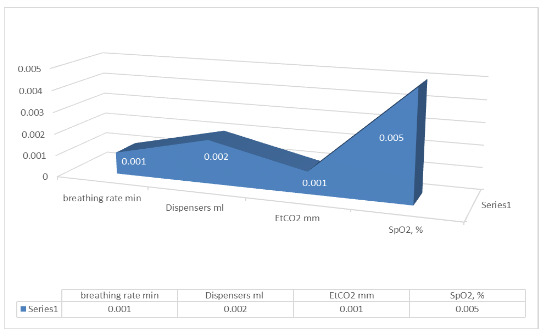
Figure 2- Explain P-Value for Results.

DISCUSSION:

Despite these benefits that outweigh morphine, these elements are not specific. Where are these elements' pharmacokinetics that do not accurately control drug levels and continuity during surgery?  Repeating the doses of these drugs and continuing to give them for a long time can accumulate in the body. Since these drugs require a relatively long period to get rid of them after intravenous infusion, they are not considered suitable for surgical procedures that require a quick end of the effect. All the previous drugs depend on their metabolism on the liver, which leads to a delay in their excretion when there is a defect in the liver function.  Although the response during surgery to pain stimulation can be controlled by giving central analgesics, this administration should be cautious for fear of accumulating these substances due to repeated administration or continuous infusion.  Before talking about Remy fentanyl, it is necessary to speak of central analgesics and synthetic opioids, and before that, we go through the physiology of pain.


All patients had a short cough, especially during topical installation, but this did not preclude intubation. No patient had laryngospasm. There was a decrease in SpO 2 lower than during intubation despite supplemental oxygen, especially in ICUs and emergency rooms; it was reversed after intubation. We believe that this SpO 2 fluctuation was a consequence of the severity of the patients. (Figure 2)


Induction of general anesthesia is challenging for the anesthesiologist, as many strategies and resources must be available. Not surprisingly, a study conducted between 1995 and 2007 found that airway-related requests were the most common, and the majority occurred during induction leading to patient death or brain damage from hypoxia. Airway trauma, including death due to injury to the mediastinum during intubation, happened in a third of the claims, with pulmonary withdrawal and esophageal intubation also being reasons for demand.


Endotracheal intubation failure by an experienced anesthesiologist is about 1 in 2,000 cases, and when LMA is used, it is about 2%. The difficulty rate for intubation and ventilation is 1 for every 5.00 10.00 anesthesia. However, the consequences of these rare problems can be catastrophic, and in non-ventilated non-intubated cases, the mortality rate (NINV) is greater than 25%. In emergencies, intubation failure increases dramatically, and NINV can occur in 1 in 600 cases.


Difficulty in intubation is expected in 1% of cases. Failure occurs in about 1:2000 routine cases and possibly 1 in 250 during rapid sequence induction (in the general population); the probability of difficulty or loss of intubation is much higher in certain groups, for example, spinal surgery, intubation outside the operating room, etc. Difficulty intubation can make it impossible to maintain or protect the airway and even shock it with repeated intubation attempts.


CONCLUSION:

Optimal sedation allows the patient to maintain spontaneous ventilation, protect their airways, cooperate, and withstand the passage of the bronchoscope. The agents used in the production of anesthesia are divided. The combination with fentanyl is very effective in achieving anti-reflex, sedation, and analgesia. The use of remifentanil has been reported with good results. Regardless of the agent chosen, the most important thing is to maintain the patient's spontaneous breathing.


The impossibility of placing the patient in a suitable position (injury to the face and neck, cervical spine stiffness, etc.). In these cases, intubation with the help of a fiberglass bronchoscope may be possible. A cricothyroidotomy is an urgent and temporary intervention. A tracheostomy (inserting a tube directly into the windpipe through the neck tissue) is more specific.


Recommendation 

  • Intubation is required when general sedation is given. Sedatives hinder the body's muscles, including the stomach, making it challenging to inhale without ventilation calmly. 
  • Most patients are extracted, which implies the breathing cylinder is taken out following a medical procedure. On the off chance that the patient is extremely sick or experiences issues breathing all alone, they might stay on the ventilator for a more extended timeframe. 
  • Intubation is likewise ruined respiratory disappointment. There are many justifications for why an exceptionally sick patient might be breathing alright. They might have a physical issue with the lungs, severe pneumonia, or a breathing issue like COPD. 
  • If the patient can't get sufficient oxygen all alone, a respirator might be vital until you are again sufficiently able to inhale unassisted.


Funding: No funding sources.


Conflict of interest: None declared.


Ethical approval: The study was approved by the Institutional Ethics Committee of Baghdad Teaching Hospital.

REFERENCES:
  1. Booth, A. W. G., et al. "SponTaneous Respiration using IntraVEnous anaesthesia and Hi-flow nasal oxygen (STRIVE Hi) maintains oxygenation and airway patency during management of the obstructed airway: an observational study." BJA: British Journal of Anaesthesia 118.3 (2017): 444-451. https://academic.oup.com/bja/article-abstract/118/3/444/2999638 
  2. Desai, Neel, and Anna Fowler. "Use of transnasal humidified rapid-insufflation ventilatory exchange for emergent surgical tracheostomy: a case report." A&A Practice 9.9 (2017): 268-270. DOI: 10.1213/XAA.0000000000000589
  3. Updated by the Committee on Standards and Practice Parameters, et al. "Practice guidelines for management of the difficult airway: an updated report by the American Society of Anesthesiologists Task Force on Management of the Difficult Airway." Anesthesiology 118.2 (2013): 251-270. https://doi.org/10.1097/ALN.0b013e31827773b2 
  4. Lindquist, Benjamin, Sybil Zachariah, and Anita Kulkarni. "Adult epiglottitis: a case series." The Permanente Journal 21 (2017). https://www.thepermanentejournal.org/doi/pdf/10.7812/TPP/16-089 
  5. Nouraei, S. A. R., et al. "Physiological comparison of spontaneous and positive-pressure ventilation in laryngotracheal stenosis." British journal of anaesthesia 101.3 (2008): 419-423. https://academic.oup.com/bja/article-abstract/101/3/419/243925 
  6. Baxter, Fred J., and Geoffrey L. Dunn. "Acute epiglottitis in adults." Canadian journal of anaesthesia 35.4 (1988): 428-435. https://link.springer.com/article/10.1007/BF03010869 
  7. Fang, Christina H., et al. "Emergent awake tracheostomy—the five‐year experience at an urban tertiary care center." The Laryngoscope 125.11 (2015): 2476-2479. https://onlinelibrary.wiley.com/doi/abs/10.1002/lary.25348 
  8. Shah, Rahul K., and Carol Stocks. "Epiglottitis in the United States: national trends, variances, prognosis, and management." The Laryngoscope 120.6 (2010): 1256-1262. https://doi.org/10.1002/lary.20921 
  9. Cook, T. M., et al. "Major complications of airway management in the UK: results of the Fourth National Audit Project of the Royal College of Anaesthetists and the Difficult Airway Society. Part 1: anaesthesia." British journal of anaesthesia 106.5 (2011): 617-631. https://academic.oup.com/bja/article-abstract/106/5/617/279879 
  10. Roca, Oriol, et al. "Current evidence for the effectiveness of heated and humidified high flow nasal cannula supportive therapy in adult patients with respiratory failure." Critical care 20 (2016): 1-13. https://link.springer.com/article/10.1186/s13054-016-1263-z 
  11. Frerk, Chris, et al. "Difficult Airway Society 2015 guidelines for management of unanticipated difficult intubation in adults." BJA: British Journal of Anaesthesia 115.6 (2015): 827-848. https://academic.oup.com/bja/article-abstract/115/6/827/241440 
  12. Guldfred, L. A., D. Lyhne, and B. C. Becker. "Acute epiglottitis: epidemiology, clinical presentation, management and outcome." The Journal of Laryngology & Otology 122.8 (2008): 818-823. https://doi.org/10.1017/S0022215107000473 
  13. Chroboczek, Tomasz, et al. "Long-term outcome of critically ill adult patients with acute epiglottitis." PLoS One 10.5 (2015): e0125736. https://journals.plos.org/plosone/article?id=10.1371/journal.pone.0125736 
  14. Patel, A., and A. Pearce. "Progress in management of the obstructed airway." Anaesthesia 66 (2011): 93-100. https://associationofanaesthetists-publications.onlinelibrary.wiley.com/doi/abs/10.1111/j.1365-2044.2011.06938.x 
License
CC BY-NC-ND
Creative Commons Attribution-NonCommercial-NoDerivatives 4.0 International License
Maintaining Spontaneous Breathing and the Effects of General Anesthesia during Breathing through an Intubation Tube © 2026 by Nemaa Mazyed Abdulazeez, Shahla Muthana Khlil-Fahmi, Ban Asad Hussein licensed under CC BY-NC-ND 4.0
All papers should be submitted electronically. All submitted manuscripts must be original work that is not under submission at another journal or under consideration for publication in another form, such as a monograph or chapter of a book. Authors of submitted papers are obligated not to submit their paper for publication elsewhere until an editorial decision is rendered on their submission. Further, authors of accepted papers are prohibited from publishing the results in other publications that appear before the paper is published in the Journal unless they receive approval for doing so from the Editor-In-Chief.
Himalayan Journal of Applied Medical Sciences and Research open access articles are licensed under a Creative Commons Attribution-Share A like 4.0 International License. This license lets the audience to give appropriate credit, provide a link to the license, and indicate if changes were made and if they remix, transform, or build upon the material, they must distribute contributions under the same license as the original.
Recommended Articles
Research Article
Digital Implantology: Current Concepts, Clinical Applications, Limitations and Future Directions - A Narrative Review
Published: 30/07/2026
Download PDF
Research Article
Study of the Role of Serum Interleukin-6 in Inflammation among Pregnant Women with COVID-19
Published: 27/07/2021
Download PDF
Research Article
Evalution CD11b, CD4, IL-17A and IL-23 as Biomarkers Immunological in Patients with Behçet’s Disease
...
Published: 13/07/2026
Download PDF
Research Article
Bones in Balance: Awareness of Rickets and Nutritional Deficiencies Among the Hamirpur Community
Published: 10/12/2024
Download PDF
Flowbite Logo
Najmal Complex,
Opposite Farwaniya,
Kuwait.
Email: support@himjournals.com

Useful Links
Order Hard Copy
Privacy policy
Terms and Conditions
Refund Policy
Others
About Us
Team Members
Contact Us
Online Payments
Join as Editor
Join as Reviewer
Subscribe to our Newsletter
Follow us
MOST SEARCHED KEYWORDS
scientific journal
 | 
business journal
 | 
medical journals
 | 
Scientific Journals
 | 
Academic Publisher
 | 
Peer-reviewed Journals
 | 
Open Access Journals
 | 
Impact Factor
 | 
Indexing Services
 | 
Journal Citation Reports
 | 
Publication Process
 | 
Impact factor of journals
 | 
Finding reputable journals for publication
 | 
Submitting a manuscript for publication
 | 
Copyright and licensing of published papers
 | 
Writing an abstract for a research paper
 | 
Manuscript formatting guidelines
 | 
Promoting published research
 | 
Publication in high-impact journals
Copyright © Himalayan Journals . All Rights Reserved.