Tuberculosis is a communicable disease that, despite having effective methods of prevention, diagnosis and treatment, still represents a significant challenge to public health. In 2022, it was the second leading cause of death from a single infectious agent in Brazil, surpassed only by COVID-19. Annually, more than 80 thousand people in the country continue to fall ill due to this disease, indicating that tuberculosis is still an endemic condition. Tuberculosis has several manifestations, including pulmonary and extrapulmonary forms. Extrapulmonary tuberculosis accounts for at least 15% of cases and includes rare conditions, such as perianal tuberculosis, which is manifested by ulcerative lesions or perianal fistulas. This paper describes the case of a 41-year-old man who presented to the emergency department with a complaint of a painful, exudative perianal ulcerative lesion. The lesion was circumferential around the anus with a radial extension of approximately 4 cm, significantly impairing ambulation and defecation. The condition had been ongoing for one year, during which the patient had undergone two biopsies and received both oral and topical medical treatments, without clinical improvement. Given the severity of pain, the lesion’s location, the difficulty in maintaining hygiene, and the patient’s impaired ability to defecate, a protective colostomy was performed to provide partial symptomatic relief. Subsequently, a diagnosis of anorectal tuberculosis was confirmed, and with appropriate treatment, the wound completely healed and intestinal transit was successfully restored.
Keywords
Perianal Tuberculosis
General Surgery
Colostomy
Extrapulmonary Manifestations
INTRODUCTION
Tuberculosis is an infectious disease caused by Mycobacterium tuberculosis. The World Health Organization (WHO) estimates that approximately one-third of the global population harbors a latent infection, and at least 50% of these cases may progress to an active infectious form. Transmission occurs through the aerosolization of contaminated respiratory secretions, with patients presenting with cavitary pulmonary disease characterized by the formation of a tuberculous cavity being the primary sources of dissemination, due to the high bacillary load present in their sputum [1].
In Brazil, tuberculosis remains a significant public health concern, with over 80,000 new cases reported in 2023. The country ranks among the 30 nations with the highest global incidence of the disease [2]. Pulmonary tuberculosis is the most common manifestation; however, extrapulmonary tuberculosis accounts for at least 15% of all cases. Among extrapulmonary presentations, the most frequent sites include: pleura (26%), lymph nodes (17%), genitourinary tract (15%), bones and joints (14%), meninges (6%), peritoneum (4%), and miliary tuberculosis (8%). Intestinal tract involvement accounts for less than 1% of extrapulmonary cases [3]. Severe cachexia, a hallmark of advanced pulmonary disease, is rare in extrapulmonary forms [4].
Tuberculosis (TB) can affect any segment of the gastrointestinal tract, including the stomach, duodenum, ileocecal region, colon, rectum, and anus, with the ileocecal area being the most commonly involved site. Less than 1% of TB cases present as gastrointestinal TB, and perianal TB is even more uncommon, accounting for approximately 1% of all gastrointestinal tract TB cases.
Perianal tuberculosis (TB) is a rare manifestation of cutaneous infection by Mycobacterium tuberculosis, accounting for only 0.001% of extrapulmonary TB cases. This form is more common in men and typically presents in the fourth decade of life.
Infection of the anogenital region occurs through hematogenous dissemination of the bacillus. To date, fewer than 60 cases of perianal TB have been documented in the literature [3].
In proctological practice, tuberculosis may present in a variety of forms, often mimicking inflammatory bowel disease, which complicates the diagnostic process. Clinical manifestations may include anal ulceration, fistulas, pilonidal sinus, recurrent perianal abscesses, inguinal lymphadenopathy, fissures, anal masses, and strictures.
The diagnosis of TB is based on clinical criteria, with at least one of the following findings: (1) histopathological evidence of caseating granulomatous necrosis; (2) positive staining for acid-fast bacilli (AFB) in biopsied tissue; (3) positive polymerase chain reaction (PCR) for TB in tissue samples; or (4) histopathological confirmation of granuloma in a suggestive clinical context, with favorable response to anti-TB treatment.
Treatment for perianal TB typically involves a prolonged regimen of rifampicin, isoniazid, pyrazinamide, and ethambutol for 6 to 9 months. With anti-TB therapy, complete resolution of perianal ulcers, masses, and stenosing lesions can be achieved without the need for surgical intervention. However, in many cases, the diagnosis is delayed and established only after histopathological analysis, resulting in missed opportunities to avoid unnecessary surgical procedures.
Early identification of such cases enables complete symptom resolution through medical treatment alone, without the need for surgery [5].
This paper reports the occurrence of perianal tuberculosis and the efficacy of surgical intervention within medical practice, with the intention of early scarring and symptom relief.
Case Report
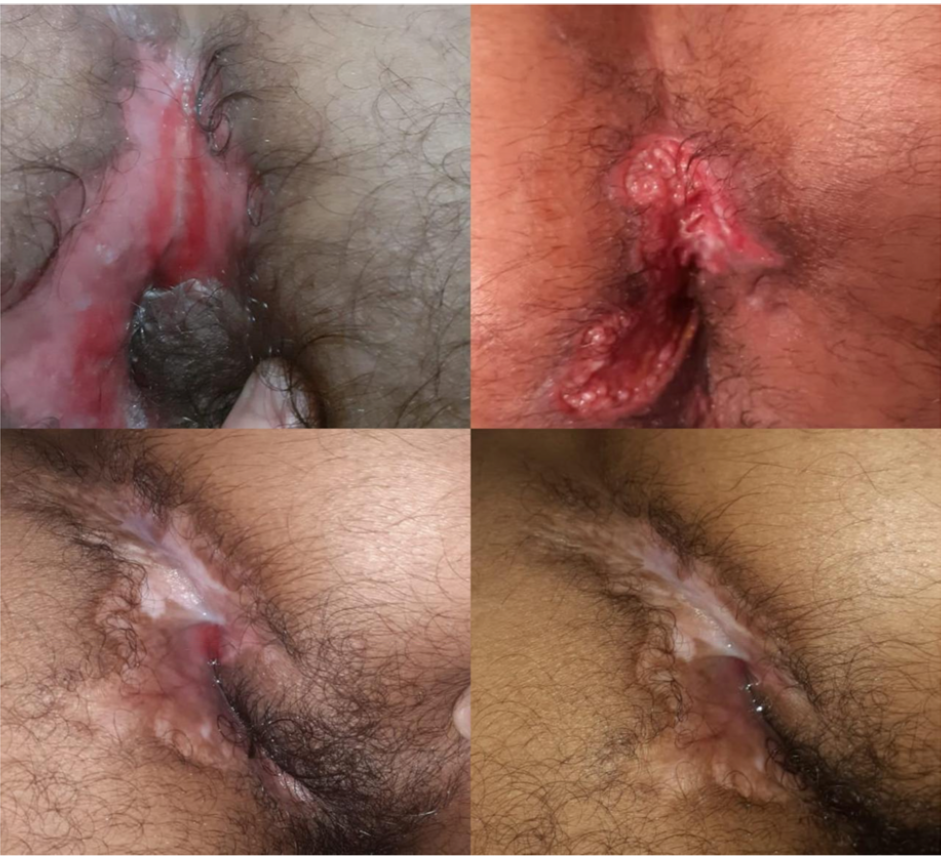
The patient, D.R.S.M., a 41-year-old married male from Taubaté, São Paulo, Brazil, with no history of smoking, alcohol use, regular medication, or prior surgeries, was referred to the Emergency Department in March 2022 due to a painful, exudative perianal ulcerative lesion that impaired both ambulation and defecation. The condition had been evolving for approximately one year, with progressive worsening, development of purulent discharge, and increasing pain intensity. No fever or systemic symptoms were reported (Figure 1).
Figure 1: The Image Represents the Phases of the Anal Lesion
On physical examination, the patient was in good general condition, well-perfused, hydrated, afebrile, normotensive, eupneic, and with normal skin coloration. Proctological examination revealed an ulcerated lesion originating from the anal verge, circumferential in distribution, with radial extension of approximately 4 cm, purulent discharge, and significant tenderness.
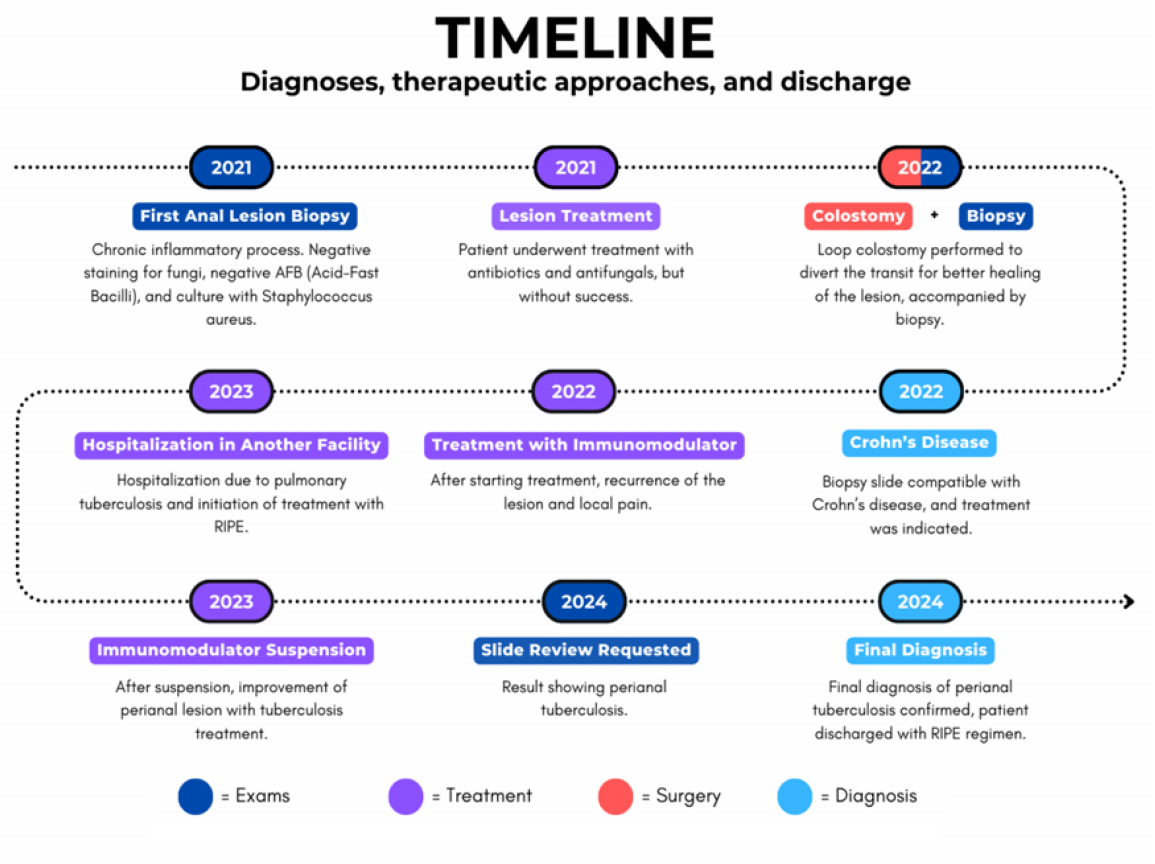
A previous biopsy performed in 2021 at another facility revealed moderate chronic inflammatory infiltrate with multinucleated giant cells. Special staining for fungi and acidfast bacilli (AFB) was negative, and secretion culture showed growth of Staphylococcus aureus. Another biopsy showed chronic, granulomatous, and ulcerated inflammation without evidence of malignancy, with the presence of fungal elements. In both instances, the patient was treated with oral and topical antibiotics and antifungals, with no improvement and progressive lesion worsening.
Given the severity of the condition, a loop colostomy was performed to divert the fecal stream and allow for proper healing of the anal lesion. At that time, a new biopsy was obtained. Histopathological analysis revealed ulceration with diffuse fibrosis, chronic granulomatous inflammation, and a fistulous tract in the dermis and subcutaneous tissue, findings suggestive of Crohn’s disease.
Biologic therapy with adalimumab was initiated. A chest X-ray, HIV serology (negative), and tuberculin skin test (PPD, non-reactive) were also performed. However, following the initiation of adalimumab, the patient experienced worsening of the perianal lesion.
During an outpatient visit, he reported having been hospitalized at another institution with a diagnosis of pulmonary tuberculosis and had started RIPE therapy (rifampicin, isoniazid, pyrazinamide, and ethambutol). Adalimumab was promptly discontinued. Surprisingly, after starting anti-tuberculosis therapy, the perianal lesion showed significant improvement. A review of the previous biopsy slides was requested, leading to a revised diagnosis of a fistula associated with intestinal/perianal tuberculosis. The patient remained under follow-up with the infectious disease team. In addition to resolution of the pulmonary disease, the perianal lesion healed completely after six months of RIPE therapy. In May 2024, after a complete colonic evaluation, intestinal continuity was successfully restored with no complications (Figure 2).
Figure 2: Timeline of Events
DISCUSSION
Perianal tuberculosis is more prevalent in men and usually occurs as a secondary complication of pulmonary tuberculosis. Infection of the anal region may result from the ingestion of respiratory secretions containing bacilli. Pre-existing anal lesions have been reported as risk factors for the development of the disease. Fistulas represent the most common symptom of anorectal tuberculosis, present in 80–91% of cases, and are often indistinguishable from cryptoglandular conditions; however, the incidence of complex fistulas are significantly higher in TB, ranging from 62% to 100% [4].
Perianal tuberculosis may present with local pain, mucopurulent discharge, and the formation of multiple complex perianal fistulas, as observed in the case described. Other clinical manifestations include inguinal ymphadenopathy, purulent perianal ulceration, anal stenosis, ulcerations, and fissures [2].
Clinically, perianal tuberculosis may appear in ulcerative, verrucous, or lupoid forms. The ulcerative form is the most common, typically characterized by well-defined borders and often associated with a primary focus in the lungs or intestines. The verrucous form tends to extend from the perianal region to the anal area, presenting a wart-like pattern. The lupoid form, which results from tuberculosis elsewhere in the body, begins as a small, soft, reddish-brown nodule that progresses into a centrally ulcerated lesion. In the present case, the patient had the ulcerative form, although no pulmonary or intestinal focus was initially identified [2].
Tuberculosis is classically associated with immunocompromised states, particularly in individuals with HIV infection or Hansen’s disease. However, these risk factors were not present in this patient. The diagnosis of perianal TB is based on clinical presentation and supported by diagnostic tests such as the tuberculin skin test (Mantoux), smear and culture for Mycobacterium tuberculosis, histopathological examination of the lesion, history of TB in other organs, and polymerase chain reaction (PCR) testing [2].
The typical histological pattern of perianal TB includes granulomas with giant cells surrounding areas of caseous necrosis. However, caseation is not always present, making it difficult to distinguish TB from Crohn’s disease. Therefore, diagnostic confirmation often relies on a combination of findings, including Ziehl-Neelsen staining, culture, and PCR for bacterial DNA [4].
Histopathological findings commonly reveal ulceration surrounded by nonspecific inflammatory infiltrate and extensive caseous necrosis. Granulomas composed of epithelioid cells and Langhans-type multinucleated giant cells may be identified in the dermis. In this case, biopsy of the intergluteal region showed chronic granulomatous inflammation, and biopsy of the perianal fistulous tract revealed epithelioid granulomas with multinucleated giant cells, although no caseous necrosis was observed.
Furthermore, fungal and acid-fast bacilli (AFB) stains were negative in both biopsy samples. The differential diagnosis of perianal ulcerative lesions should include Crohn’s disease, pyoderma gangrenosum, mixed-flora anorectal abscesses, cutaneous amebiasis, sarcoidosis, syphilis, lymphogranuloma venereum, neoplasms, hidradenitis suppurativa, and herpes simplex. Perianal TB and Crohn’s disease share similar features, such as ulcerative lesions and granulomatous inflammation on histopathology. However, perianal TB can be differentiated by Ziehl-Neelsen staining, culture for M. tuberculosis, and most notably, PCR testing for TB DNA.
The treatment of perianal TB may also include surgical management. The infection does not resolve spontaneously and, if left untreated, may lead to miliary dissemination and death. Ulcerative anal lesions associated with perianal TB usually regress within weeks of initiating pharmacological therapy. If cutaneous lesions do not respond to medical treatment or are accompanied by obstruction or abscess formation, surgical intervention becomes necessary.
In conclusion, the diagnosis of perianal tuberculosis is challenging due to its rarity, particularly in the absence of a pulmonary focus. Tuberculosis should be considered in the differential diagnosis of chronic, non-healing perianal ulcers and fistulas, especially in recurrent cases and in regions where TB is endemic [2].
CONCLUSION
This case report describes perianal tuberculosis in a patient who, after multiple biopsies and clinical treatment without significant response, required surgical intervention. In this case, a protective colostomy was proposed to provide relief from the patient's symptoms. The patient had difficulties with defecation and significant pain in the affected area. Subsequently, a definitive diagnosis of anorectal tuberculosis was made, highlighting the importance of surgical intervention in cases of complications associated with perianal tuberculosis.
Availability of Data and Materials
The database used to describe this report consists of the analysis of medical records, patient progression, laboratory tests, and imaging studies, which were applied to determine the respective diagnosis of the patient in question.
In accordance with Resolution 466/2012 by the National Health Council, it is considered that any research involving human subjects carries some degree of risk. Potential harm may be immediate or delayed, affecting the individual or the community. In the present study, there are no significant risks related to the research as it involves the analysis of medical records. The only risk present is associated with the fact that the patient had undergone a surgical procedure previously, under the care of the responsible physician.
As for the benefits, the focus was on how the diagnosis was made and the type of treatment proposed to resolve this condition, which will assist in guiding the management of new suspected cases of perianal tuberculosis. To further explore the topic, reference studies on perianal tuberculosis and the effectiveness of surgical intervention were used, available through the PubMed and Scielo databases.
This work, titled "Complications of Perianal Tuberculosis and the Effectiveness of Surgical Intervention: A Detailed Analysis," will be submitted to the ethics committee, including the following documents: researcher’s commitment statement, informed consent form (ICF), and institutional approval from the Regional Hospital of Vale do Paraíba, supporting the conduct of the study. It will then be submitted to the ethics committee for review.
Authors’ Contribution
Karen Kallás Pinto: analyzed the patient data and was a major contributor to writing the manuscript. Isabella Siqueira Vilela de Oliveira: critically reviewed and approved the final version of the manuscript. Maristela Melhem Natrielli De Almeida: contributed to the review process and supervised the development.
REFERENCE
Andreoli, T.E. et al. “Cecil textbook of medicine.” Madrid: Elsevier Science; 2003.
Ministério da Saúde. “Tuberculosis epidemiological bulletin 2024 – TB communication campaign 2024.” Brasília (DF): Ministério da Saúde; 2024. Available from: https://www.gov.br/saude/ptbr/assuntos/noticias/2024/marco/brasil-avanca-na-prevencao-diagnostico-etrata mento-da-tuberculose/apresentacao-de-slides-tubercul ose-20-03-24.pdf
Ramos, A. et al.“Primary extensive perianal cutaneous tuberculosis: a challenging diagnosis.”Braz J Infect Dis. 2022, pp. 102722.
Cerqueira, L.O. et al. “Perianal tuberculosis: case report of a rare and late-diagnosed disease.”Ann Sci Conf Med Univ Vila Velha. 2017.
Lip, H.T.C. et al. “Perianal tuberculosis.”J Gastrointest Surg. 2021.
License
Creative Commons Attribution-NonCommercial-NoDerivatives 4.0 International License
All papers should be submitted electronically. All submitted manuscripts must be original work that is not under submission at another journal or under consideration for publication in another form, such as a monograph or chapter of a book. Authors of submitted papers are obligated not to submit their paper for publication elsewhere until an editorial decision is rendered on their submission. Further, authors of accepted papers are prohibited from publishing the results in other publications that appear before the paper is published in the Journal unless they receive approval for doing so from the Editor-In-Chief.
Himalayan Journal of Community Medicine and Public Health open access articles are licensed under a Creative Commons Attribution-Share A like 4.0 International License. This license lets the audience to give appropriate credit, provide a link to the license, and indicate if changes were made and if they remix, transform, or build upon the material, they must distribute contributions under the same license as the original.
Recommended Articles
Research Article
Assessing the Role of Community Engagement in Promoting Malaria Prevention and Treatment Practices in Mashonaland Central Province, Zimbabwe: A Case of Centenary District
Dzamara Tafadzwa,
Mapuranga Danemore
Published: 13/08/2026
Download PDF
Cite
x
APA
Tafadzwa, D. & Danemore, M. (2026). Assessing the Role of Community Engagement in Promoting Malaria Prevention and Treatment Practices in Mashonaland Central Province, Zimbabwe: A Case of Centenary District. Himalayan Journal of Community Medicine and Public Health, 7(1), 1-6.
MLA
Tafadzwa, Dzamara and Mapuranga Danemore. "Assessing the Role of Community Engagement in Promoting Malaria Prevention and Treatment Practices in Mashonaland Central Province, Zimbabwe: A Case of Centenary District." Himalayan Journal of Community Medicine and Public Health 7.1 (2026): 1-6.
Chicago
Tafadzwa, Dzamara and Mapuranga Danemore. "Assessing the Role of Community Engagement in Promoting Malaria Prevention and Treatment Practices in Mashonaland Central Province, Zimbabwe: A Case of Centenary District." Himalayan Journal of Community Medicine and Public Health 7, no. 1 (2026): 1-6.
Harvard
Tafadzwa, D. and Danemore, M. (2026) 'Assessing the Role of Community Engagement in Promoting Malaria Prevention and Treatment Practices in Mashonaland Central Province, Zimbabwe: A Case of Centenary District' Himalayan Journal of Community Medicine and Public Health 7(1), pp. 1-6.
Vancouver
Tafadzwa D, Danemore M. Assessing the Role of Community Engagement in Promoting Malaria Prevention and Treatment Practices in Mashonaland Central Province, Zimbabwe: A Case of Centenary District. Himalayan Journal of Community Medicine and Public Health. 2026 Jan;7(1):1-6.
Download PDF
Research Article
Curves of Concern: Public Awareness of Scoliosis and Its Impact on Childhood Development in Hamirpur
Vishal Dhatwalia,
Swati Chandel
Published: 10/12/2024
Download PDF
Cite
x
APA
Dhatwalia, V. & Chandel, S. (2024). Curves of Concern: Public Awareness of Scoliosis and Its Impact on Childhood Development in Hamirpur. Himalayan Journal of Community Medicine and Public Health, 5(2), 1-6.
MLA
Dhatwalia, Vishal and Swati Chandel. "Curves of Concern: Public Awareness of Scoliosis and Its Impact on Childhood Development in Hamirpur." Himalayan Journal of Community Medicine and Public Health 5.2 (2024): 1-6.
Chicago
Dhatwalia, Vishal and Swati Chandel. "Curves of Concern: Public Awareness of Scoliosis and Its Impact on Childhood Development in Hamirpur." Himalayan Journal of Community Medicine and Public Health 5, no. 2 (2024): 1-6.
Harvard
Dhatwalia, V. and Chandel, S. (2024) 'Curves of Concern: Public Awareness of Scoliosis and Its Impact on Childhood Development in Hamirpur' Himalayan Journal of Community Medicine and Public Health 5(2), pp. 1-6.
Vancouver
Dhatwalia V, Chandel S. Curves of Concern: Public Awareness of Scoliosis and Its Impact on Childhood Development in Hamirpur. Himalayan Journal of Community Medicine and Public Health. 2024 Jul;5(2):1-6.
Download PDF
Research Article
Etiological Analysis of the Incident of Computer Vision Syndrome (Cvs) in Students of the Faculty of Medical Muhammadiyah University Semarang
Anang Kriswantoro,
...
Swasty
Published: 20/01/2026
Download PDF
Cite
x
APA
Kriswantoro, A., Martiningsih, W. R., Novitasari, A. & None, S. (2026). Etiological Analysis of the Incident of Computer Vision Syndrome (Cvs) in Students of the Faculty of Medical Muhammadiyah University Semarang. Himalayan Journal of Community Medicine and Public Health, 7(1), 1-5.
MLA
Kriswantoro, Anang, et al. "Etiological Analysis of the Incident of Computer Vision Syndrome (Cvs) in Students of the Faculty of Medical Muhammadiyah University Semarang." Himalayan Journal of Community Medicine and Public Health 7.1 (2026): 1-5.
Chicago
Kriswantoro, Anang, Wahju R. Martiningsih, Andra Novitasari and Swasty . "Etiological Analysis of the Incident of Computer Vision Syndrome (Cvs) in Students of the Faculty of Medical Muhammadiyah University Semarang." Himalayan Journal of Community Medicine and Public Health 7, no. 1 (2026): 1-5.
Harvard
Kriswantoro, A., Martiningsih, W. R., Novitasari, A. and None, S. (2026) 'Etiological Analysis of the Incident of Computer Vision Syndrome (Cvs) in Students of the Faculty of Medical Muhammadiyah University Semarang' Himalayan Journal of Community Medicine and Public Health 7(1), pp. 1-5.
Vancouver
Kriswantoro A, Martiningsih WR, Novitasari A, Swasty S. Etiological Analysis of the Incident of Computer Vision Syndrome (Cvs) in Students of the Faculty of Medical Muhammadiyah University Semarang. Himalayan Journal of Community Medicine and Public Health. 2026 Jan;7(1):1-5.
Download PDF
Research Article
Silent Threats Unveiled: Gauging Public Awareness and Understanding of Blood Clotting Disorders in Ambala, Haryana
Ashmita Joshi,
...
Sanjeev Kumar
Published: 30/07/2024
Download PDF
Cite
x
APA
Joshi, A., kaur, J. & Kumar, S. (2024). Silent Threats Unveiled: Gauging Public Awareness and Understanding of Blood Clotting Disorders in Ambala, Haryana. Himalayan Journal of Community Medicine and Public Health, 5(2), 1-6.
MLA
Joshi, Ashmita, Jasleen kaur and Sanjeev Kumar. "Silent Threats Unveiled: Gauging Public Awareness and Understanding of Blood Clotting Disorders in Ambala, Haryana." Himalayan Journal of Community Medicine and Public Health 5.2 (2024): 1-6.
Chicago
Joshi, Ashmita, Jasleen kaur and Sanjeev Kumar. "Silent Threats Unveiled: Gauging Public Awareness and Understanding of Blood Clotting Disorders in Ambala, Haryana." Himalayan Journal of Community Medicine and Public Health 5, no. 2 (2024): 1-6.
Harvard
Joshi, A., kaur, J. and Kumar, S. (2024) 'Silent Threats Unveiled: Gauging Public Awareness and Understanding of Blood Clotting Disorders in Ambala, Haryana' Himalayan Journal of Community Medicine and Public Health 5(2), pp. 1-6.
Vancouver
Joshi A, kaur J, Kumar S. Silent Threats Unveiled: Gauging Public Awareness and Understanding of Blood Clotting Disorders in Ambala, Haryana. Himalayan Journal of Community Medicine and Public Health. 2024 Jul;5(2):1-6.
Pinto, K. K., Vilela de Oliveira, I. S. & De Almeida, M. M. N. (2026). Complications of Perianal Tuberculosis and Efficacy of Surgical Intervention: A Detailed Analysis. Himalayan Journal of Community Medicine and Public Health, 7(1), 1-5.
MLA
Pinto, Karen K., Isabella S. Vilela de Oliveira and Maristela M. N. De Almeida. "Complications of Perianal Tuberculosis and Efficacy of Surgical Intervention: A Detailed Analysis." Himalayan Journal of Community Medicine and Public Health 7.1 (2026): 1-5.
Chicago
Pinto, Karen K., Isabella S. Vilela de Oliveira and Maristela M. N. De Almeida. "Complications of Perianal Tuberculosis and Efficacy of Surgical Intervention: A Detailed Analysis." Himalayan Journal of Community Medicine and Public Health 7, no. 1 (2026): 1-5.
Harvard
Pinto, K. K., Vilela de Oliveira, I. S. and De Almeida, M. M. N. (2026) 'Complications of Perianal Tuberculosis and Efficacy of Surgical Intervention: A Detailed Analysis' Himalayan Journal of Community Medicine and Public Health 7(1), pp. 1-5.
Vancouver
Pinto KK, Vilela de Oliveira IS, De Almeida MMN. Complications of Perianal Tuberculosis and Efficacy of Surgical Intervention: A Detailed Analysis. Himalayan Journal of Community Medicine and Public Health. 2026 Jan;7(1):1-5.



 Download PDF
 Download XML