Dexamethasone its derivatives, dexamethasone sodium phosphate and dexamethasone acetate, are synthetic glucocorticoids. Its molecular structure is 1-dehydro-9α-fluoro-16α-methylhydrocortisone or as 9α-fluoro- 11β,17α, 21-trihydroxy-16α-methylpregna-1,4-diene-3,20-dione [1].
Structural Diagram
Its pKa is -3.3 to 12.42. Dexamthasone water solubility is 0.0505 mg/mL.
Pharmacokinetics
Dexamethasone is a water-soluble ester, in the form of dexamethasone sodium phosphate. It has an oral, intramuscular or intravenous preparation. It acts rapidly and attains high concentration in tissue fluids. Dexamethasone is mainly metabolized in the liver by hepatic microsomal enzymes [2].
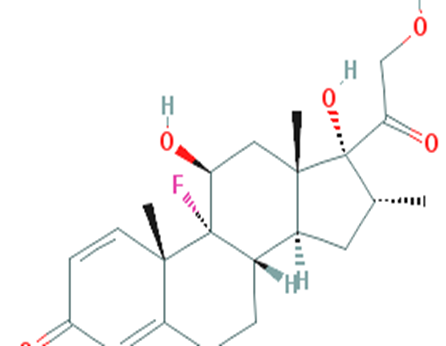
Figure 1: Structural Diagram
The t1/2 of dexamethasone in greater than 36 hrs, its action starts within 30 minutes of injection and action persists even after the drug disappears from the circulation[3].
Pharmacological Actions
Carbohydrate and protein metabolism: Glucocorticoids promote glycogen deposition in the liver by inducing hepatic glycogen synthetase and promoting gluconeogenesis. It inhibits glucose utilization in peripheral tissues. This along with increased glucose release causes insulin resistance and diabetes like state. It causes protein breakdown and amino acid mobilization from peripheral tissues, responsible for side effects like muscle wasting. The amino acids are funneled into the liver and used for gluconeogenesis. Excess urea is produced and this cause negative nitrogen balance [4].
Fat Metabolism
This action is primary permissive in nature. It promotes lipolysis due to glucagon, growth hormone, adrenaline and thyroxine. Cyclic adenosine mono phosphate (cAMP) induced breakdown of triglycerides are enhanced.
Calcium metabolism
It inhibits the intestinal absorption of calcium and increases renal excretion of calcium. There is also loss of
calcium from bone indirectly due to loss of osteoid in chronic use. Spongy bones (vertebra, ribs) are more sensitive.
Water Excretion
Effect on water excretion is independent of action on sodium transport, in maintaining glomerular filtration rate (GFR). In adrenal insufficiency, the capacity to excrete a water load is considerably reduced [5]. Glucocorticoid enhances the secretory capacity of renal tubules.
Cardiovascular System
Glucocorticoids restrict capillary permeability and maintain tone of arteries and myocardial contractility. It has permissive effect on pressor action of adrenaline and angiotensin. They also play a role in development of hypertension and should be cautiously used in hypertensive patients.
Skeletal Muscles
Optimal level of corticosteroids is needed for normal muscle function. Weakness may occur in both hypo and hypercortism but the effects may be different. Hypocortism– weakness due to hypodynamic circulation; Hypercortism– excess glucocorticoid action leading to muscle wasting.
Central Nervous System
Mild euphoria is common with pharmacological doses of glucocorticoids. This is due to a direct effect on brain, independent of relief of disease symptoms, sometimes progresses to cause increased motor activity, insomnia, anxiety or depression. It also maintains the level of sensory perception and normal level of excitability of neurons. High doses tend to lower seizure threshold in epileptics [6].
Stomach
Secretion of gastric acid and pepsin is increased and may aggravate peptic ulcer.
Lymphoid Tissue and Blood Cells
Glucocorticoid drive can raise the rate of destruction of lymphoid cells (T cells are more sensitive than B cells). However, a marked lytic response is shown by malignant lymphatic cells – usually in lymphomas. Corticosteroid increases the number of RBCs, platelets and neutrophils in the circulation. They decrease lymphocytes, basophils and eosinophils. These are due to sequestration of cells. The count becomes normal in 24 hrs [7].
Inflammatory Responses
Irrespective of type of injury or insult, the attending inflammatory response is suppressed by glucocorticords [8]. This is the basis of most of their clinical uses. It lowers all stages of inflammation. The actions are direct and even local application is possible. The cardinal signs of inflammation such as redness, heat, swelling and pain are suppressed. Corticosteroids are only palliative; the underlying disease processes continues while manifestations are dampened.
Immunological and allergic response
They cause greater suppression of cell mediated immunity in which T cells are primarily involved example: delayed hypersensitivity and graft rejection [9]. It decreases the release of interleukin-1 and interleukin -2.
Uses
Arthritis: Used in rheumatoid arthritis in conjunction with nonsteroidal anti-inflammatory drugs (NSAIDs), arthritis in rheumatic fever and in gouty arthritis
Collagen Diseases: In disease like systemic lupus erythematosus, polyarteritis nodosa, dermatomyositis, this drug may be life-saving
Severe Allergic Reactions: Used in anaphylaxis for short periods, in angioneurotic edema, urticaria, serum sickness
Autoimmune diseases: Autoimmune hemolytic anemia, thrombocytopenia, active chronic hepatitis responds to corticosteroids
Bronchial Asthma: Used intravenously in status asthmaticus
As An Adjunct to Drug in Nausea and Vomiting: As it prevents the release of inflammatory mediators and prostoglandins, they modulate neuronal activity and have a membrane stabilizing action. It has a minimal action in nausea and vomiting. It increases the efficacy of the drug which is co-administered
Eye Disease: Allergic conjuctivitis, iridocyclitis, keratitis
Intestinal Disease: In diseases like crohns, ulcerative colitis, celiac disease with remissions and exacerbations
Cerebral Edema: In cerebral edema due to meningitis and tumors. Dexamethasone is preferred because it does not have sodium retaining capacity. Large doses given in spinal injury can reduce neurological sequalae
Malignancies: As a component of chemotherapy, in ALL, Hodgkin’s and other lymphomas
In Organ Transplantations and Skin Allograft: To prevent rejection
To test adrenal –Pituitary axis function
Contraindications for chronic use
These are only relative contraindications since, the steroid dexamethasone is a life-saving drug, they are, peptic ulcer, diabetes mellitus, hypertension, viral and fungal infections, tuberculosis and other infections, osteoporosis, herpes simplex keratitis, psychosis, epilepsy, congestive heart failure, renal failure [10].



 Download PDF
 Download XML