Contents
Download PDF
pdf Download XML
1001 Views
432 Downloads
Share this article
Review Article | Volume 4 Issue 2 (July-Dec, 2023) | Pages 1 - 6
Satisfaction with the Use of Hospital Management Information Systems (MIS): A Literature Review
 ,
 ,
1
Magister Kesehatan Masyarakat, Fakultas Kesehatan Masyarakat, Universitas Diponegoro, Indonesia
Under a Creative Commons license
Open Access
Received
July 28, 2023
Revised
Aug. 18, 2023
Accepted
Sept. 2, 2023
Published
Oct. 15, 2023
Abstract

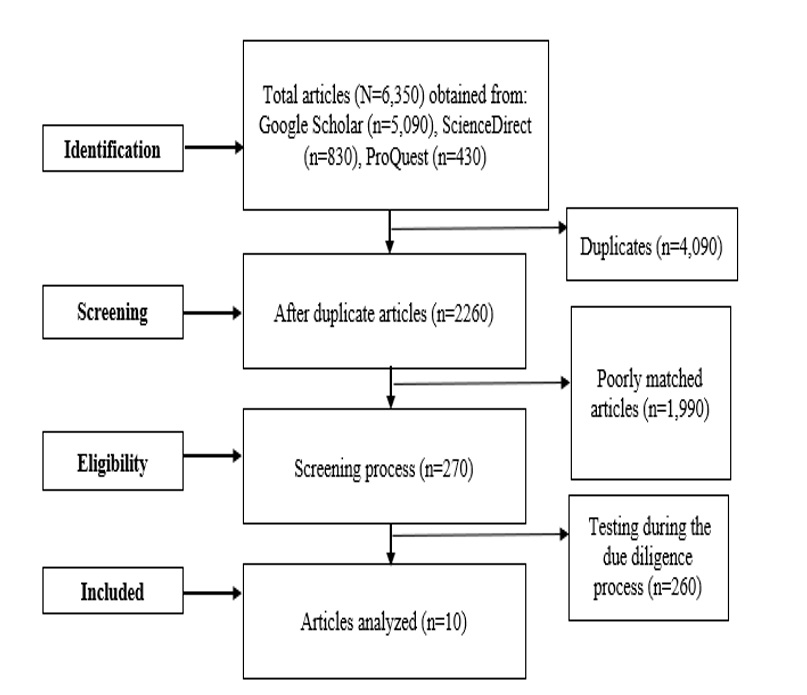
It is critical for hospital management information systems to understand their impact on user satisfaction. Hospitals are complex institutions with many interrelated departments and functions. To run their operations efficiently, hospitals need a management information system that can manage and unify various aspects, from patient administration to inventory management. The research method used in this research is a qualitative research method, in general the data collection method used is the literature review model. The results obtained were 6,350 articles. Furthermore, 6,340 articles were excluded, with details of 4,090 articles being duplicates, 1,990 articles not being suitable, and 260 articles being inappropriate. Thus, 10 articles were obtained that were appropriate to the topic and reviewed. This research can be concluded that the satisfaction of Management Information System (MIS) users in hospitals is very satisfied. Apart from that, it was also found that technology quality, system quality and service quality are factors that contribute to satisfaction for Management Information System (MIS) users in hospitals.

Keywords
INTRODUCTION

It is critical for hospital management information systems to understand their impact on user satisfaction. According to [1]. Management information systems are information systems used to present information that is used to support management operations and decision making in an organization. Hospitals are complex institutions with many interrelated departments and functions. To run their operations efficiently, hospitals need a management information system that can manage and unify various aspects, from patient administration to inventory management. Having a management information system means hospitals have advantages that other organizations or agencies do not have.


The importance of management information systems in the hospital context lies not only in operational efficiency, but also in the quality of patient service. With a good system, the registration process, medical record management, scheduling and communication between departments can be improved. This can have a direct impact on patient satisfaction and the effectiveness of health services. According to Darmawan et al. [2] Management Information Systems (MIS) have many benefits as follows:


  • Increase the efficiency and effectiveness of data accurately and in real time

  • Make it easier for management to plan, supervise, direct and delegate work to all departments that have relationships or coordination

  • Improving the quality of human resources, due to a coordinated and systematic work system unit

  • Increase productivity and cost savings in the organization


The successful implementation of a management information system can also influence the satisfaction of internal users, such as administrative staff and medical personnel. A system that is easy to use, reliable and provides accurate information can increase productivity and job satisfaction. Thus, a deep understanding of how management information systems contribute to hospital operations and the patient and staff experience can provide a solid foundation for further exploring user satisfaction in this context.


Based on the background above, researchers are interested in conducting research with the title "Satisfaction with the Use of Hospital Management Information Systems (MIS): Literature Review” by reviewing research results from various relevant sources. Apart from that, this research also aims to find out what is the satisfaction with using the management information system (MIS) in the hospital? And what are the factors for user satisfaction of management information systems (MIS) in hospitals?


Literature Review

Information System Definition Management: An organization held transactions that must be processed in order to carry out daily activities. Salary factors must be prepared, sales and payments on estimates must be needed. All this and stuff the other is data processing activities following a standard procedure certain. Computers are useful for data processing tasks such as this, but a management information system also performs tasks and more than just a data processing system. Is a processing system information that applies skills for management and for decision making decision [3]. A Management Information System (a term commonly known to people) is a human/machine system integrated (integrated) to provide information that supports the function operations, management and retrieval decisions in an organization. This system uses software (software) hardware (hardware) computer, manual procedure, model management and decisions and a databases [4].


Development of the Concept of Information System Management

Actually before people use the existing computer ideas about information systems to support management and decision-making. Use information systems in organizations, turned out to be able to strengthen the organization's ability to achieve its goals. Development of science such as management accounting, science management knowledge, theories management and processing computer, enabling maturation MIS concept, as it exists today. So that the MIS concept can be seen as a fundamental extension of management accounting by incorporating ideas and techniques management science, theory of management behavior and decision decisions and computer skills, then complete the embodiment of the idea MIS concept [5]. Management science is application. Scientific methods and quantitative analytical techniques for management problems. Model formation for analysis management is usually used the formula math or calculation procedure who generally need assistive devices computer. On progress, management theories emphasize in terms of behavior and motivation on organizational structures and systems in the organization. Developments in management theories are important for MIS designer, because it helps in understanding the role of human systems or machines and is useful for the development of decision models [6]. 


Concept Decisions for the System Information

The forces that drive the decision-making process can be dissatisfaction with the current situation or expected rewards from circumstances new. In the case of dissatisfaction, the driving force is the discovery of a problem. In terms of expected rewards, is the result of seeking opportunities. Some decision-making models emphasize more on feedback on decision results. For example, Rubenstein and Haberstroh propose the following steps that is identification of the problem or need for decision making, analysis and reporting of alternatives, selection among the available alternatives, communication and implementation of decisions, follow-up steps and feedback decision [7].


MATERIALS AND METHODS

The research method used in this research is a qualitative research method, in general the data collection method used is the literature review model, the literature review approach is an approach that collects various references related to the research problem. As stated by Phillippi and Lauderdale [13] according to the subject matter and analyzed in depth so that conclusions and findings in the research can be drawn. Literature taken from books, national and international journal articles and other literature.


Literature review is synthesized using a narrative method by grouping similar extracted data according to the results measured to answer the objectives [14]. So it can be concluded that literature review or library study is a research method that reviews and collects needed references such as books, journals and so on, which then become research results. The ten research articles that meet the requirements will then be assessed for quality and synthesized in this literature review. The following PRISMA diagram can be seen in the image below:


Figure 1: PRISMA of Literature Review

RESULTS

The database search results obtained a total of 6,350 articles. Next, a duplication check is carried out to see whether there is any duplication or not. After the article was checked for duplication and issued, it was obtained 4,090. The articles were then screened for titles so that 270 articles were obtained and a feasibility test process was carried out, so that 10 articles were obtained that were appropriate to the topic and a review was carried out. The articles obtained were then entered into the next stage, namely full-text review based on the inclusion criteria set by the researcher. The ten research articles that met the requirements were then assessed for quality and synthesized in this literature review


Table 1:  Article Search Results

Researcher (years)

Goal target

Design and Location

Respondent Characteristics

Measurement

Research result

The Relationship between Technology Quality and User Satisfaction of the Hospital Management Information System at RSU Mardi Lestari Sragen 

The aim of this research is to determine the relationship between technology quality and hospital information management system user satisfaction in using the hospital management information system at RSU Mardi Lestari Sragen.

The design of this research is observational analytic with a cross sectional approach. The research location is RSU Mardi Lestari Sragen.

The population used in this research was 140 hospital information management system user officers and a sample of 70 hospital information management system user officers was taken.

The instrument in this research used a previous researcher's questionnaire by Wati, (2021) which was valid and reliable. The data analysis used was univariate and bivariate analysis using the Spearman rank test.

The research results show a value of p = 0.000 (p<0.05) so that H0 is rejected, which means there is a relationship between the technology quality variable and hospital information management system user satisfaction.

The Influence of System Quality, Information Quality and Service Quality on User Satisfaction of the Management Information System of Hospital "X" Palopo City. [15]

This research is to find out whether there is an influence of system quality, information quality and service quality on user satisfaction of the management information system of RS "X" Palopo City

This research is a type of quantitative research. Meanwhile, the research location is at "X" Hospital, Palopo City

The population used in this research are all people who have implemented and used the hospital management information system (hospital information management system) at "X" Hospital, Palopo City.

The data collection technique in this research uses a questionnaire (questionnaire).

The results of this research can be concluded that system quality, information quality and service quality greatly influence user satisfaction of the hospital management information system.

Evaluation of User Satisfaction of the Hospital Management Information System Using the EUCS Method at Doloksanggul Regional Hospital in 2020. [16]

This study aims to determine the level of satisfaction of hospital information management system users at the Doloksanggul Regional General Hospital (RSUD) based on the End User Computing Satisfaction (EUCS) method.

The design in this research is quantitative. The research location is Doloksangggul Regional Hospital

The number of respondents in this study was 68 people at Doloksangul Regional Hospital, then a sample of 40 people was calculated using the Slovin formula.

The measuring instrument used in this research uses a questionnaire that was created by the researcher.

The results of the level of end user satisfaction at hospital information management system at Doloksanggul Regional Hospital are at a fairly satisfied level.


Analysis of the Implementation of Hospital Management Information Systems Using the HOT FIT Approach: Systematic Literature Review. [17].

This research aims to find out how to analyze the implementation of a hospital management information system using the HOT FIT method.

This research uses a literature study or literature review design or approach. Location The research was conducted in Indonesia.

This research uses previous research objects or literature reviews such as journals, ebooks and so on.

The literature search method uses SINTA-accredited journal sites and Google Scholar. namely "Hospital information management system" and “HOT FIT”.

The research results show that the quality of data management information is assessed by the level of accuracy and relevance of the information data. With the HOT FIT method, information can be more relevant and accurate and the information has benefits for users.

Analysis of User Satisfaction of Hospital Management Information Systems Using the EUCS Method. [17].

The aim or purpose of this research is to analyze user satisfaction of the Hospital management information system using the EUCS method

This research uses the End User Computing Satisfaction (EUCS) method with 5 dimensions, namely Content, Accuracy, Appearance, User Ease, and Timeliness. The research location is in Indonesia.

The characteristics of the respondents in this study were 100 employees using hospital information management system.

The measurement used in this research is a questionnaire consisting of 21 questions and consisting of 5 EUCS dimensions.

The results of the research were obtained with a value of 73% for the level of user satisfaction, which means that users felt satisfied in using hospital information management system and provided 4 recommendations for improvements to hospital information management system so that it can run well and not take too much time.


Continue Table 1

Evaluation of MIS-RS User Satisfaction Levels Using the EUCS Method at RSUD Prof. Dr. H. Aloei Sabie Gorontalo City. [18].

The aim of this research is to measure the level of satisfaction of users of the Hospital Management Information System (MIS-RS) Prof. Dr. H. Aloei Saboe Gorontalo City and provided recommendations so that the system runs better.

The method used in this research is End-User Computing Satisfaction (EUCS) using a quantitative approach. The location of this research is at RSUD Prof. Dr. H. Aloei Sabie Gorontalo City.

The respondents in this research were administrative employees and programmers at RSUD Prof. Dr. H. Aloei Sabie Gorontalo City as many as 34 people.

This research uses a questionnaire that has been tested for validity and reliability.

The research results show that the level of user satisfaction for all EUCS variables is in the satisfied and very satisfied categories, which indicates that the user is satisfied and needs to be maintained.

Analysis of the Relationship between Hospital Management System Quality and User Satisfaction at Gunung Maria Tomohon General Hospital.  

The aim of this research is to analyze the relationship between system quality, information quality and service quality with user satisfaction of hospital management information systems.

This research is a quantitative study using an analytical observational study with a cross sectional study design. The location of this research is RSU Gunung Maria Tomohon.

The characteristics of the respondents in this study were 33 men and 102 women.

The instruments used in this research include system quality, information quality, service quality and user satisfaction questionnaires which have been tested using SPSS 27 with 50 samples which are considered adequate as the minimum Exploratory Factor Analysis (EFA) sample.

The research results show that there is a significant relationship between the quality of the hospital management information system and user satisfaction at the Gunung Maria Tomohon General Hospital

Analysis of User Satisfaction of the Hospital Administration Information System (SIARS) with the Delone and Mclean Model. [19].

The aim of this research is to analyze system quality, information quality and service quality on user satisfaction.

This research is a type of quantitative research, with a Delone and Mclean design. The location of this research is RSIA Srikandi IBI Jember

The research subjects used in this study were the population of officers related to SIARS who had usernames and passwords, namely 70 people and the sample of officers related to SIARS who had usernames and passwords, namely 60 people.

The data collection method is by creating a questionnaire that is adapted to several variables from the Delone and Mclea method and conducting a trial of the questionnaire to obtain valid and reliable results, then distributing valid and reliable questionnaires to research respondents to fill in the questionnaire based on their respective assessments. individual.

The results obtained are that there is a moderate and unidirectional significant relationship of 0.519 between system quality and user satisfaction. There is a moderate and unidirectional significant relationship of 0.425 between information quality and user satisfaction. There is a strong and unidirectional significant relationship of 0.780 between service quality and user satisfaction.

Preparing strategic information management plans for hospitals: a practical guideline MIS plans for hospitals: a guideline. [20].

This research has the aim that systematic information management in hospitals requires the existence of a Management Information System (MIS).

The design in this research consists of guidelines for the structure of the MIS plan and also regarding the content and preparation process. The location of this research was Germany

The characteristics of the respondents in this study were hospital staff.

The research instruments used were computer-supported tools available in hospitals.

These guidelines are used in some hospitals in preparing MIS plans. Experience shows that MIS plans can be prepared very efficiently and on time using these guidelines.


DISCUSSION

The research was carried out and used the literature review method by reviewing ten studies and discussing aspects of the Management Information System (MIS) in hospitals. This research certainly has aims and objectives in research to see the satisfaction of Management Information System (MIS) users in hospitals. This research shows that respondents or Management Information System users tend to be satisfied with the use of MIS in hospitals. Apart from that, satisfaction factors in the Management Information System (MIS), such as good technological quality, will create satisfaction for hospital information management system users [21]. This research also shows that there is a significant relationship between the quality of the hospital management information system and user satisfaction at the hospital.


This research also informs that system quality, information quality and service quality greatly influence user satisfaction of hospital management information system [15]. Apart from that, the quality of data management information is assessed by the level of accuracy and relevance of the information data. With the HOT FIT method, information can be more relevant and accurate and the information has benefits for users in the Management Information System [22]. The level of user satisfaction for all EUCS variables is in the satisfied and very satisfied categories, which indicates that the user is satisfied and needs to be maintained.


Apart from that, this research found that user satisfaction, which means users feel satisfied in using hospital information management system, also provides 4 recommendations for improvements to hospital information management system so that it can run well and not take too much time. This guideline is used in several hospitals in preparing MIS plans. Experience shows that MIS plans can be prepared very efficiently and on time using these guidelines [20].

CONCLUSION

This research can be concluded that from the ten articles, the satisfaction of Management Information System (MIS) users in hospitals is very satisfied, especially those carried out to improve the quality of services in hospital health facilities. In general, from the articles that have been reviewed, it was found that there was an increase in efficiency which helped facilitate the service process, in terms of shorter time and the availability of more complete information. Apart from that, it was also found that technology quality, system quality and service quality are the main factors in terms of satisfaction for Management Information System (MIS) users in hospitals. It is also important for hospitals to improve their Management Information System (MIS) so that services can be maximized.

REFERENCE
  1. Intan, M.S. and A.P. Savitri. “Web-based news management information system.” Journal of Information Technology and Systems (JTSI), vol. 1, no. 1, 2020.

  2. Darmawan, D. and A. Ratnasari. “Design and build of a web-based project management information system at PT. Search Infosys.” SISFOKOM Journal (Information and Computer Systems), vol. 9, no. 3, 2020.

  3. Martins, D. et al. “Decision support system for business ideas competitions.” Journal of Information Systems Engineering & Management, vol. 4, no. 3, 2019, pp. 1–14. https://doi.org/10.29333/jisem/5892

  4. Vafaei, F. and A.N. Harati. “Strategic management in decision support system for coastal flood management.” International Journal of Environmental Research, vol. 4, no. 1, 2010, pp. 169–176.

  5. Hassanin, Mayssara A.A., supervised by A. “No title.” Paper Knowledge: Toward a Media History of Documents, 2014.

  6. Aswal, D.K. et al. “Effect of grain boundaries on paraconductivity of YBCO.” Article in Press, vol. 1, no. 1, 2002, pp. 1–11.

  7. Utami, S.S. “Peranan sistem informasi manajemen untuk pengambilan keputusan pengusaha kecil.” Jurnal Ekonomi dan Kewirausahaan, vol. 11, no. 2, 2011, pp. 142–150.

  8. Fuglseth, A.M. and K. Grønhaug. “Can computerised market models improve strategic decision-making? An exploratory study.” Journal of Socio-Economics, vol. 32, no. 5, 2003, pp. 503–520. https://doi.org/10.1016/j.socec.2003.08.007

  9. Al-Tarawneh, H.A. “The main factors beyond decision making.” Journal of Management Research, vol. 4, no. 1, 2011, pp. 1–23. https://doi.org/10.5296/jmr.v4i1.1184

  10. Janssen, M., H. van der Voort, and A. Wahyudi. “Factors influencing big data decision-making quality.” Journal of Business Research, vol. 70, 2017, pp. 338–345. https://doi.org/10.1016/j.jbusres.2016.08.007

  11. Khakheli, M. and G. Morchiladze. “Factors affecting decision making in an organization.” Journal Name Missing, vol. 3, no. 1, 2015, pp. 425–428.

  12. Nooraie, M. “Factors influencing strategic decision-making processes.” International Journal of Academic Research in Business and Social Sciences, vol. 2, no. 7, 2012, pp. 405–429.

  13. Syakharani, A.W. and M.L. Kamil. “Culture and culture: An overview of various forms of culture, 7 universal elements of culture.” Cross-Border, vol. 5, no. 1, 2022.

  14. Sri, A.W. “Literature review: Differentiated approaches in science learning.” Journal of Mathematics and Natural Sciences Education, vol. 12, no. 2, 2022.

  15. Sari, Novita et al. “The influence of system quality, information quality and service quality on user satisfaction of the management information system of Hospital ‘X’ Palopo City.” Surya Medika Journal (JSM), vol. 9, no. 2, 2023.

  16. Siregar, Yasintam D.F. “Evaluation of user satisfaction of the hospital management information system using the EUCS method at Doloksanggul Regional Hospital in 2020.” Journal of Healthcare Technology and Medicine, vol. 7, no. 1, 2021.

  17. Febrianti, Fyna et al. “Analysis of user satisfaction of hospital management information systems using the EUCS method.” Journal of Informatics Engineering and Information Systems, vol. 10, no. 1, 2023.

  18. Aswandi, Azrul et al. “Evaluation of MIS-RS user satisfaction levels using the EUCS method at RSUD Prof. Dr. H. Aloei Sabie Gorontalo City.” Diffusion: Journal of Systems and Information Technology, vol. 2, no. 2, 2022.

  19. Setiawan, D.H.P. and M.D. Arief. “Analysis of user satisfaction of the hospital administration information system (SIARS) with the Delone and Mclean model.” Journal of Business Information Systems, vol. 1, 2021.

  20. Brigl, B. et al. “Preparing strategic information management plans for hospitals: A practical guideline.” International Journal of Medical Informatics, vol. 74, 2004, pp. 51–65.

  21. Achmad, Syaiful A. et al. “The relationship between technological quality and user satisfaction of hospital management information systems at RSU Mardi Lestari Sragen.” Indonesian Journal of Health Information Management (IJHIM), vol. 3, no. 3, 2023.

  22. Putri, R.K. “Analysis of the implementation of hospital management information systems using the HOT FIT approach: Systematic literature review.” Diagnosa: Journal of Health and Nursing Sciences, vol. 1, no. 2, 2023.

License
CC BY-NC-ND
Creative Commons Attribution-NonCommercial-NoDerivatives 4.0 International License
Satisfaction with the Use of Hospital Management Information Systems (MIS): A Literature Review © 2026 by Budi Utomo, Cahya Tri Purnami, Sri Winarni licensed under CC BY-NC-ND 4.0
All papers should be submitted electronically. All submitted manuscripts must be original work that is not under submission at another journal or under consideration for publication in another form, such as a monograph or chapter of a book. Authors of submitted papers are obligated not to submit their paper for publication elsewhere until an editorial decision is rendered on their submission. Further, authors of accepted papers are prohibited from publishing the results in other publications that appear before the paper is published in the Journal unless they receive approval for doing so from the Editor-In-Chief.
Himalayan Journal of Community Medicine and Public Health open access articles are licensed under a Creative Commons Attribution-Share A like 4.0 International License. This license lets the audience to give appropriate credit, provide a link to the license, and indicate if changes were made and if they remix, transform, or build upon the material, they must distribute contributions under the same license as the original.
Recommended Articles
Research Article
Curves of Concern: Public Awareness of Scoliosis and Its Impact on Childhood Development in Hamirpur
Published: 10/12/2024
Download PDF
Research Article
Etiological Analysis of the Incident of Computer Vision Syndrome (Cvs) in Students of the Faculty of Medical Muhammadiyah University Semarang
...
Published: 20/01/2026
Download PDF
Research Article
Silent Threats Unveiled: Gauging Public Awareness and Understanding of Blood Clotting Disorders in Ambala, Haryana
...
Published: 30/07/2024
Download PDF
Research Article
Knowledge About HBV Infection and Its Association with HBSAG Positivity among Residents of Kaza Sub- Division Of District Lahaul & Spiti In Himachal Pradesh
...
Published: 30/07/2024
Download PDF
Flowbite Logo
Najmal Complex,
Opposite Farwaniya,
Kuwait.
Email: support@himjournals.com

Useful Links
Order Hard Copy
Privacy policy
Terms and Conditions
Refund Policy
Others
About Us
Team Members
Contact Us
Online Payments
Join as Editor
Join as Reviewer
Subscribe to our Newsletter
Follow us
MOST SEARCHED KEYWORDS
scientific journal
 | 
business journal
 | 
medical journals
 | 
Scientific Journals
 | 
Academic Publisher
 | 
Peer-reviewed Journals
 | 
Open Access Journals
 | 
Impact Factor
 | 
Indexing Services
 | 
Journal Citation Reports
 | 
Publication Process
 | 
Impact factor of journals
 | 
Finding reputable journals for publication
 | 
Submitting a manuscript for publication
 | 
Copyright and licensing of published papers
 | 
Writing an abstract for a research paper
 | 
Manuscript formatting guidelines
 | 
Promoting published research
 | 
Publication in high-impact journals
Copyright © Himalayan Journals . All Rights Reserved.